Historia
Mesopotamia: la tierra entre los ríos
Una llanura plana levantada con limo, sin casi piedra, ni madera, ni metal propios. Aun así las ciudades aparecieron aquí antes que en ninguna otra parte, y esas carencias explican buena parte del porqué.
Mesopotamia es una palabra griega que significa entre los ríos, y la tierra que nombra es la llanura aluvial depositada por el Tigris y el Éufrates en lo que hoy es el sur de Irak. Todo lo demás en este sitio ocurre aquí.
Vale la pena entender el lugar físicamente, porque los dos hechos que lo formaron son de una sencillez casi embarazosa: hay agua si la mueves, y no hay nada más.
Un país hecho de limo de río
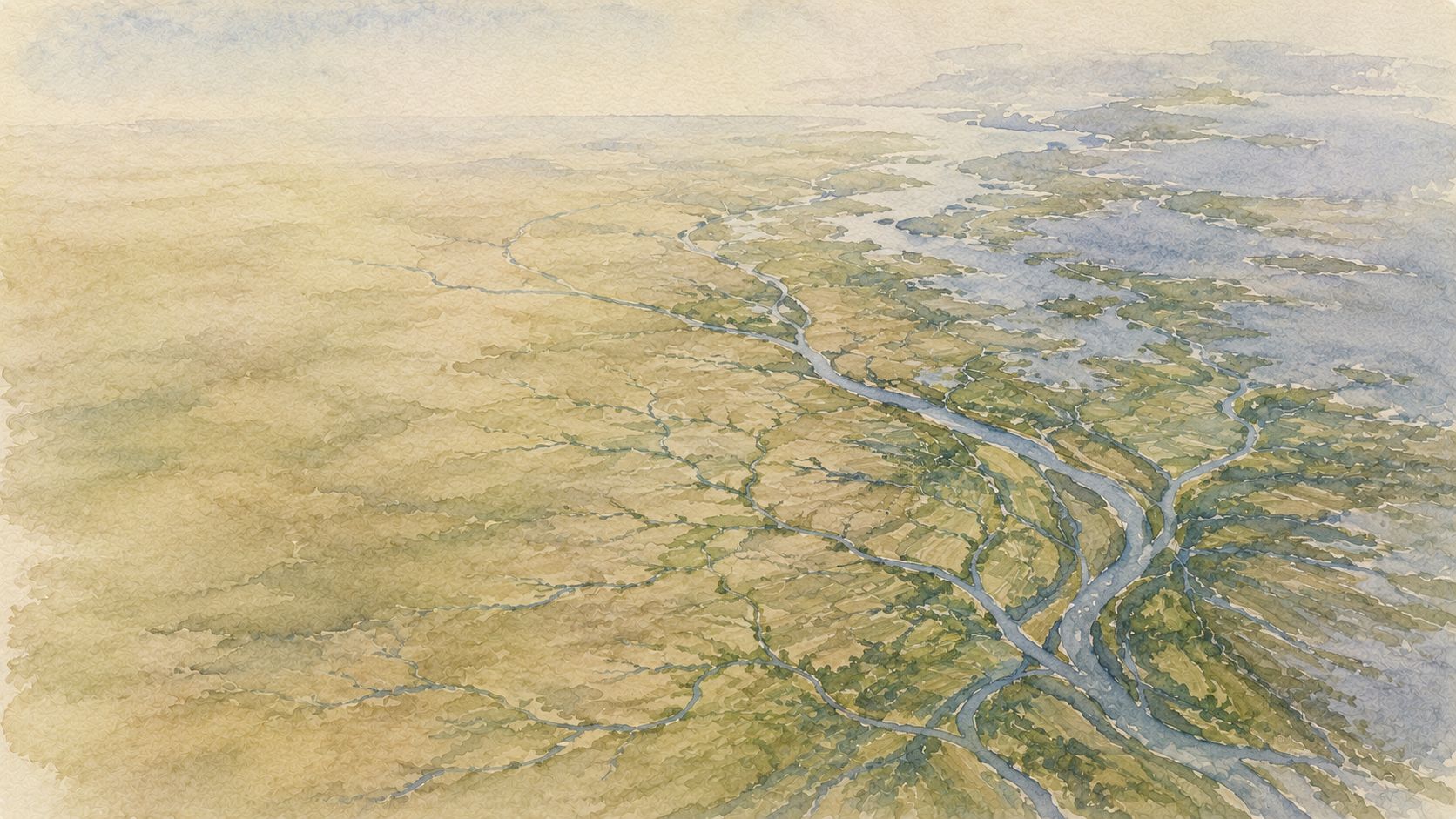
La llanura del sur no es roca antigua con tierra encima. Es el depósito de los propios ríos, miles de años de limo soltado al frenarse la corriente, acumulado en una vega casi perfectamente llana, cruzada por cauces cambiantes y abierta, en su extremo sur, a las marismas.
Por ser tan plana, los ríos vagan. Un cauce que alimentaba una ciudad podía moverse, y se movió, y una ciudad alimentada por un cauce que se mueve estaba en serios apuros. Varios yacimientos antiguos quedan hoy muy lejos de cualquier agua.
La lluvia del sur no basta para cultivar. Ese solo hecho descarta el modo evidente de vivir y obliga al otro.
El excedente venía del riego, y el riego exige acuerdo
Riega la llanura y resulta extraordinariamente productiva. El limo es fértil, la estación de cultivo es larga y la cebada de regadío puede rendir muchísimo.
Pero el riego no es cosa que una casa haga sola. Hay que abrir los canales, y luego se ciegan de sedimento y hay que limpiarlos, cada año, para siempre. El agua tomada aguas arriba es agua que no llega aguas abajo. El trabajo hay que organizarlo, el mantenimiento hay que imponerlo y los pleitos los tiene que resolver alguien.
Así que el excedente que alimentó a los primeros asentamientos densos de aquí no fue un regalo de la tierra; fue el producto de un trabajo coordinado. Esa es la versión honesta de por qué las ciudades aparecen en esta llanura: no porque fuera fácil, sino porque volverla productiva exigía que la gente se organizara a gran escala, llevara cuenta de las obligaciones y respondiera ante un centro.
Las carencias que construyeron una civilización
La llanura no tiene casi piedra de construcción, muy poca madera y ningún mineral metálico. Lo que tiene, en cantidad prácticamente ilimitada, es barro y cañas.
Así que construyeron en adobe y caña, y comerciaron por todo lo demás: madera de las montañas, piedra, cobre, y lapislázuli que llegaba desde unos tres mil kilómetros, de lo que hoy es Afganistán. Una cuenta de lapislázuli en una tumba de Ur es el recibo de una red de intercambio que cruzaba montañas y desiertos.
Y como la arcilla era el material a mano, en arcilla escribieron. No es un accidente menor. El papiro se pudre y el pergamino arde, pero la arcilla cocida es casi indestructible, de modo que una civilización que escribió en lo más barato que tenía es aquella cuyos documentos cotidianos todavía podemos leer cinco mil años después. La pobreza de la llanura en todo material salvo el barro es la razón de que sepamos tanto de ella.
Lo que está atestiguado y lo que añadimos
Cada página factual se escribe a partir de una ficha de referencia que separa la evidencia del relato, afirmación por afirmación. Esta es esa ficha, completa.
Periodo: De los periodos de El Obeid a Uruk, Baja Mesopotamia (hacia el VI al IV milenio a. n. e.)
Lo que sostienen las fuentes
- Mesopotamia significa «entre los ríos» (del griego); la tierra es la llanura aluvial formada por el limo del Tigris y el Éufrates, en lo que hoy es el sur de Irak.
- Las marismas y los brazos del sur permitían regar; fue ese excedente, y no la lluvia, lo que alimentó aquí por primera vez un poblamiento denso.
- La llanura apenas tiene piedra, madera o metal propios, así que su gente construyó en adobe y caña y comerció por lo demás; la arcilla y la caña se volvieron los materiales de la vida diaria, la escritura incluida.
Lo que añade nuestro relato
La crónica habla de esta llanura como de algo antiguo y de larga memoria. Eso es atmósfera, no una afirmación.
Lo que nunca afirmamos
Que los ríos, la tierra o sus pueblos fueran hechos o moldeados por alguien ajeno al registro humano, o que las marismas oculten algo nuestro.
Fuentes
- Wikipedia: Mesopotamia
- Wikipedia: Tigris–Euphrates river system
- Wikipedia: Mesopotamian Marshes
- Wikipedia: Ubaid period
- Referencia
HIST_LAND_BETWEEN_RIVERS- Última revisión
Cita sugerida: Crónicas de Uruk, «La tierra entre los ríos» (HIST_LAND_BETWEEN_RIVERS), revisado el 2026-07-26.
Las lecturas de los signos y nombres sumerios siguen el uso académico donde el valor está bien atestiguado, y se señalan para revisión especializada donde es discutido. Si encuentra un error, queremos saberlo.
En la crónica
La crónica habla de esta llanura como de un lugar antiguo y de larga memoria. Eso es atmósfera, no una afirmación.
Los ríos, la tierra y la gente que la habitó son del registro. No les añadimos nada.
Preguntas frecuentes
- ¿Dónde está exactamente Mesopotamia?
- La tierra entre el Tigris y el Éufrates, en su mayor parte el Irak actual, con partes que se extienden a Siria, el sureste de Turquía e Irán. Las ciudades sumerias de este sitio están en la llanura aluvial del sur, cerca de las marismas y del fondo del Golfo.
- ¿Por qué surgieron aquí las primeras ciudades y no en un sitio más fácil?
- En parte porque la agricultura de regadío sobre este limo produce un excedente muy grande, y en parte porque obtenerlo exige organización: canales que abrir y limpiar, derechos de agua que arbitrar, trabajo que coordinar. La llanura premiaba a quienes construían instituciones, y esas instituciones son casi todo lo que una ciudad es.
- ¿Por qué escribían en arcilla?
- Porque la arcilla era el material abundante y la piedra, la madera y el papiro no lo eran. Resultó ser la superficie de escritura más duradera que nadie haya usado: las tablillas de arcilla sobreviven al fuego, al enterramiento y a los milenios, y por eso la vida diaria mesopotámica está mejor documentada que la de muchas sociedades posteriores y más ricas.
Sigue leyendo
Cuando tablillas sinceras se contradicen
Cinco relatos sinceros de un suceso, y cómo leerlos.
Sellos cilíndricos
Una firma y un cierre en un solo gesto rodado.
Depósitos de fundación
Mensajes enterrados en los cimientos, dirigidos al siguiente constructor.
Los Anunnaki
Quiénes fueron realmente los Anunnaki en la creencia sumeria, y cómo una familia de dioses antiguos se volvió un mito moderno.
Sigue explorando la Crónica