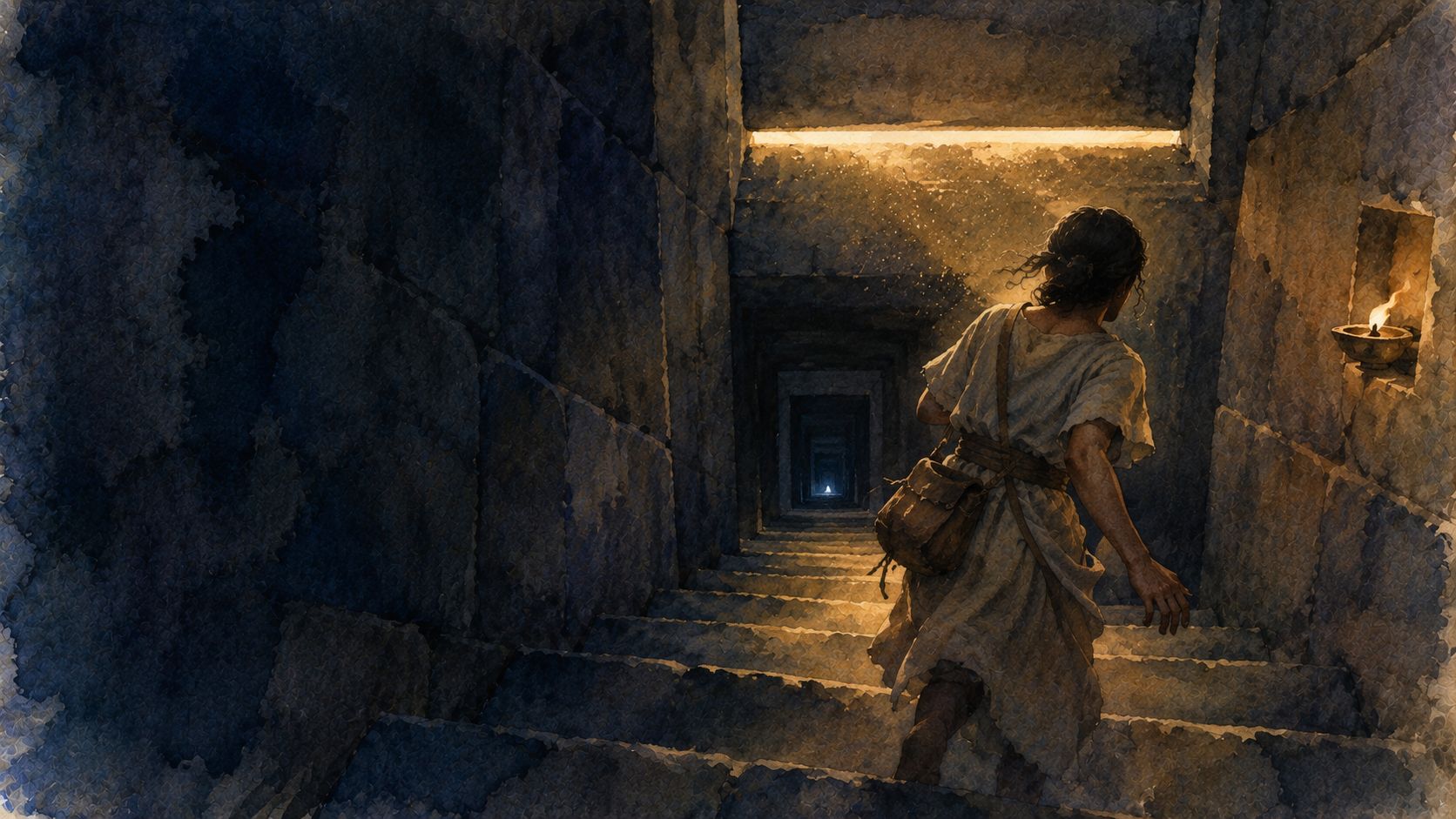
Chronicles of Uruk
One living world across three eras, lived through the eyes of those who were there.
Ancient Sumer, the present day and New York in 2314 are one story, and it keeps growing. You do not watch it from outside: you step into a life, feel what it feels, and what you choose stays with you.
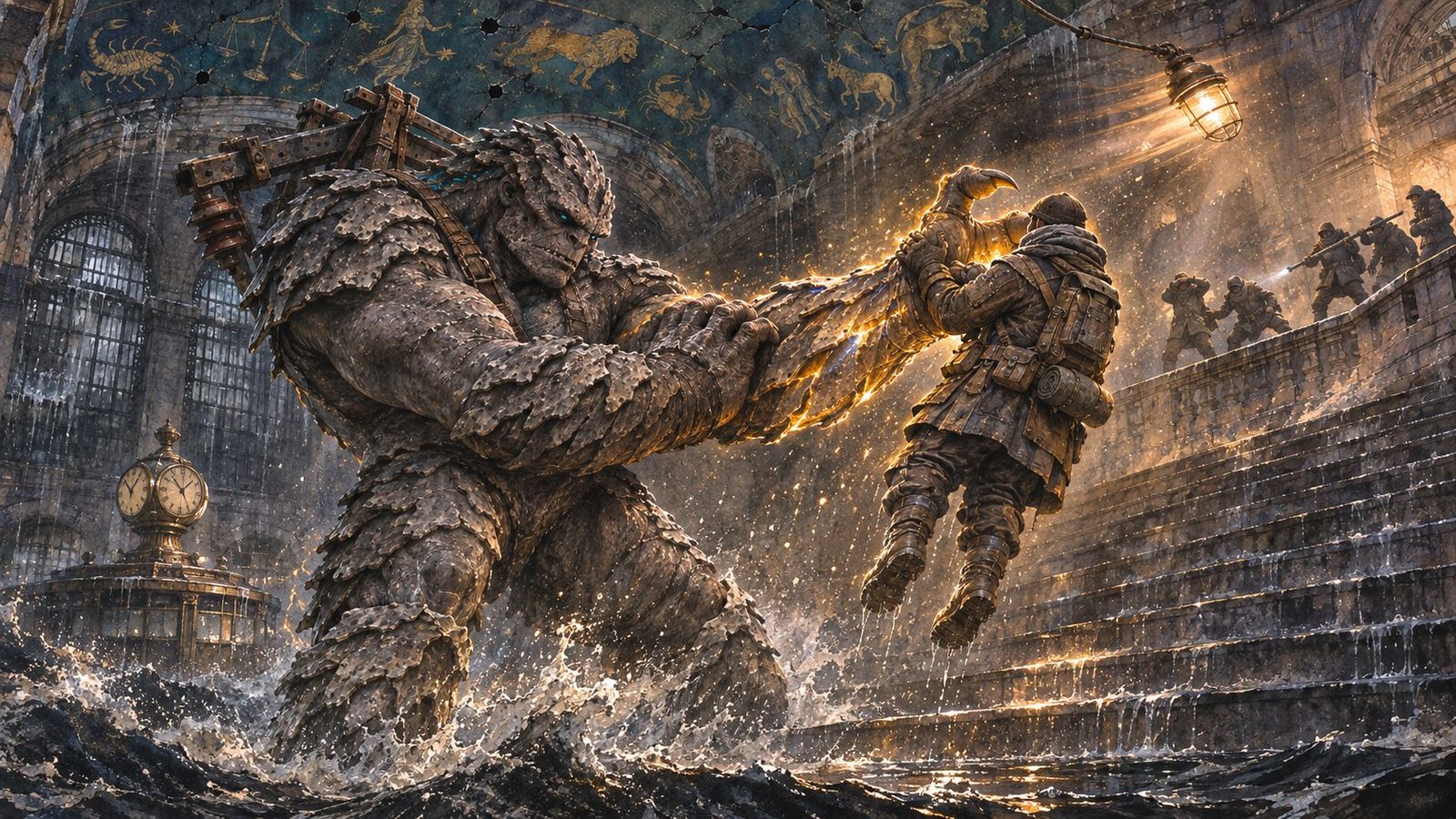
Grand Central, 2314: you ride a giant, and he fights every move you make.
A story and an adventure are not the same thing
A self-contained campaign, walked in acts. It has a mouth that closes behind you, a satchel whose contents you must choose before you set out, and thresholds that ask for payment you actually feel. Where a story is read, an adventure is survived.
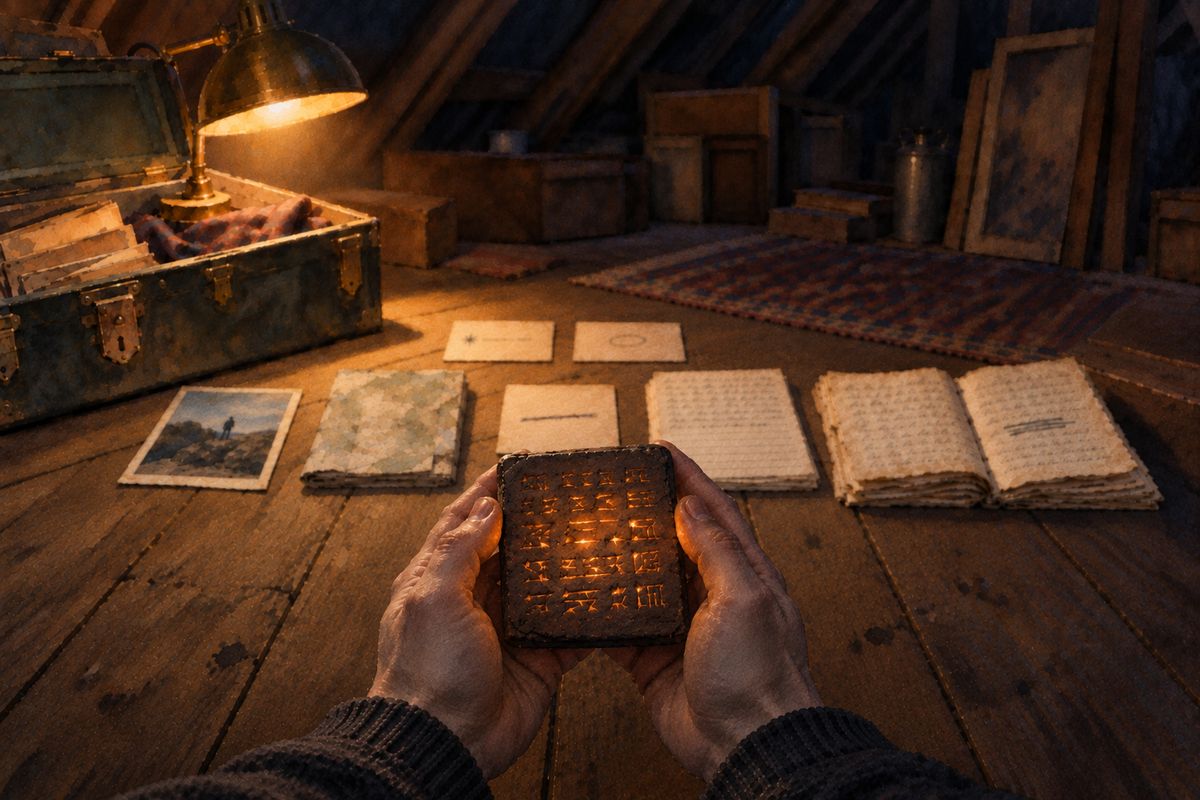
A story
- Read like an illustrated novel, one choice at a time.
- No death. The story bends around you and carries on.
- You keep every name and word you learn, for good.
- As long as its telling needs: a full season, or a short story in one sitting.
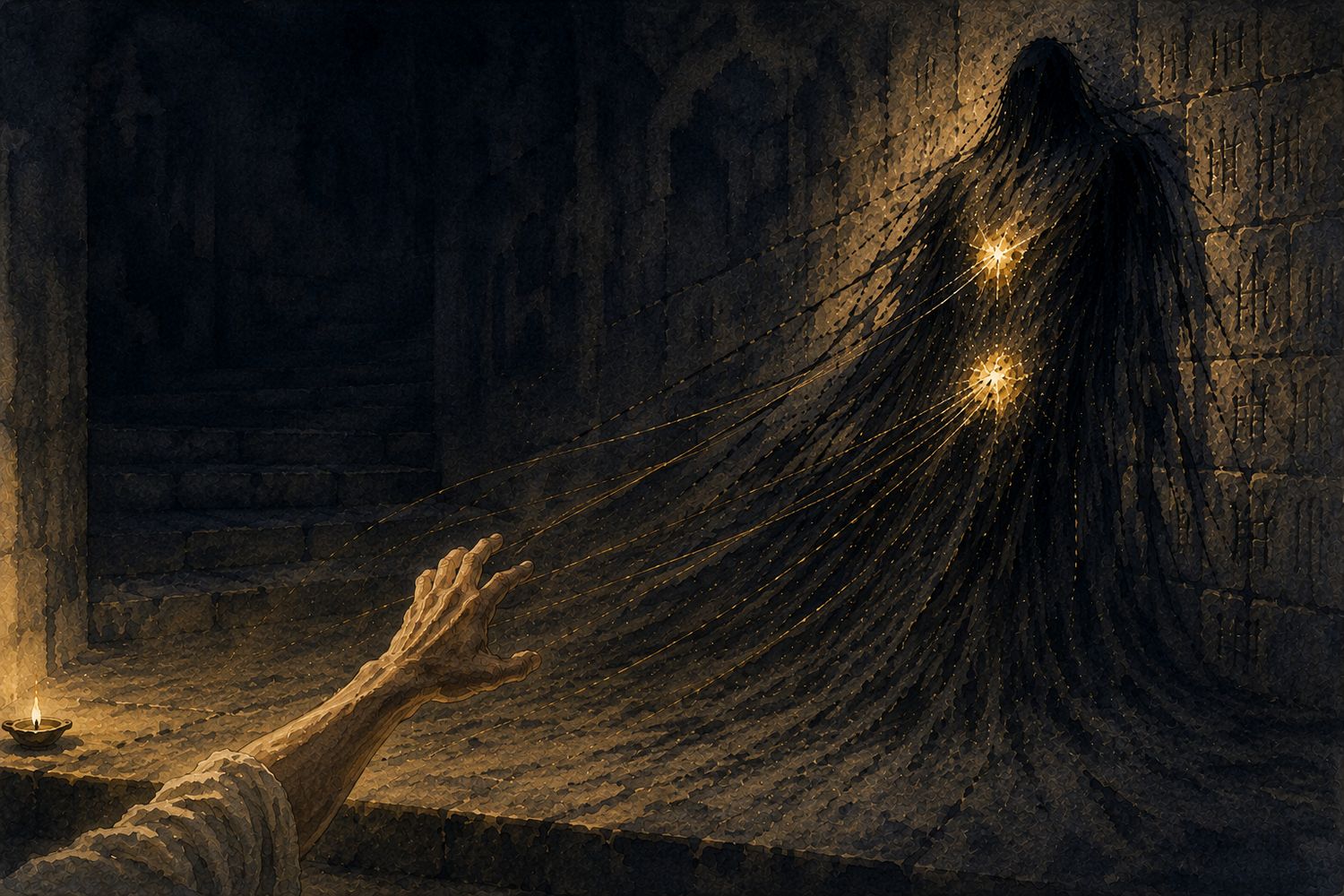
An adventure
- Walked like an expedition, act by act.
- Real failure. You return to a seal you pressed and walk it again.
- What you carry can be spent, taken at a threshold, or lost.
- A few acts, one road through, and a way back out.
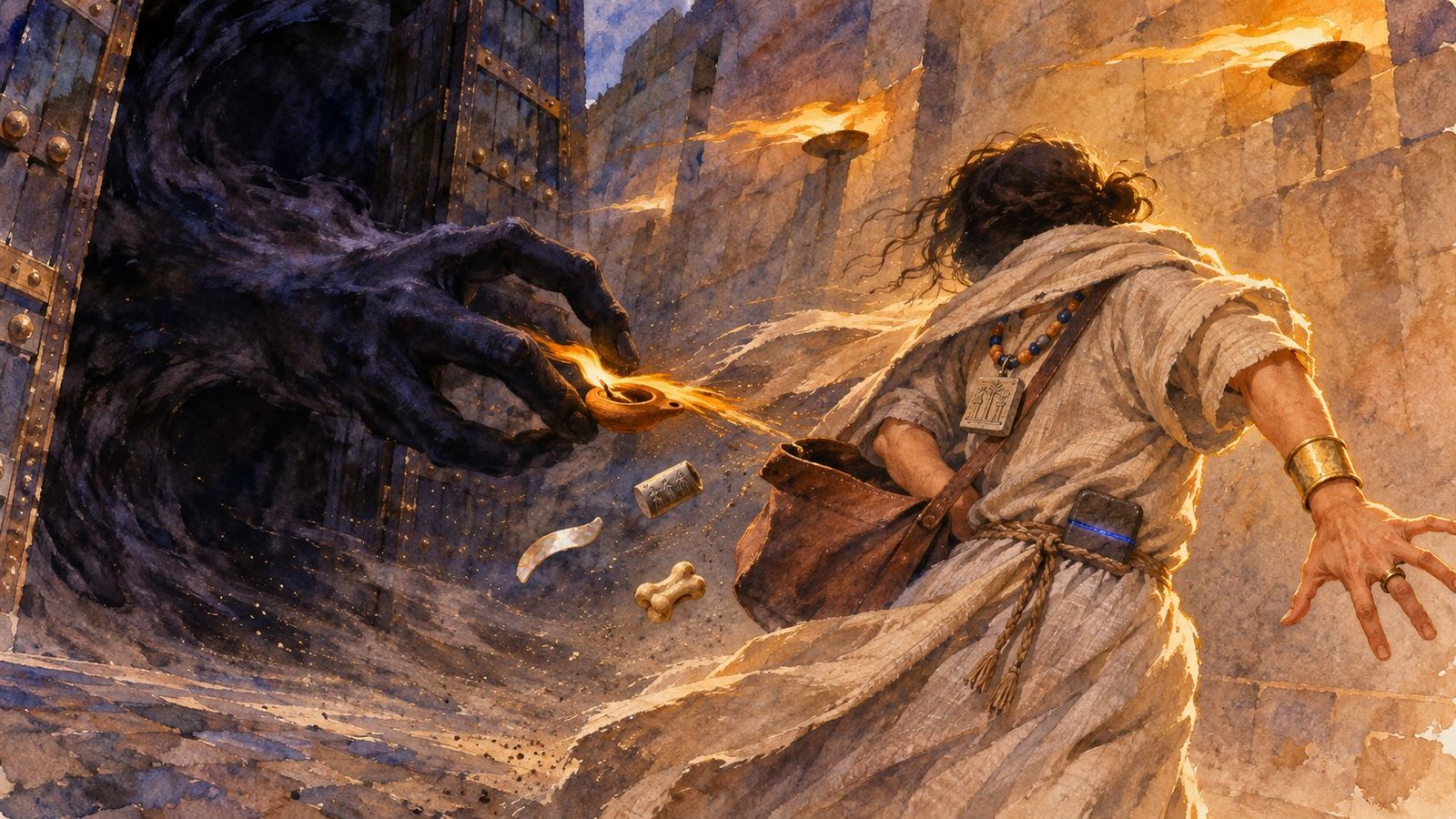
Every gate has a keeper, and every keeper takes something you brought.
Tabletop rules, adapted
There is a twenty-sided die under the prose
If you have played at a table, you already know this system. It is the same grammar of dice, modifiers and edges, with the arithmetic done for you and nobody to schedule an evening with.
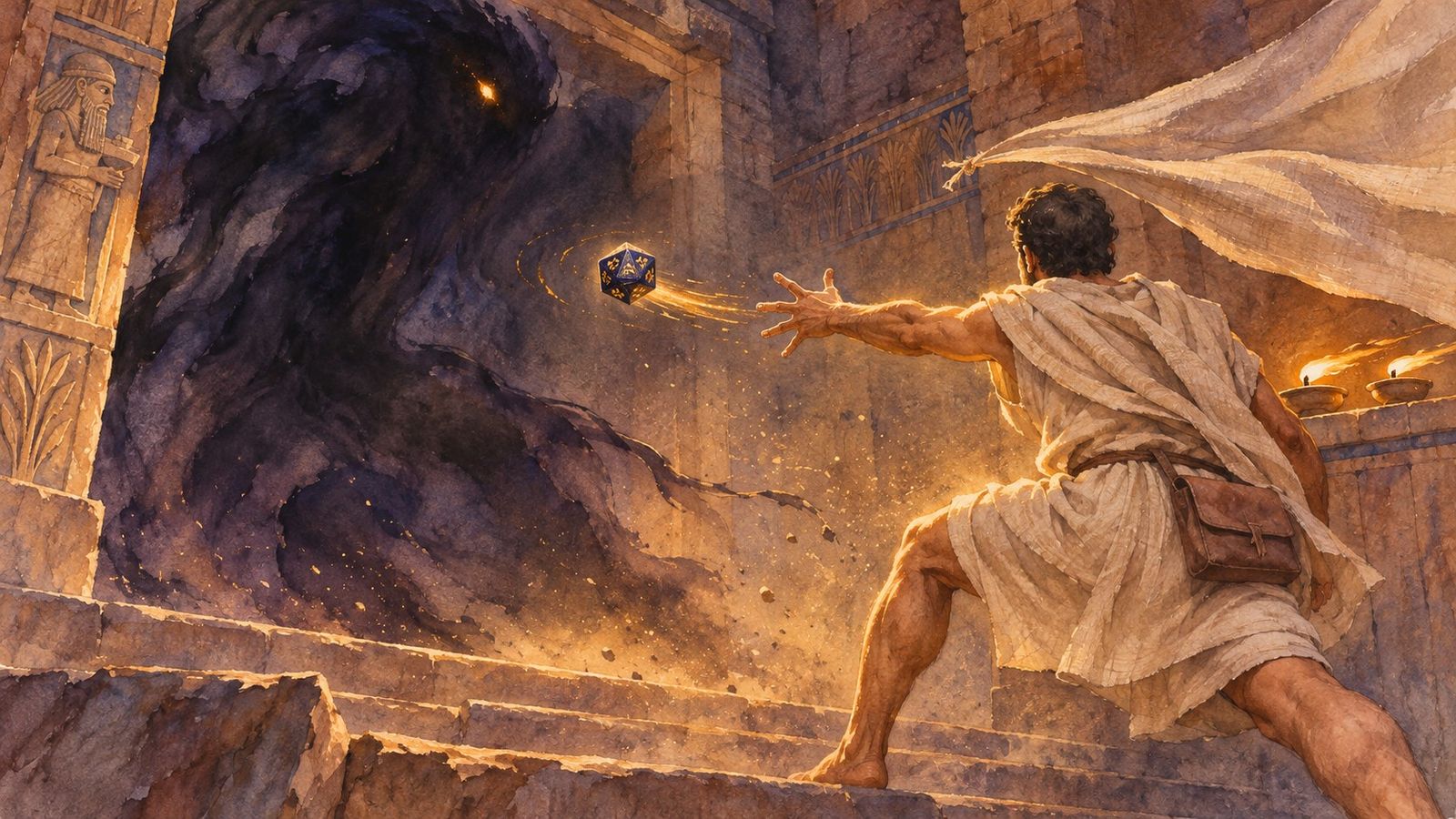
the moment asks 9 · clean at 14
- +3·you have read 3 signs before this one
- +2·you have touched what the minister fears
It lands clean, because of what you already did.
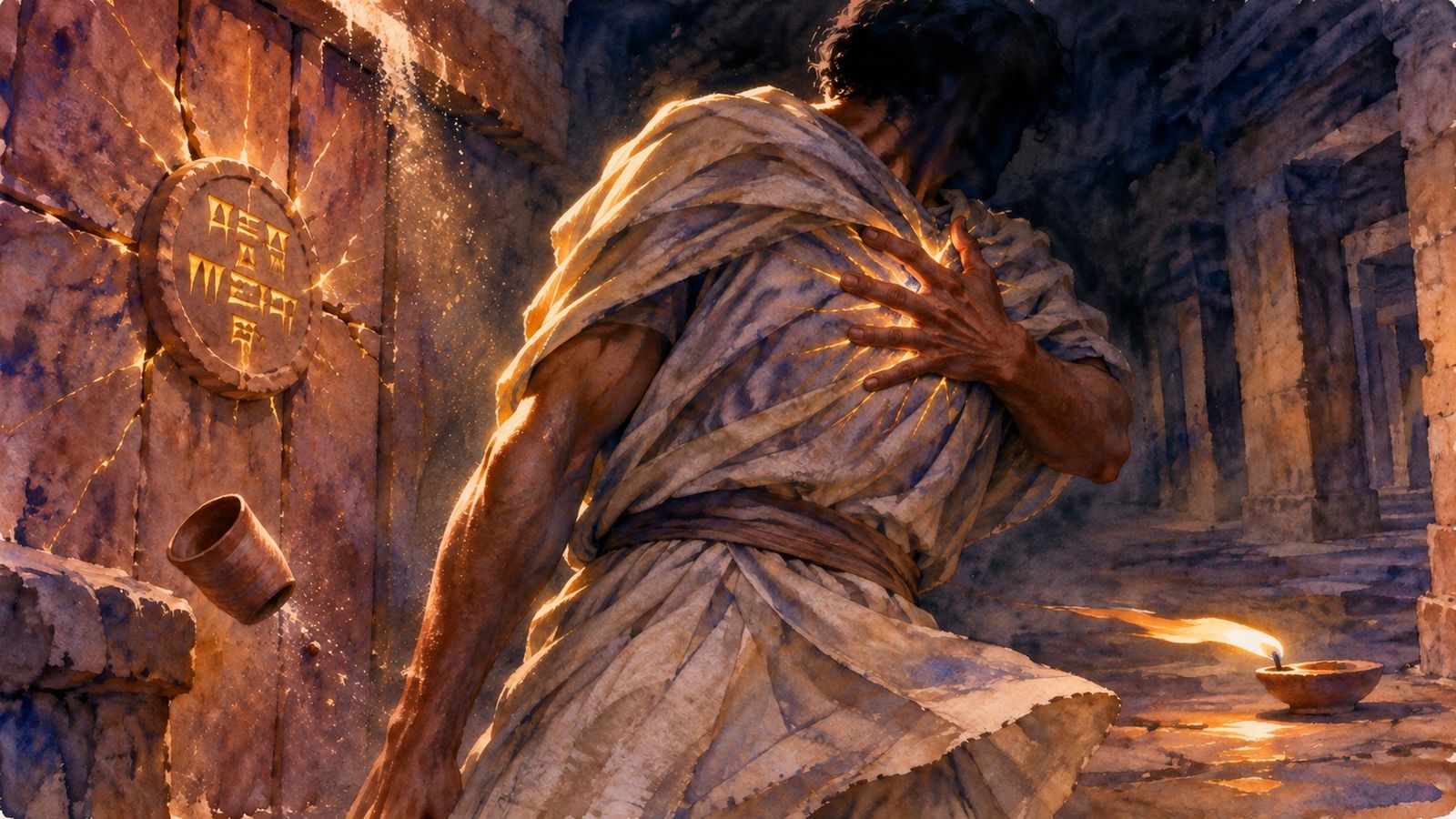
A host who takes the hands back
You ride someone else's body, and he is not a costume. He argues, refuses and is afraid. Let your nerve run out and he takes his hands back, and you watch the choice you can no longer make until someone steadies you.
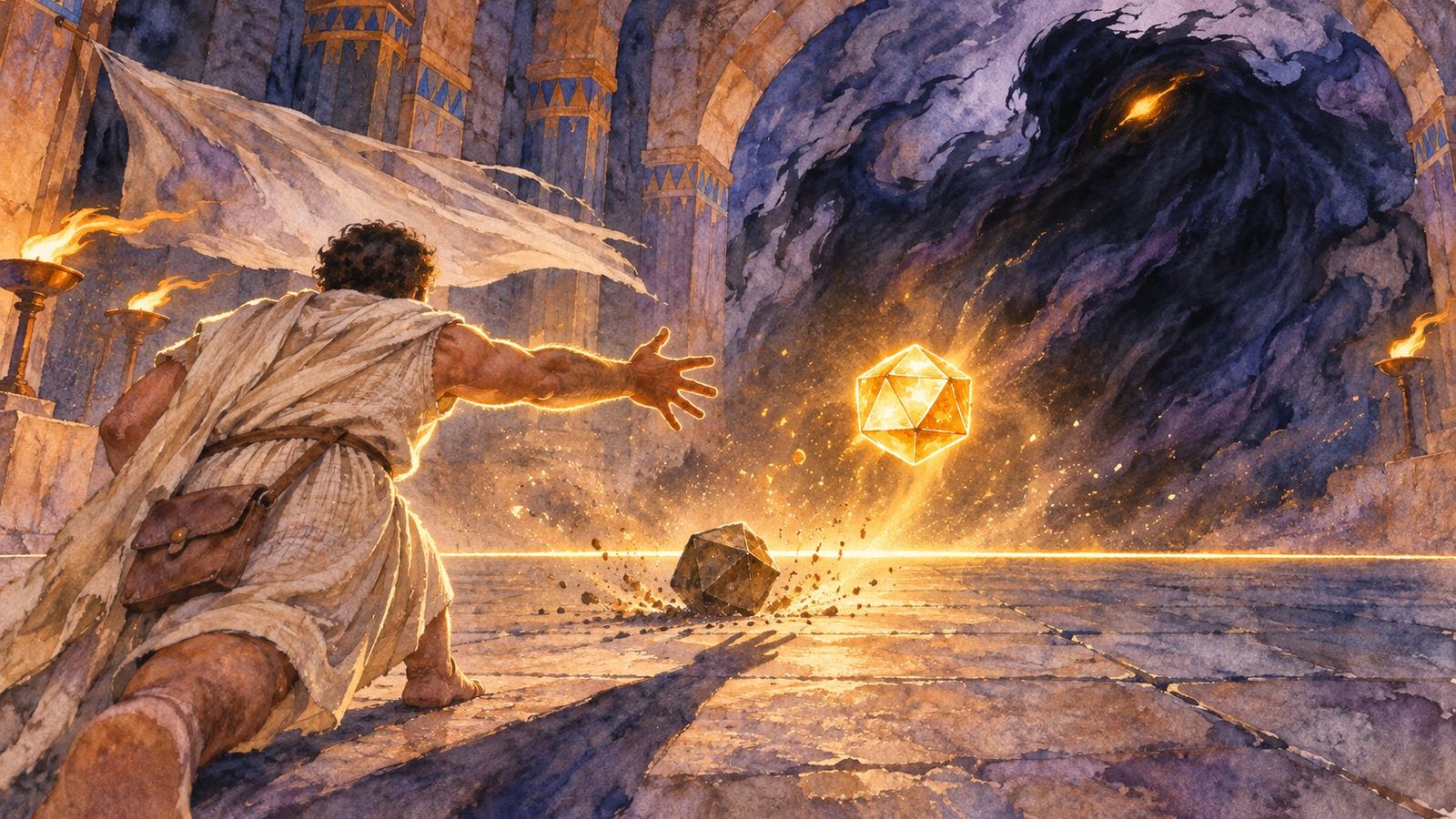
Advantage you watch climb
Prepare well and two dice are thrown. You see the lower one land short, then the higher one carry the number over the line. The best moment the die gives is the one where your preparation visibly saves you.
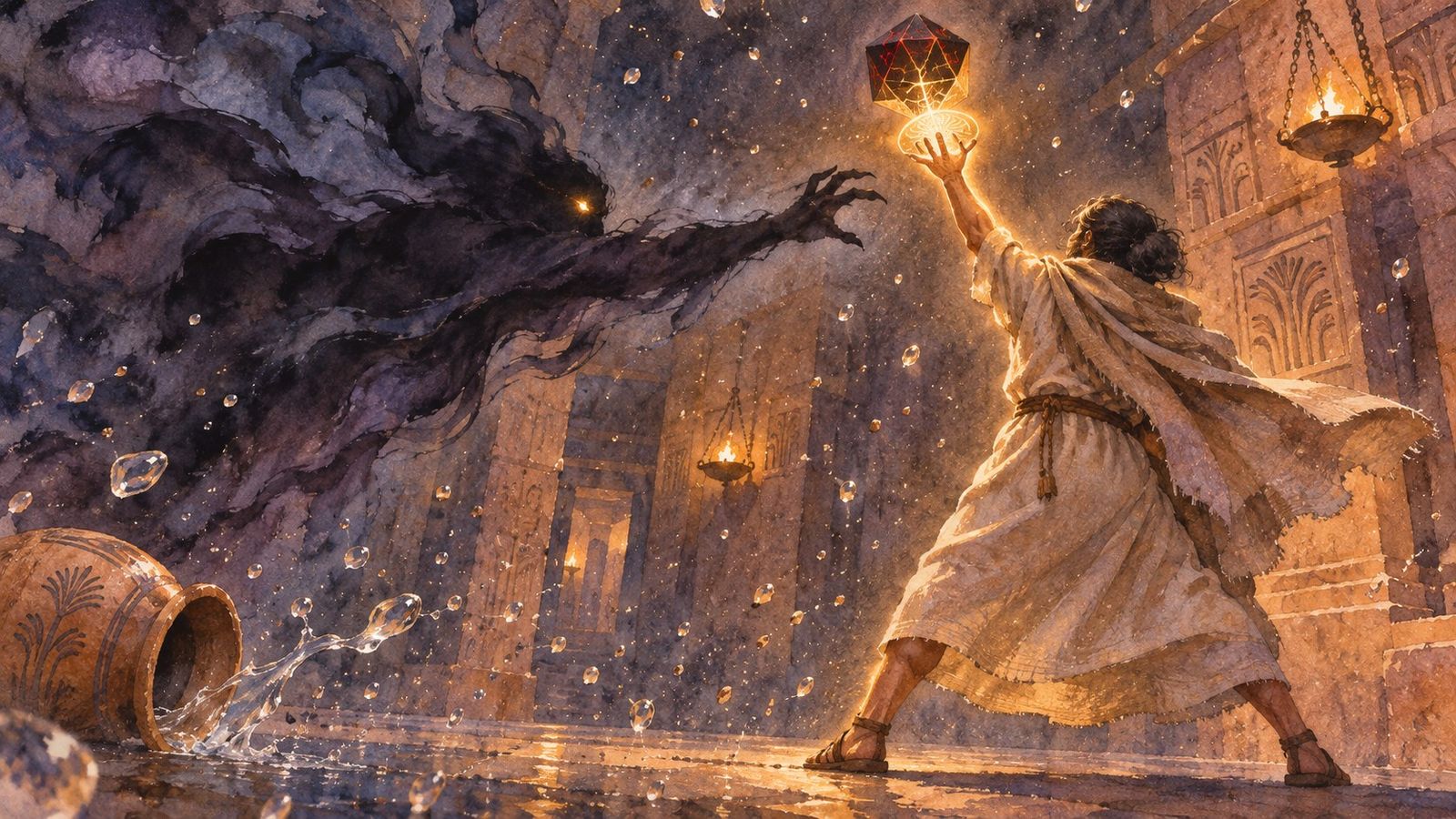
Favor, spent after you see the fail
A roll goes against you and the game holds it on screen. Spend Favor to soften it, or keep it for something worse. You decide with the bad news already in front of you.
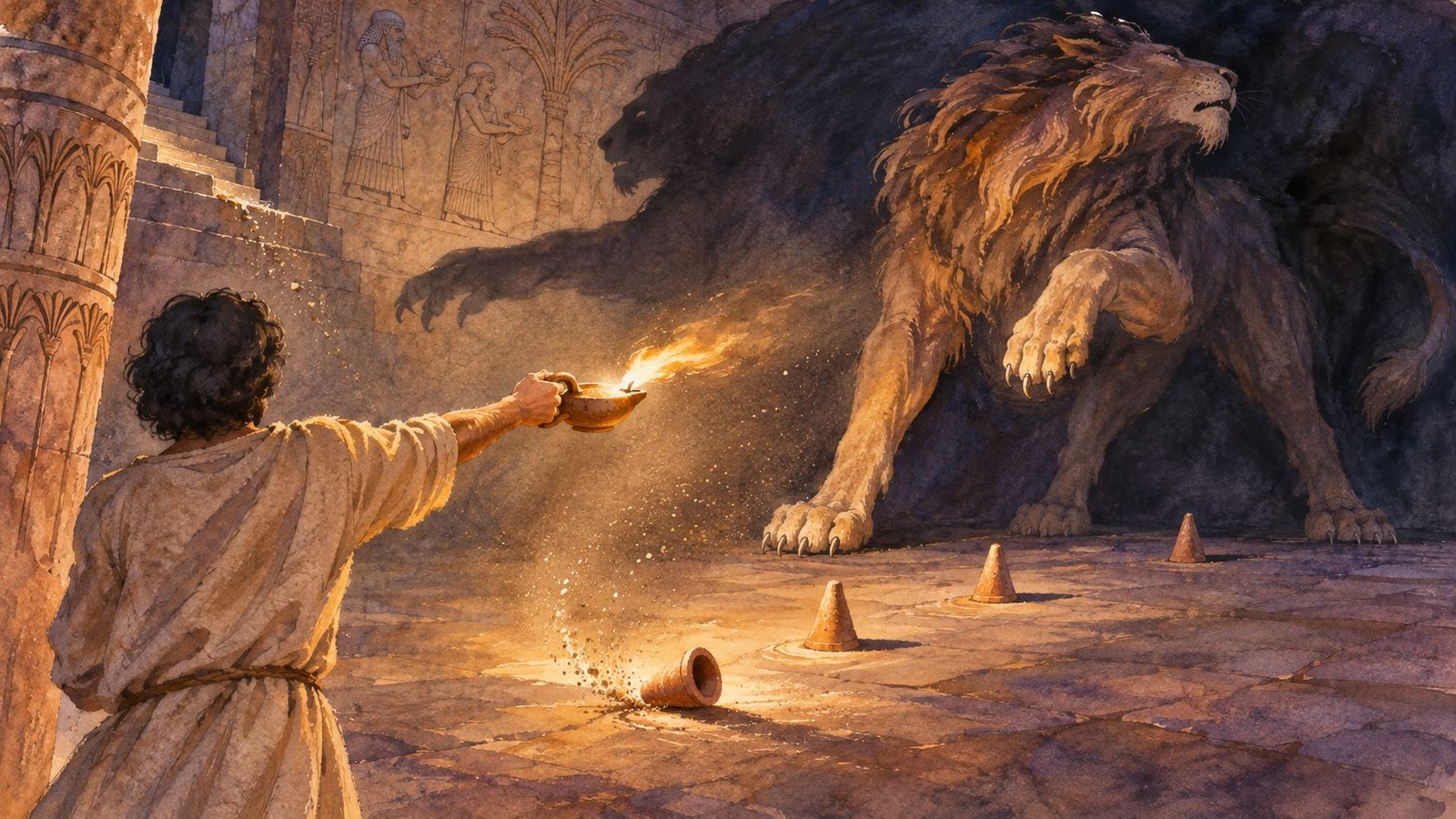
Creatures you can read
Everything that presses on you has one fear and one want, and the game tells you before you commit whether you touch either. A creature you can read is one you can outplay.
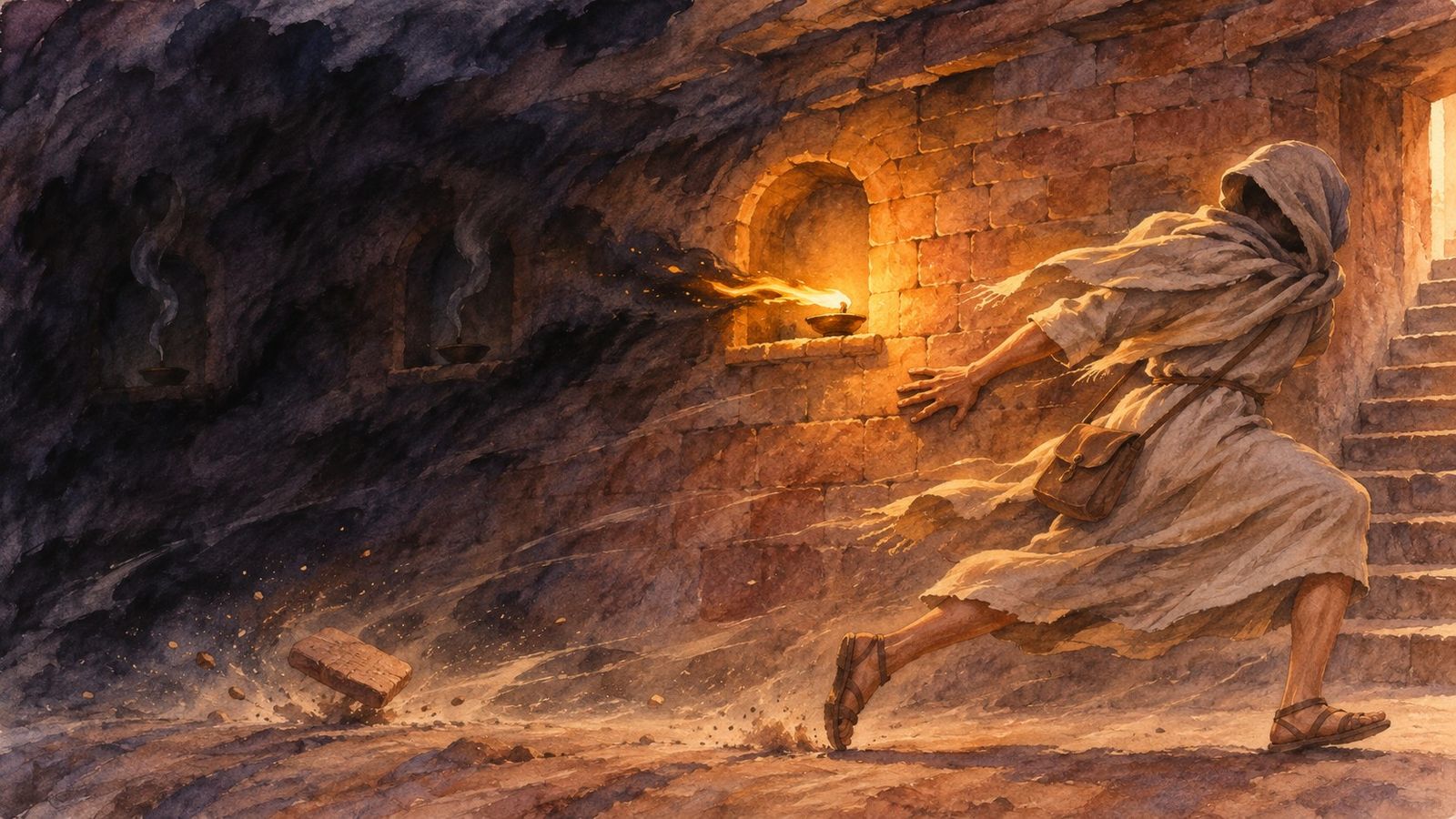
A clock you can see
There are no hit points to grind down. When something hunts you, a clock fills with each exchange, and looking costs nothing. Two steps gone, one left: every move is a real decision.
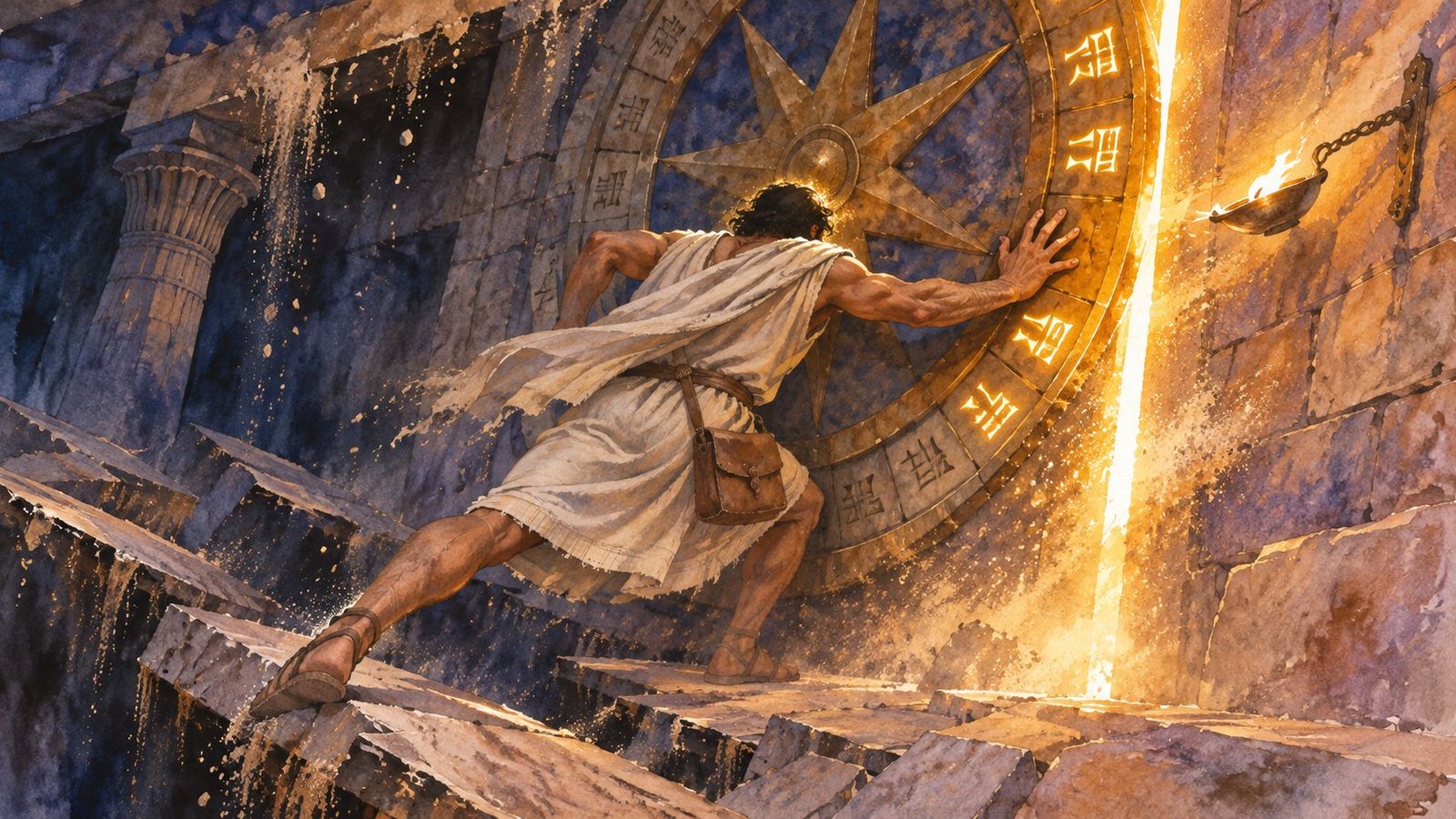
Puzzles in your hands
Some doors want your fingers, not a roll: press the wedges into clay, turn a star wheel, hold a grip that must not slip. Every board can also be settled with a roll, so nothing is locked behind dexterity.
A companion who speaks
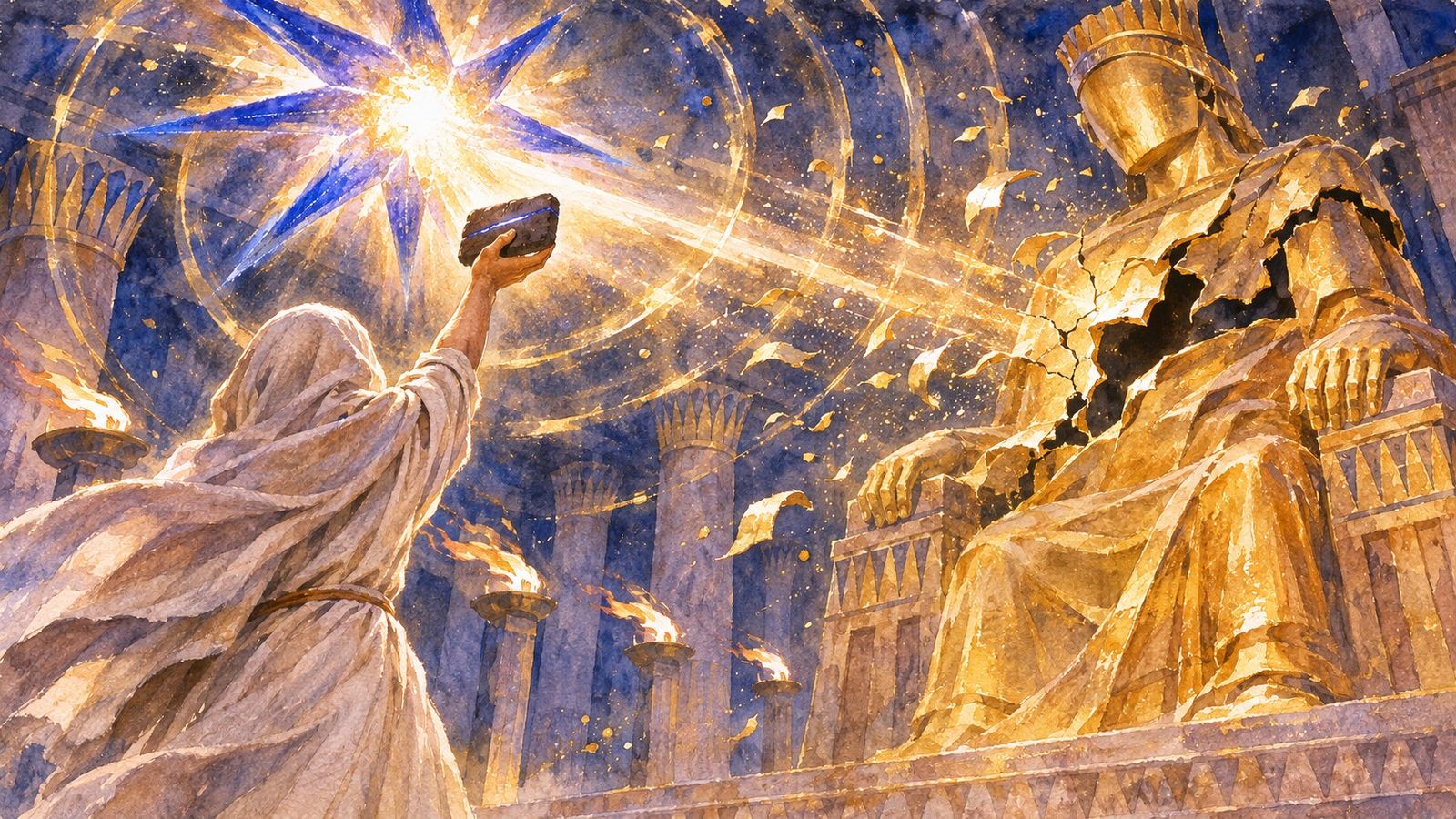
Nisaba, the tablet's light, comes out when you call her. She speaks her lines aloud, warns you before a costly choice, and helps you tell true from counterfeit. Keeping her out has a price, and she will never tell you what to do.
No death, real consequences
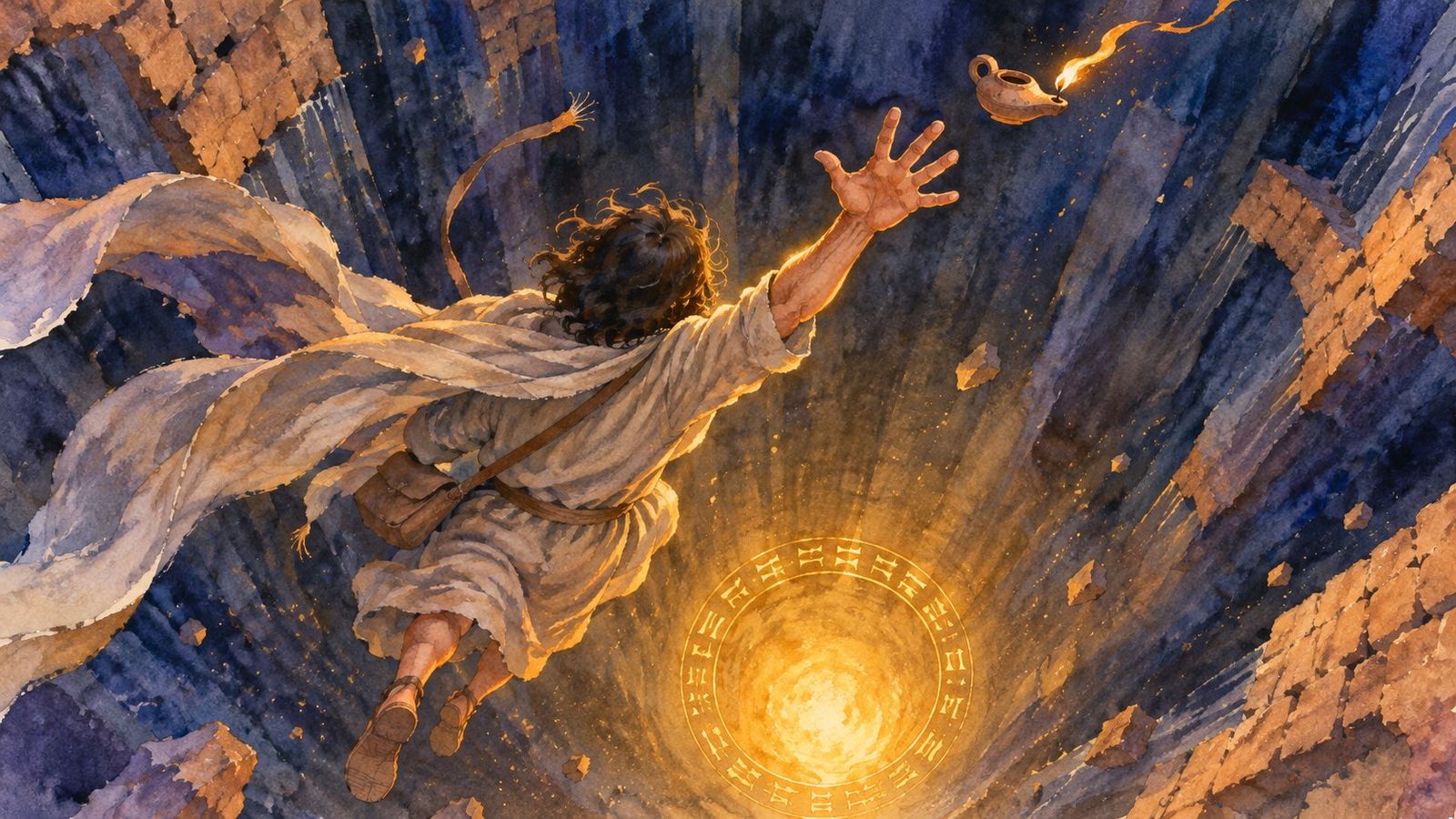
Nobody dies here. Fall, and you wake at a waypoint you sealed, and something you carried stays behind. A bad roll never says try again: it turns the road.
No dungeon master. No party to gather. No sheet to keep and no arithmetic to do. One player, one road, and rules that hold.
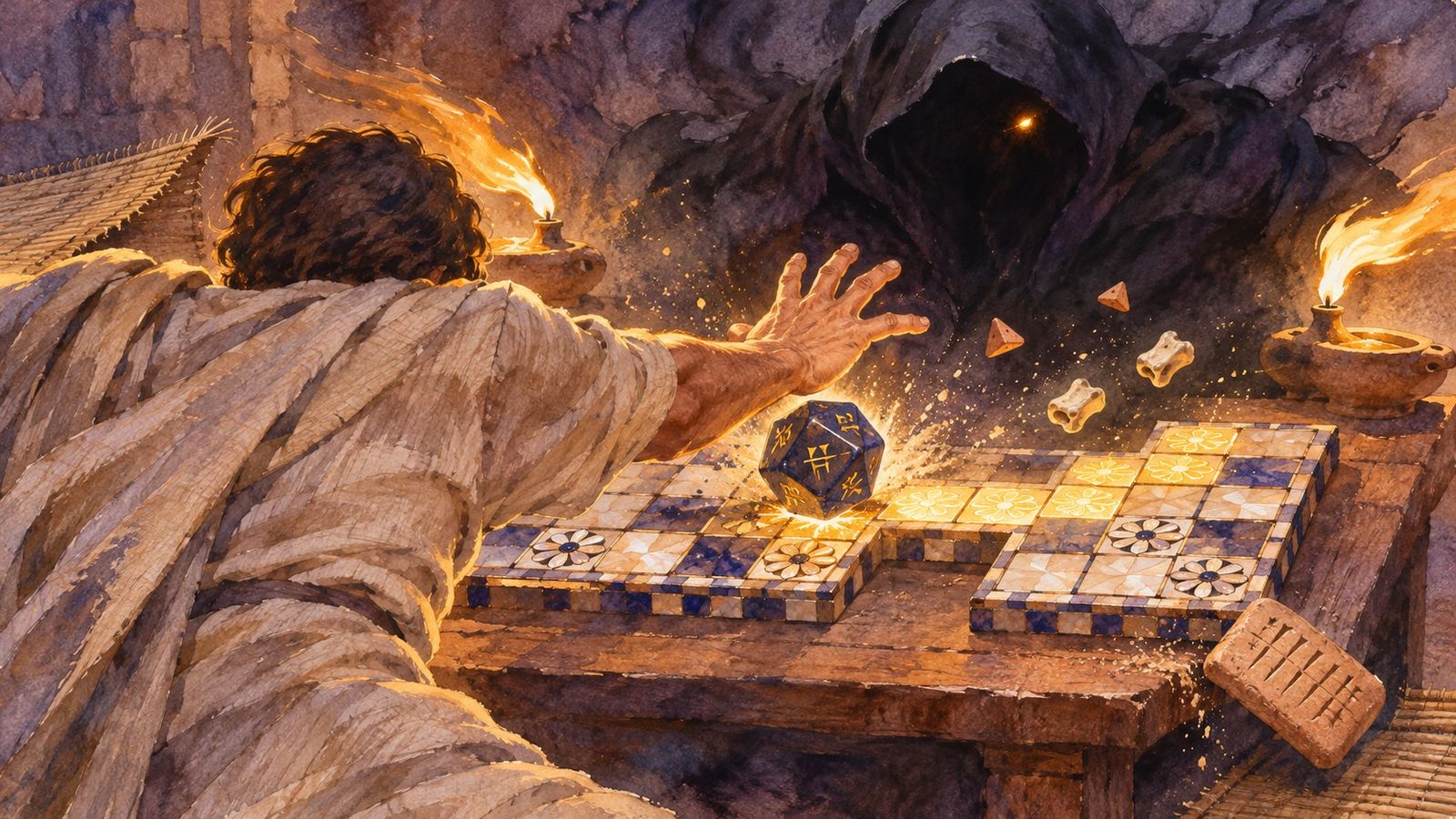
Four and a half thousand years ago, at Ur, the dice were already falling.
The full rules
See how an Adventure really works
The whole system is laid out on a members page: the meters and where they break, one turn from tap to save, the odds behind every roll with a calculator you can play with, the clock step by step, and a side-by-side with D&D. It opens with a free account.
Keep exploring the Chronicle