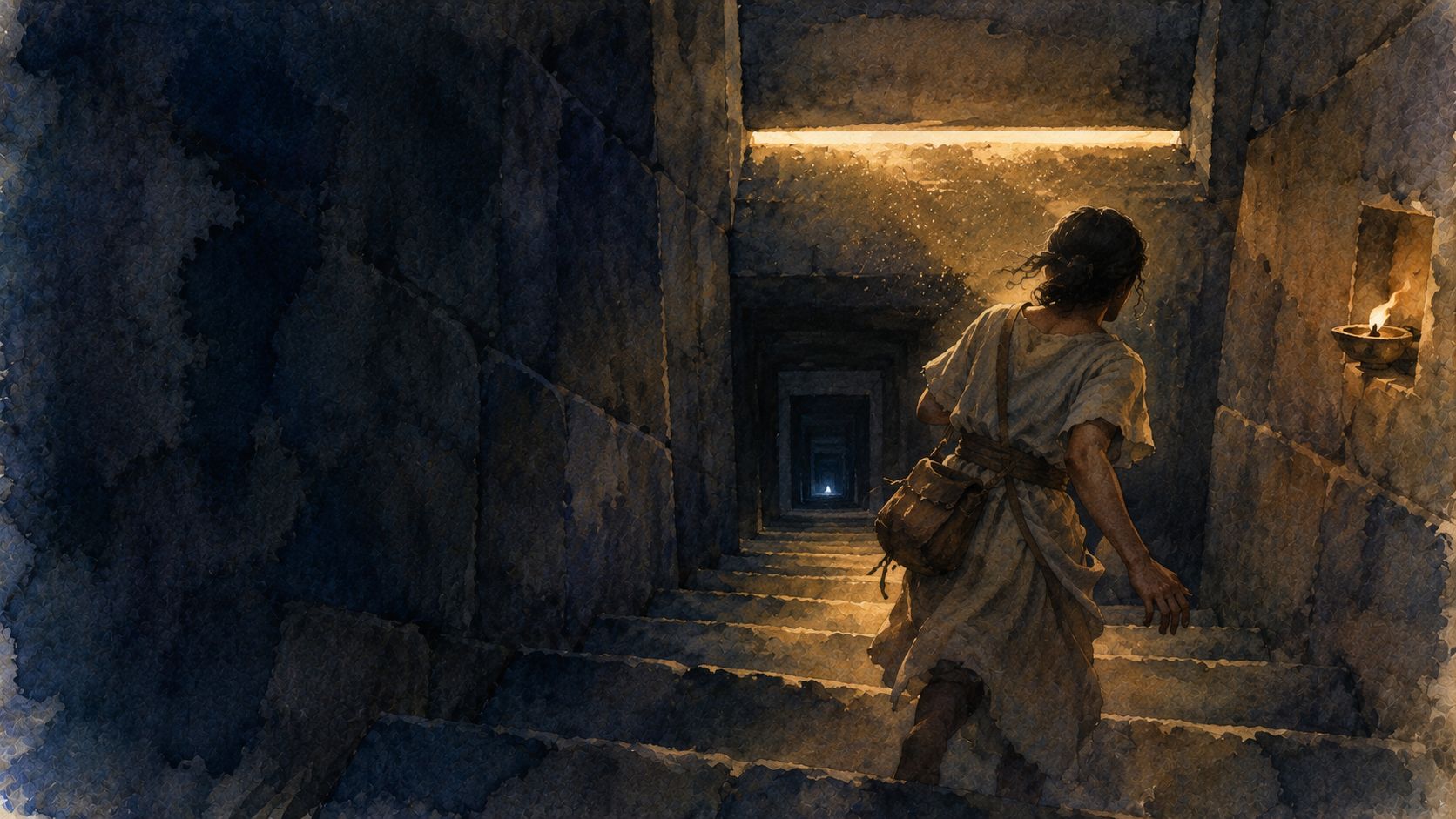
Adventure Chambers
A campaign with something to lose
The stories are yours to read and shape. A chamber is something else: a sealed campaign along a road out of myth, where the world pushes back and what you give up stays given up. There will be many of them, across all three eras. The Descent is the first.
What a chamber is
A self-contained campaign, walked in acts. It has a mouth that closes behind you, a satchel whose contents you must choose before you set out, and thresholds that ask for payment you actually feel. Where a story is read, a chamber is survived.
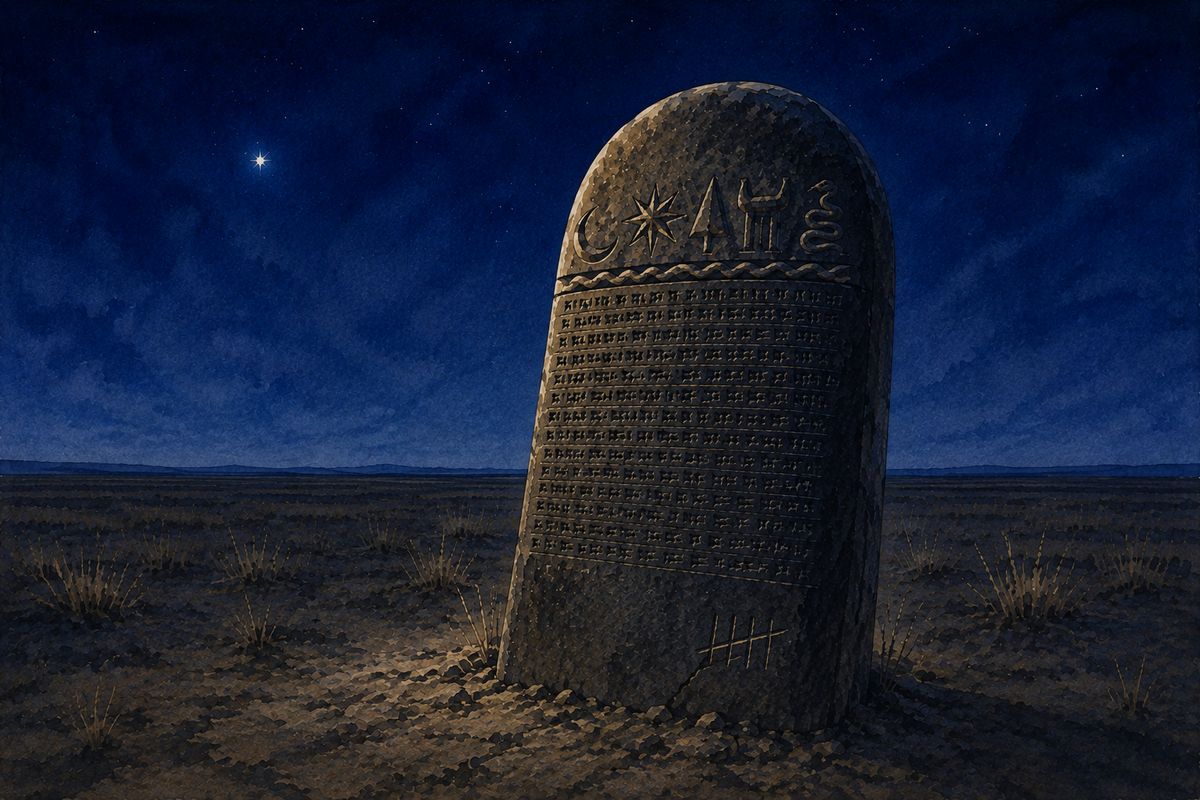
A road out of myth, and a stone that says whose ground this is.
A story and a chamber are not the same thing
A story
- Read like an illustrated novel, one choice at a time.
- No death. The story bends around you and carries on.
- You keep every name and word you learn, for good.
- As long as its telling needs: a full season, or a short story in one sitting.
A chamber
- Walked like an expedition, act by act.
- Real failure. You return to a seal you pressed and walk it again.
- What you carry can be spent, taken at a threshold, or lost.
- A few acts, one road through, and a way back out.

Past the last field, the dark keeps pace with you.
Tabletop rules, adapted
There is a twenty-sided die under the prose
If you have played at a table, you already know this system. It is the same grammar of dice, modifiers and edges, with the arithmetic done for you and nobody to schedule an evening with.
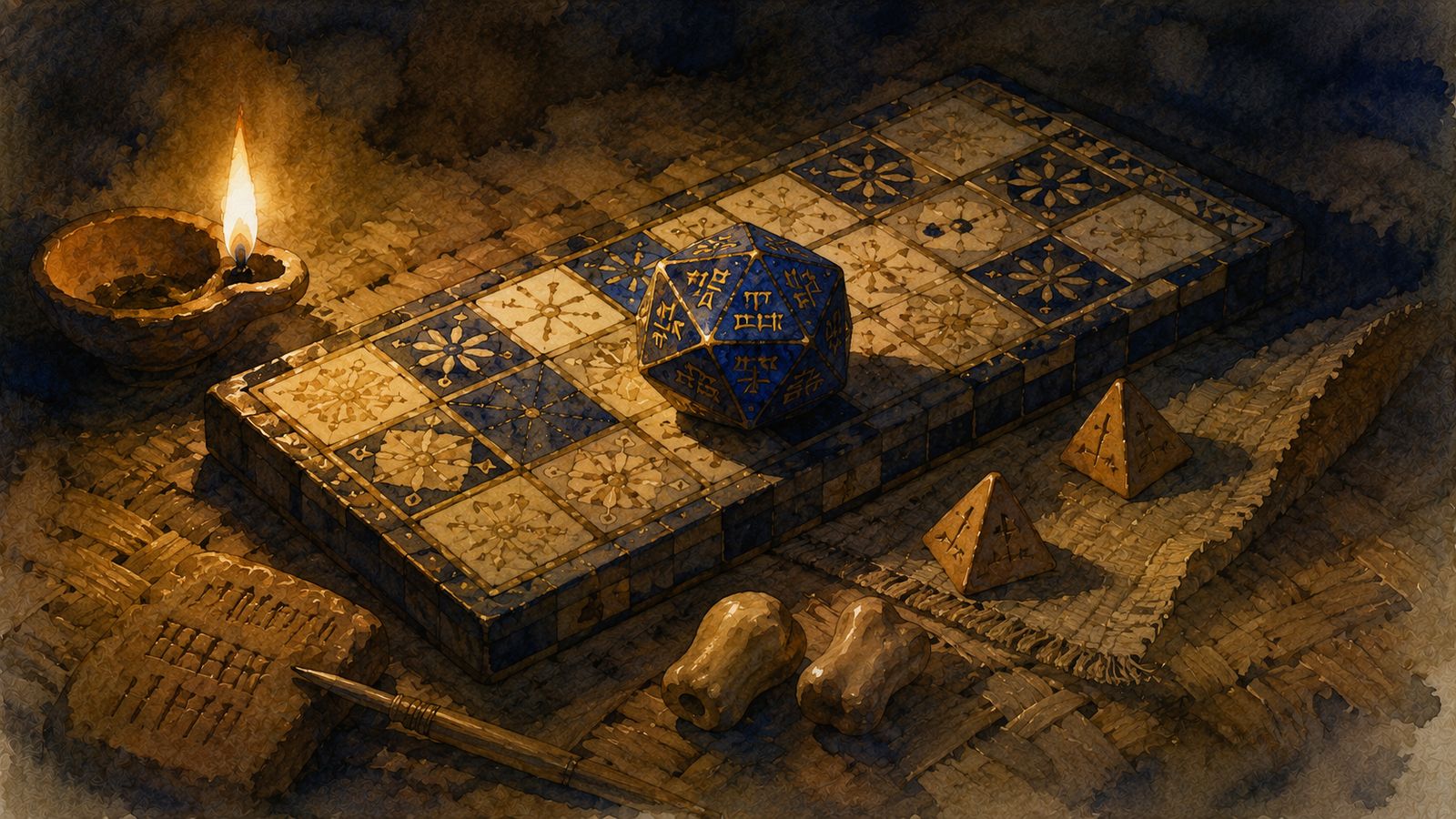
the moment asks 12
- +3·you have read 3 signs before this one
- +2·you have touched what the minister fears
It lands clean — because of what you already did.
The die, and three ways it lands
Every risk rolls a twenty against a difficulty. It does not answer yes or no: it lands strongly, or it lands and charges you for it, or it goes against you. Most of the story lives in that middle band, where you get what you asked for and pay something you did not expect.
Your leanings are your ability scores
Nobody hands you a sheet to fill in. Boldness, empathy, reverence and curiosity are built by what you actually do, and they add to the rolls that suit them. Reading a rite leans on how much real cuneiform you have learned, which means study is a stat.
Advantage, earned in the fiction
Look before you act and the odds tilt. An edge is never a hidden bonus: it comes from something you did in the room, like reading how a thing moves before you speak to it, or carrying a rite it is known to fear, and the game tells you which.
A clock, instead of hit points
When something is hunting you, the tension is a clock that fills, not a bar you grind down. Watching costs nothing. Acting spends a step. Fill it and the worst authored thing happens, which is a beat in the story rather than a number reaching zero.
Favor, to spend on a bad roll
You bank Favor for playing well. When a roll goes against you the game stops and offers it: soften this, or let it stand. It is the one place the dice can be argued with, and spending it is a decision you make with your eyes open.
Some things you do, not roll
A door that wants a sign does not want a dice roll. You press the wedges yourself, turn the ring until it registers, answer the call with the right echo. Every one of them has a tap-to-solve door as well, so nothing is gated behind dexterity.
No dungeon master. No party to gather. No sheet to keep and no arithmetic to do. One player, one road, and rules that hold.
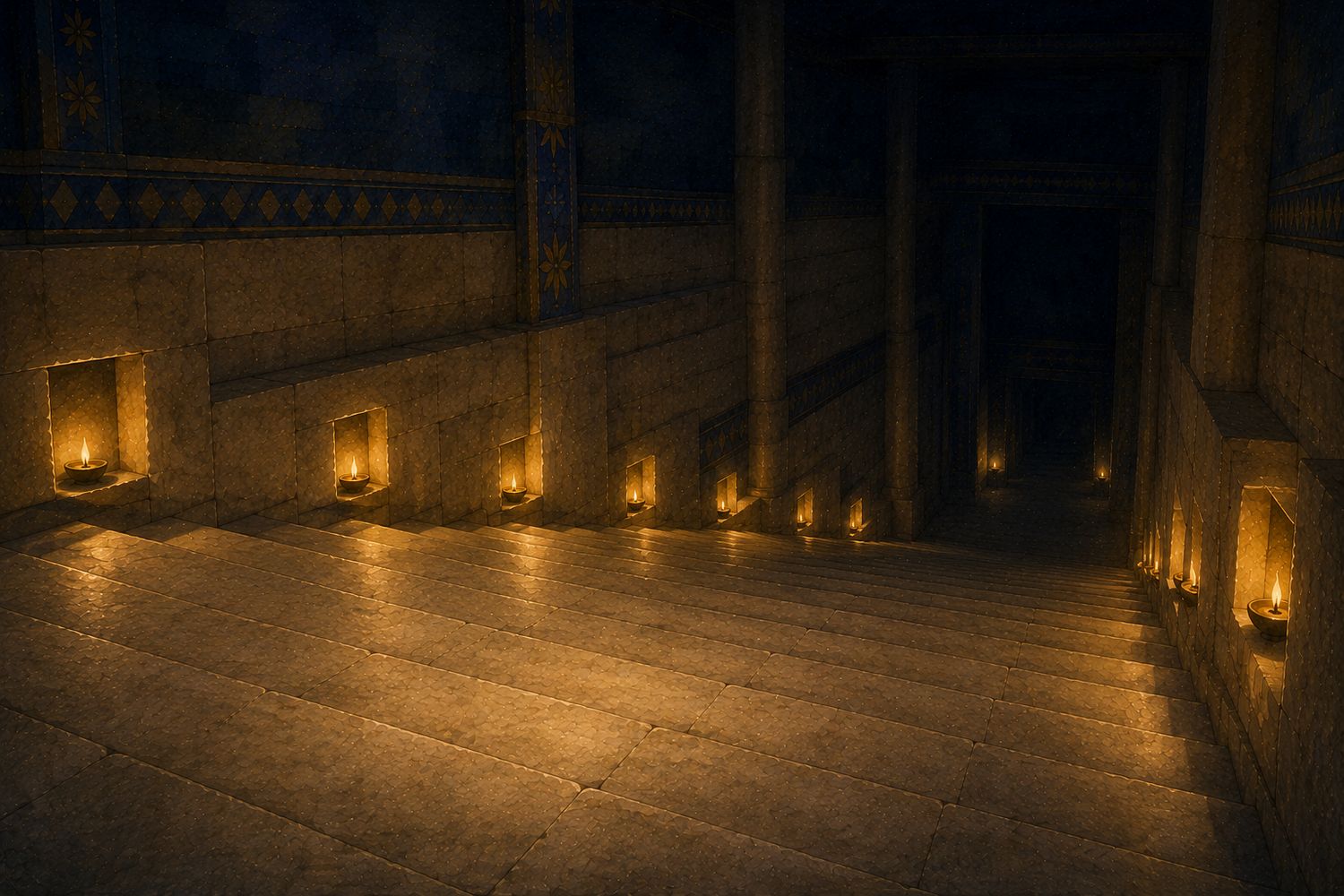
Every chamber has a mouth. It closes behind you.
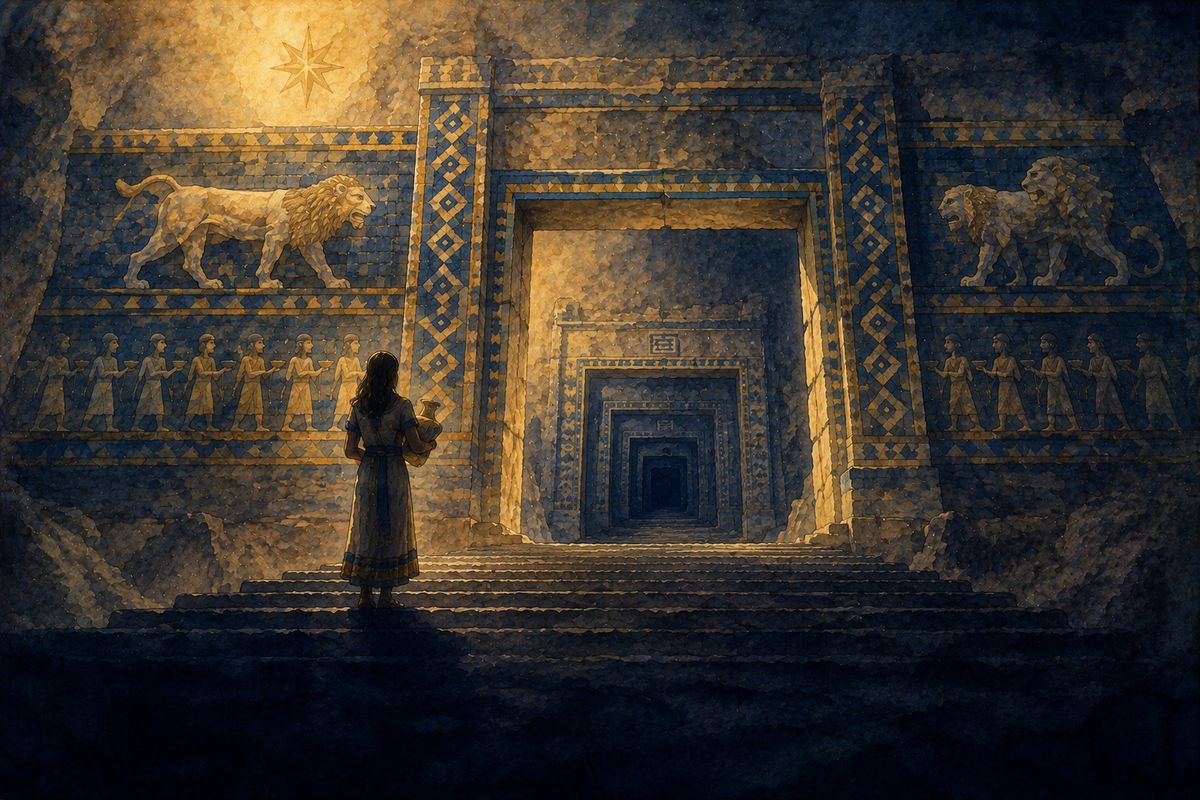
The first chamber
The Descent
The oldest road in myth: gate after gate downward, and at each one the keeper asks for something you brought. It is drawn from the Sumerian descent of Inanna as the tablets actually tell it, and it does not soften the arithmetic. You reach the bottom carrying less than you came with.
The first act is free to walk.
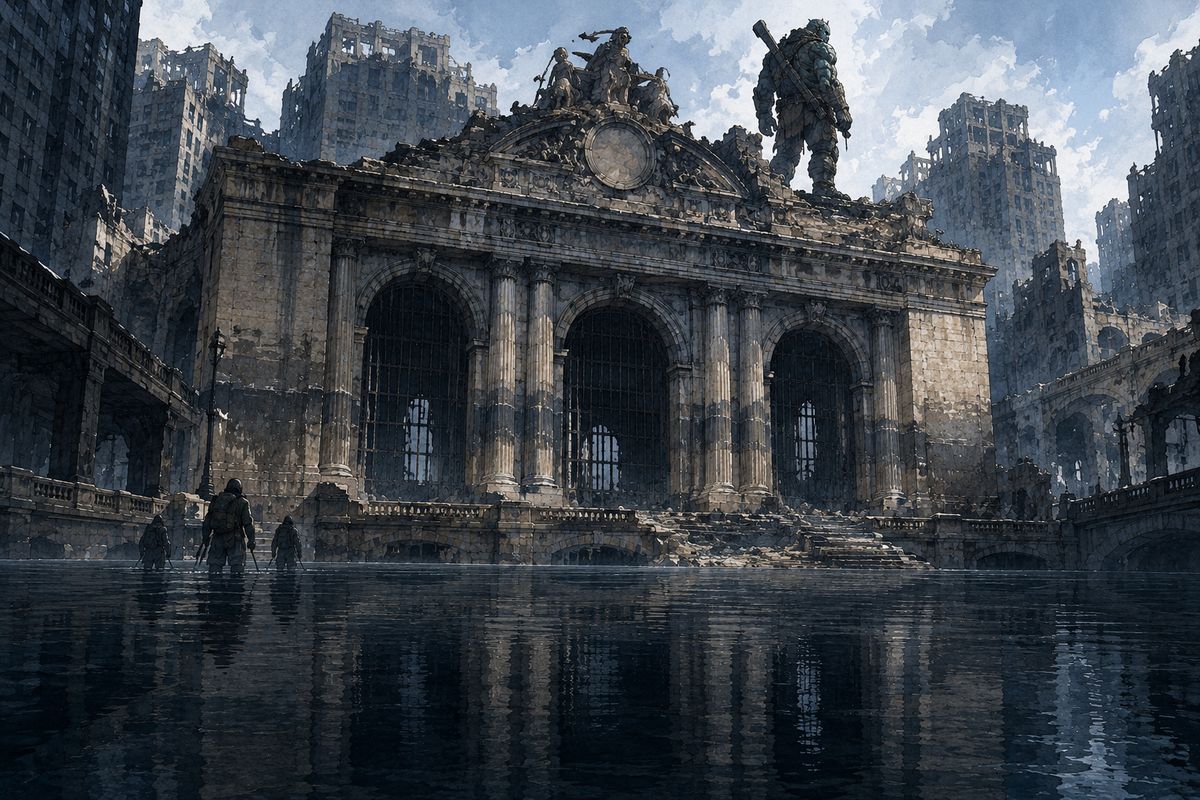
You are not watching. You are inside someone.
You do not play a figure on a screen; you ride a life, seeing through their eyes and feeling the room they stand in. Their hands are not yours to command outright, and what they already know, they know without you. The fit is never perfect, and that friction is the point.
Failure, without a game over
A chamber can go wrong, and it will. But there is no death screen and no lost afternoon: every act seals a waypoint as you pass it, and a wrong turn returns you to the last seal you pressed, changed by what you learned. The road stays open; the cost is time and what you spent.
Every walk is recorded
A finished chamber presses its seal into your record beside the others, and the moments that mattered are kept as plates you can return to. The wall fills as you walk more of them.
Walk one and see
The first act asks nothing but an email and a code. Everything you meet inside is grounded in the real myth, and the history is there to read whenever you want it.
Keep exploring the Chronicle