History
The Epic of Gilgamesh, the oldest story
Before the Iliad, before the Bible, a Sumerian king became the hero of the oldest great story humanity ever wrote down. It was pressed into clay in the city of Uruk, and we can still read it today.
The Epic of Gilgamesh is the earliest surviving work of great literature, older than Homer by well over a thousand years. It tells of a restless king, a wild man made to be his equal, a friendship that changes them both, and one man's refusal to accept that he must die. Four thousand years later, its questions are still ours.
A king, and the wild man made to match him
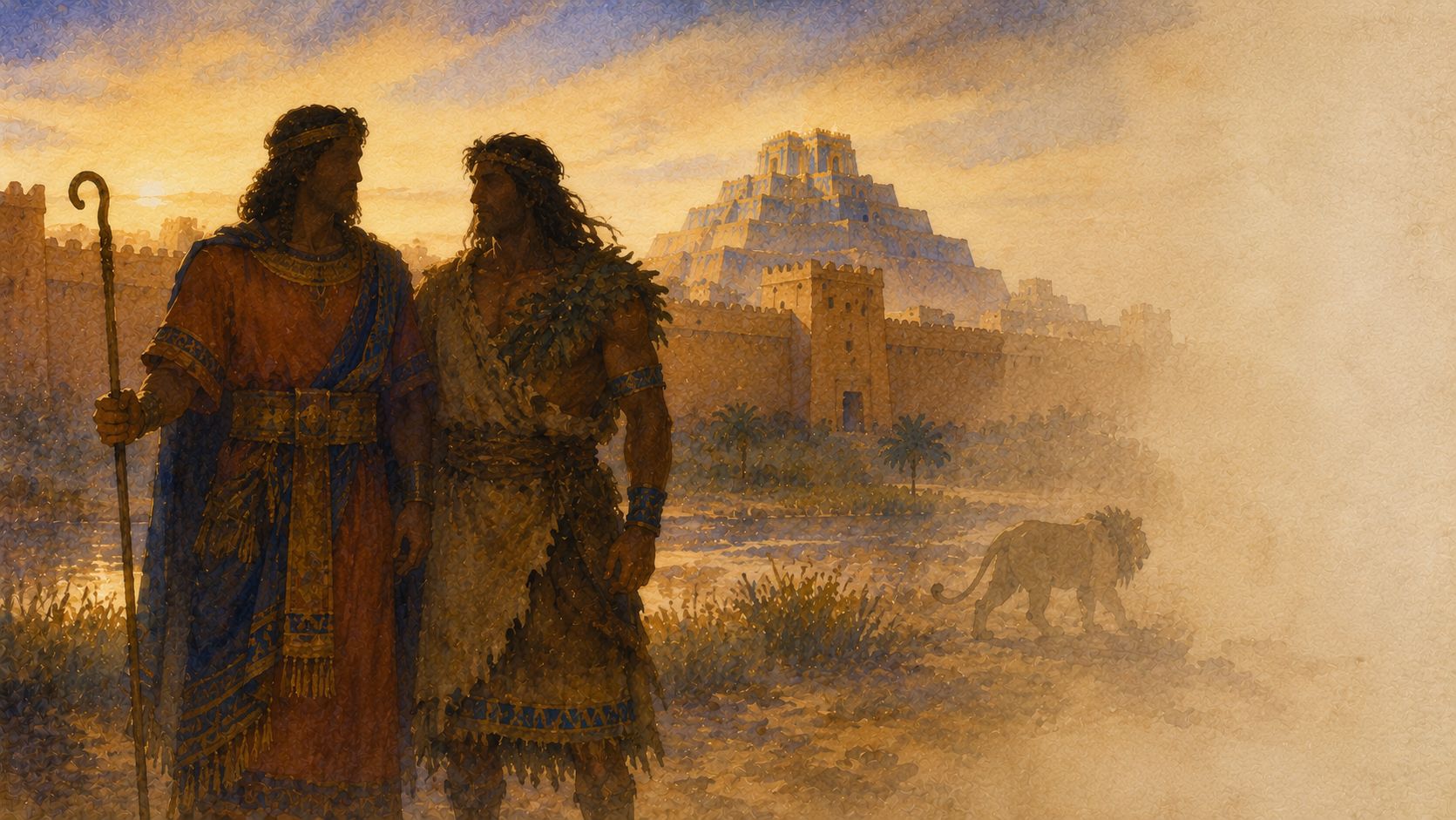
Gilgamesh is the king of Uruk, said to be part god and part man, so strong and so restless that he wears his own people down. To answer their cries the gods shape Enkidu, a wild man of the open country, raised among the animals, made to be his match.
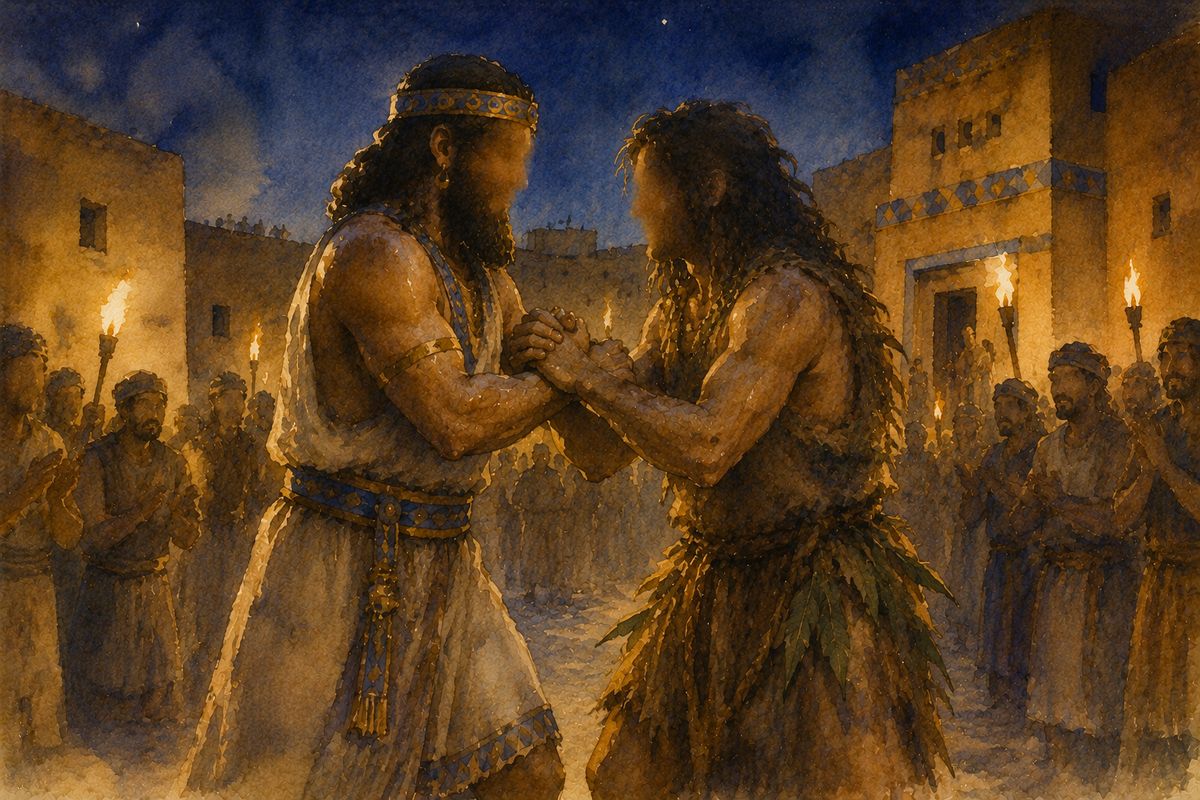
The two meet and fight to a standstill, and in that instant become inseparable friends. Together they set out for glory: into the distant Cedar Forest to face its terrible guardian, and against the Bull of Heaven sent by an angry goddess. For a while they seem unstoppable.
The journey to the edge of death
Then Enkidu dies, and everything changes. Gilgamesh, who feared nothing, is broken by grief and by a new terror: if his friend could die, so can he.
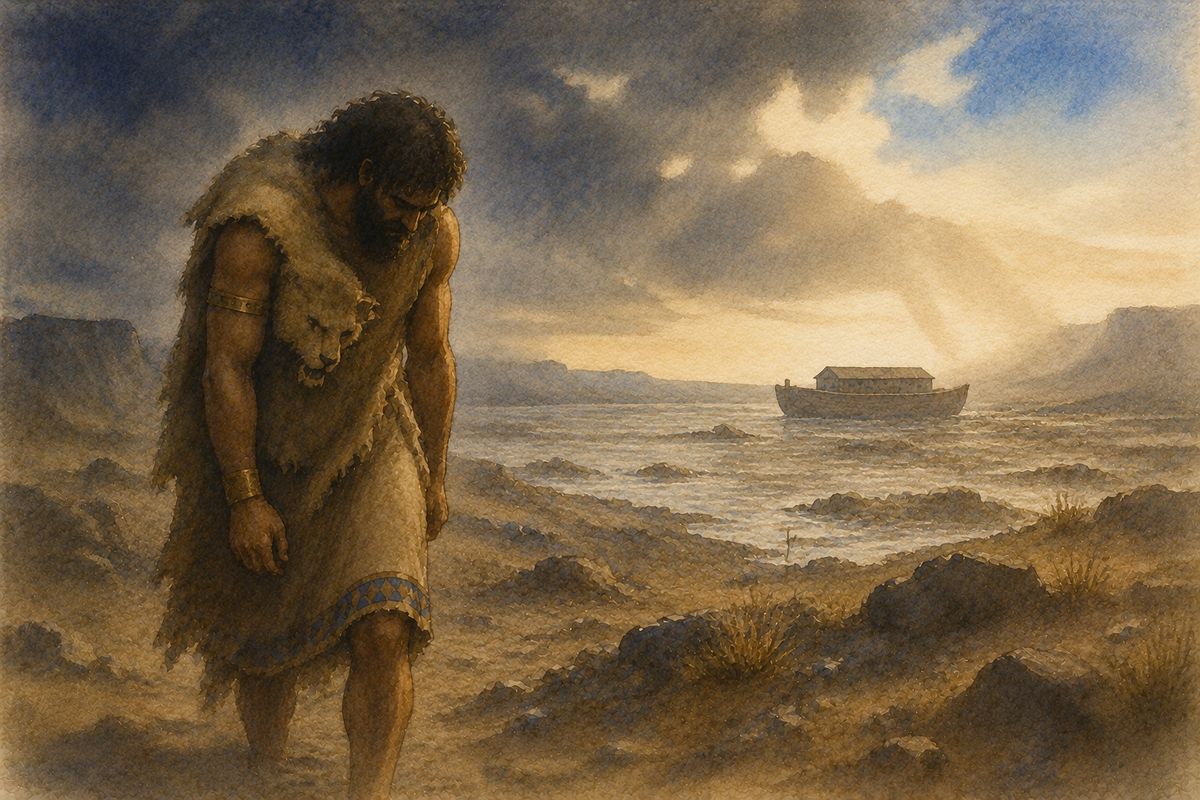
He leaves his city and wanders to the ends of the earth in search of a way to escape death, seeking out Utnapishtim, the one man granted eternal life after surviving a great flood. Utnapishtim's tale of that flood, told to Gilgamesh, is strikingly close to the later story of Noah, and was written down long before it.
Gilgamesh is offered one last chance, a plant that restores youth, and loses it to a snake on the way home. He returns to Uruk with empty hands and one hard-won truth: a life is measured by what you build and whom you love, not by escaping the end.
How we can still read it
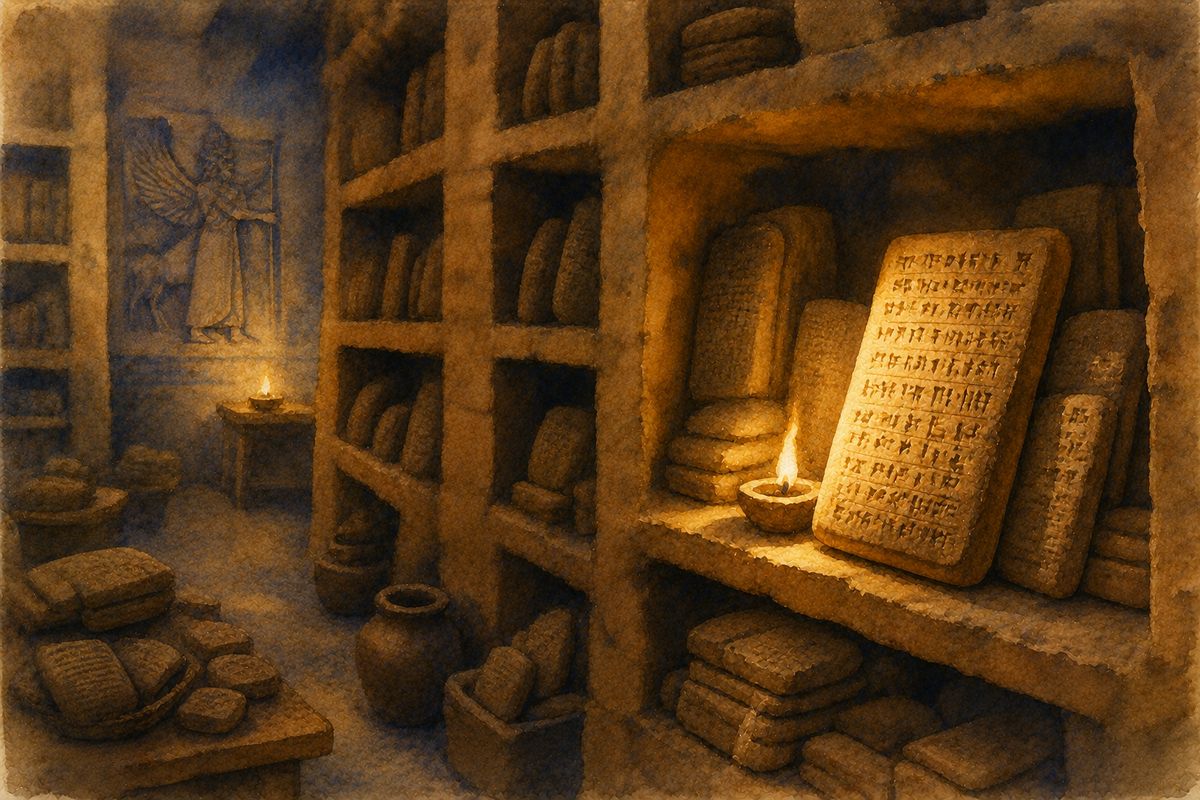
The epic survives because it was written on clay, and clay endures. Scribes copied it for over a thousand years; the fullest version was gathered in the library of the Assyrian king Ashurbanipal at Nineveh in the seventh century BCE.
Those tablets were dug up in the 1850s and sat unread until 1872, when a young scholar named George Smith translated the flood tablet and, the story goes, leapt up and began to undress in his excitement. The epic is still not entirely complete; new fragments are identified even now, and each one adds a line to the oldest story we know.
What is attested, and what we added
Every factual page here is written against a canon record card that separates the evidence from the retelling, claim by claim. This is that card, shown in full.
Period: Library of Ashurbanipal buried ~612 BCE; rediscovered 1850s CE; first read 1872 CE
Written:𒌷𒉌𒉡𒀀
What the record supports
- The Epic of Gilgamesh tablets were unearthed at the ruins of the Library of Ashurbanipal in Nineveh (near modern Mosul, Iraq), by Austen Henry Layard and his Assyrian assistant Hormuzd Rassam, in the 1850s.
- Hormuzd Rassam was a native Assyrian from Mosul, the region of ancient Nineveh; he later led excavations in his own right.
- The self-taught English scholar George Smith recognized and translated the Flood tablet in 1872, the first modern reading of the Epic.
What our story adds
The chronicle adds one uncatalogued tablet to the crates leaving Nineveh, and a family that quietly kept it. The excavation, the crates and the 1872 reading are history.
What we never claim
We never rewrite the public record: the catalogued tablets and George Smith's reading stand as they are. We assert nothing about the real Hormuzd Rassam's descendants or any living person, and the story never presumes anything about a player's own ancestry.
Sources
- Reference
HIST_NINEVEH_DISCOVERY- Last reviewed
Suggested citation: Chronicles of Uruk, “The rediscovery of Gilgamesh (Nineveh, 1850s; the 1872 reading)” (HIST_NINEVEH_DISCOVERY), reviewed 2026-07-26.
Readings of Sumerian signs and names are the standard scholarly ones where a value is well attested, and are flagged for specialist review where it is contested. If you find an error, we want to hear about it.
Gilgamesh in the Chronicle
The world of Chronicles of Uruk remembers Gilgamesh the way the tablets do, as history turned to legend. You do not need to know the epic to play, but if you do, you will hear it echo.
The adventure is invented. The epic, the flood, the friendship, and the grief are real, and far older than most people imagine.
Common questions
- How old is the Epic of Gilgamesh?
- The oldest Sumerian poems about Gilgamesh date to around four thousand years ago, and the material behind them is older still. The famous unified epic was compiled later, but it remains the earliest surviving great work of literature, predating the Homeric poems by more than a millennium.
- Is the flood in Gilgamesh related to Noah's flood?
- They are closely related. The flood story in Gilgamesh, and the older Mesopotamian versions behind it, share so many details with the later account of Noah that scholars see the biblical flood as part of the same ancient tradition, written down centuries afterward.
- Was Gilgamesh a real person?
- Possibly. A king named Gilgamesh appears in early lists of the rulers of Uruk and may have reigned around 2700 BCE. Whether or not the man was real, the legend grew far beyond him.
Keep reading
The Anunnaki
Who the Anunnaki actually were in Sumerian belief, and how a family of ancient gods became a modern myth.
Cuneiform, the first writing
How marks pressed into wet clay five thousand years ago became the first writing, and what the tablets still say to us.
Inanna, queen of heaven
The goddess of love and war whose eight-pointed star became our mark, and the oldest story of a god who dies and returns.
Uruk, the first great city
The Sumerian city that gave an age its name, home to the world's earliest writing and the king who became its oldest legend.
Related dispatches
All dispatchesIn the chronicle
This figure appears in Chronicles of Uruk. What follows is our retelling, not the record above.
The chronicle borrows him and gives him descendants. What that inheritance is, and what it costs the people who carry it, is the story's to tell.
Keep exploring the Chronicle