History
Uruk, the first great city
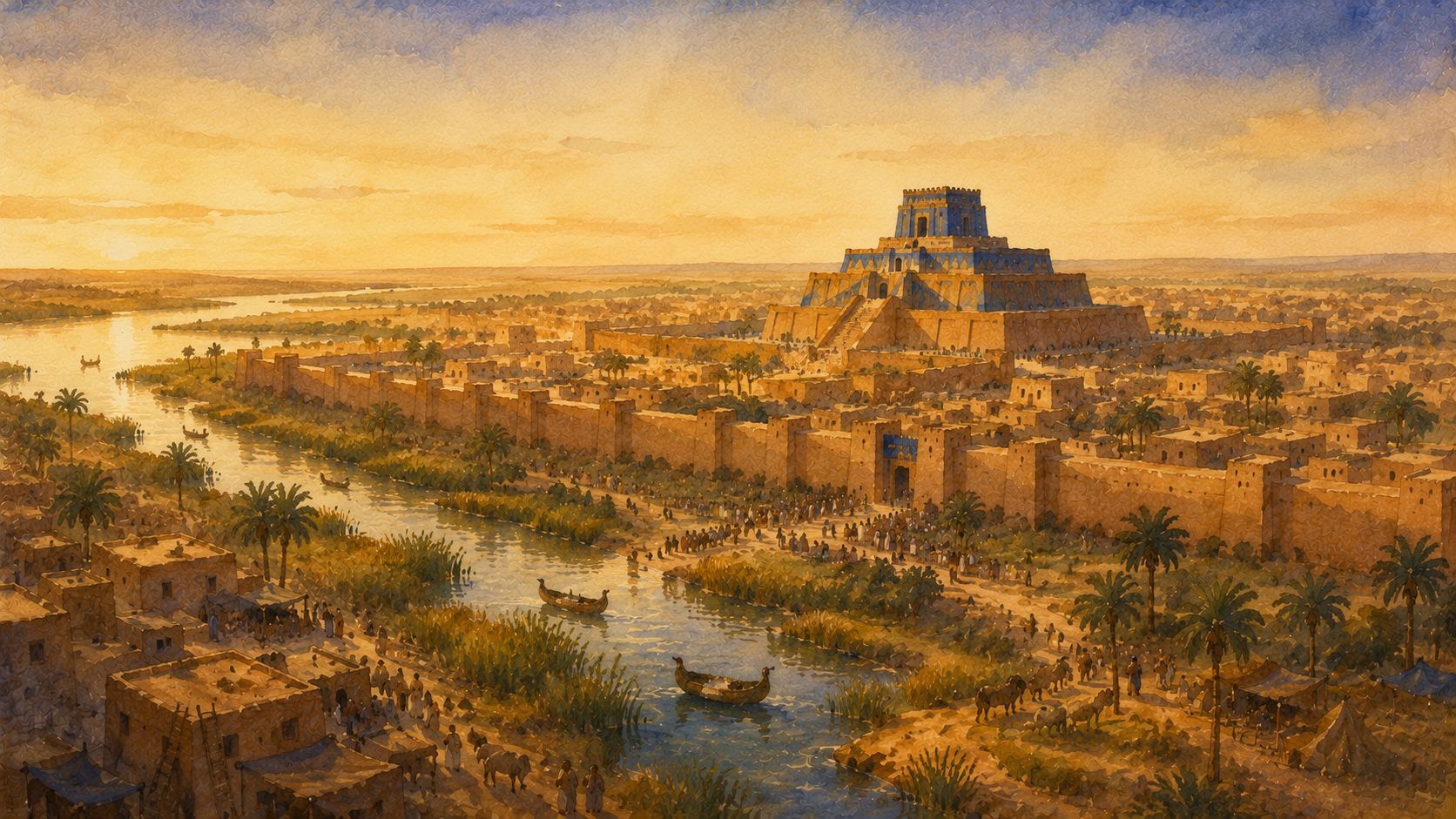
Five thousand years ago, on the plain between the Tigris and Euphrates, people gathered in numbers the world had never seen and built something new: a city. Its name was Uruk, and an entire age is named after it.
Uruk was one of the earliest cities on Earth, and for a time the largest place any human had ever built. It rose in southern Mesopotamia, in what is now southern Iraq, and at its height it held tens of thousands of people behind a great wall. Here the temple, the marketplace, and the written record all took shape together. When we say the story of Chronicles of Uruk is rooted in real history, this is the ground it stands on.
A city before there were cities
For most of human history people lived in villages and small towns. Then, in the fourth millennium BCE, Uruk grew past anything that had come before. At its peak it may have held tens of thousands of residents inside a wall many kilometres long, a scale so far beyond its neighbours that historians name the whole era the Uruk period.
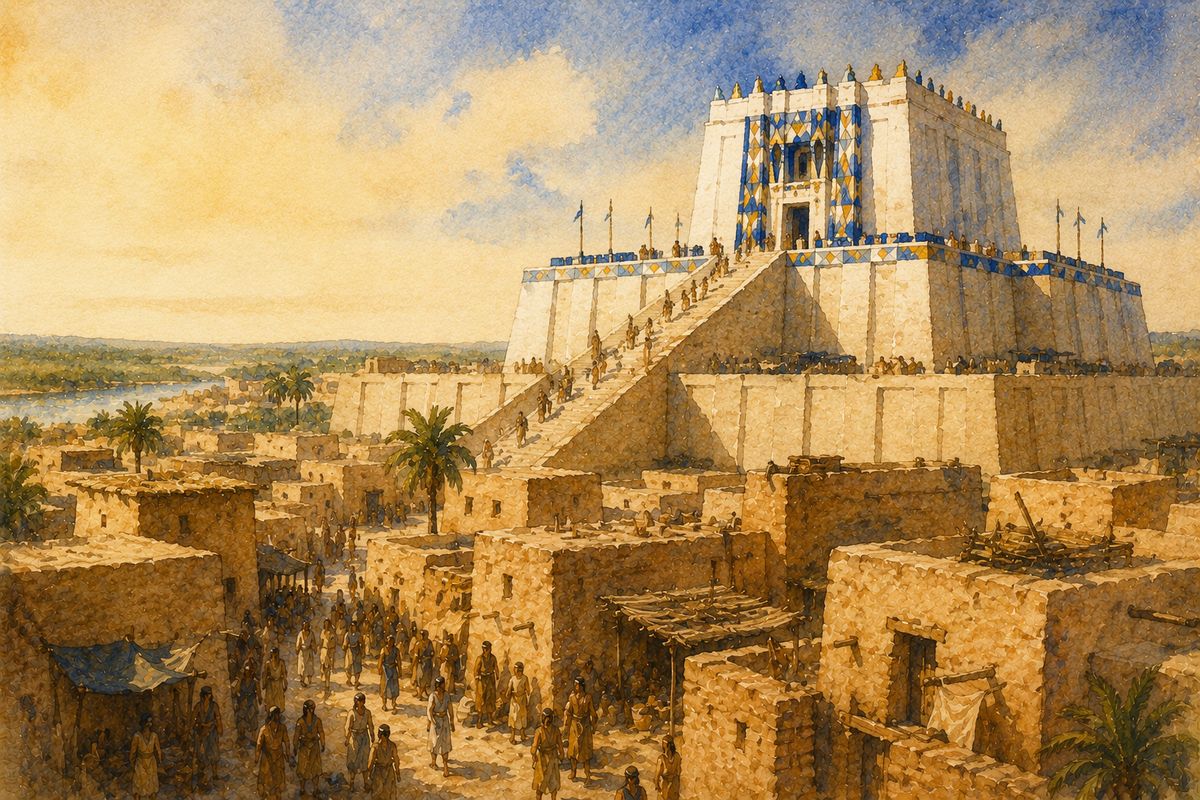
Two great districts stood at its heart. Eanna was the precinct of Inanna, the goddess of love and war the later world would know as Ishtar. Nearby rose the district of the sky-god Anu, crowned by a high whitewashed temple on a platform, an ancestor of the stepped towers we call ziggurats. Around them spread workshops, storehouses, and the crowded homes of a true city.
Uruk was not just big. It was a new kind of place, where strangers lived side by side, labour was organised on a vast scale, and a temple economy fed and counted a population no village could support.
Where writing began
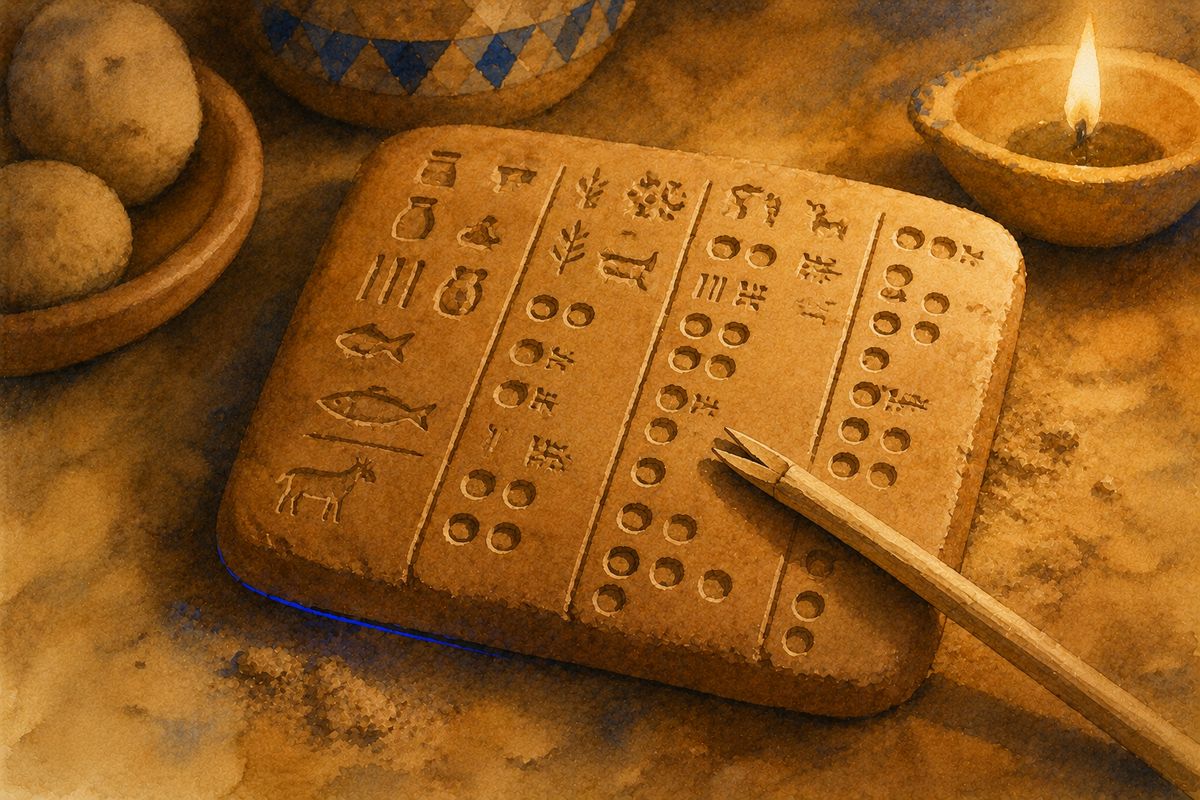
Uruk's greatest gift to the world was writing itself. Around 3300 BCE, the administrators of its temples needed to track herds, grain, rations, and land. They began pressing marks into wet clay tablets: first simple pictures and counting signs, then, over generations, a system flexible enough to record language.
Those marks were the ancestors of cuneiform, the wedge-shaped script that would carry Mesopotamian thought for three thousand years. It is the oldest writing we can still read, and it started here, in the account-books of a Sumerian city.
Writing was not invented to tell stories or record laws. It was invented to keep track of things. Only later did people realise that the same tool could hold a hymn, a letter, a king's boast, or the oldest tale humanity ever wrote down.
The city of Gilgamesh, and its long silence
Uruk is also remembered as the city of Gilgamesh, a king who may really have ruled here around 2700 BCE and who became the hero of the world's oldest surviving epic. In that poem his greatest monument is the wall of Uruk itself, which the story invites the reader to walk and admire.
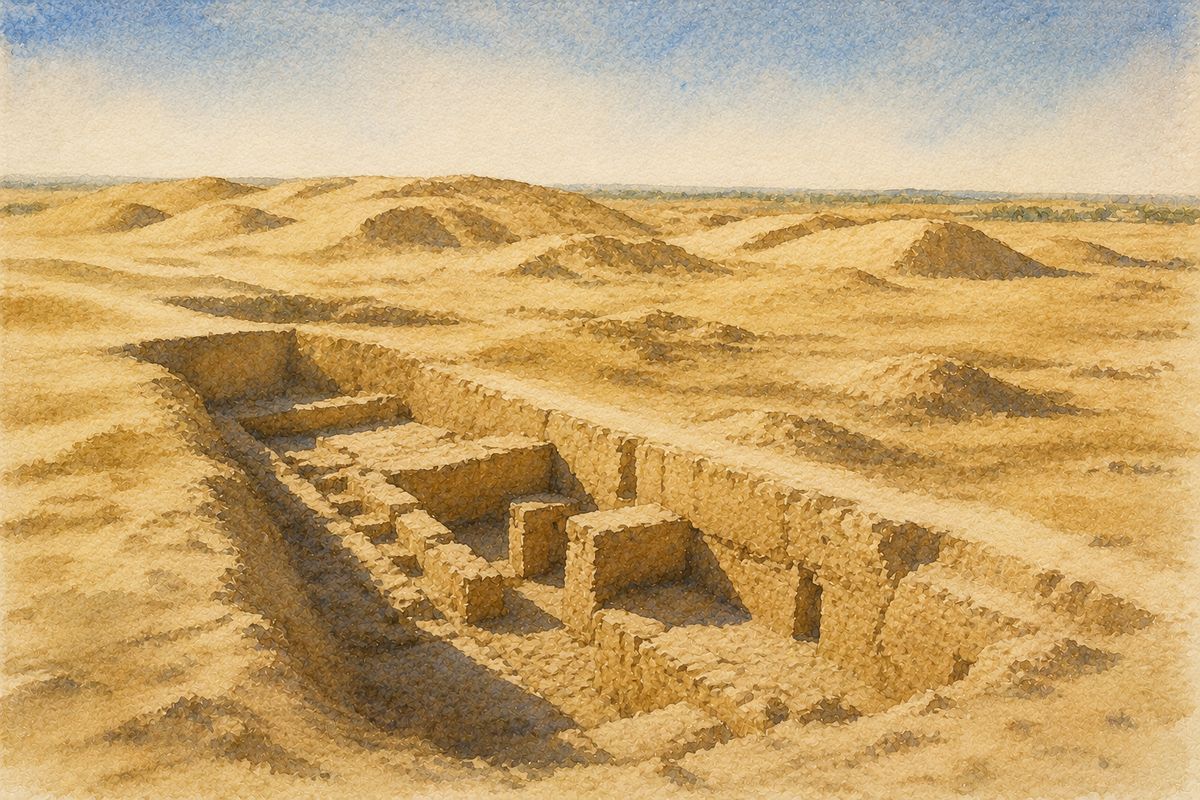
The city lived on for thousands of years, through Sumerian, Akkadian, Babylonian, and later rulers, before the rivers shifted, the fields dried, and the people drifted away. Its great mounds were slowly buried by sand.
Today the ruins are called Warka, and archaeologists have been uncovering them for over a century. The walls, the temples, and the first tablets are real, and you can still stand where the first city stood.
What is attested, and what we added
Every factual page here is written against a canon record card that separates the evidence from the retelling, claim by claim. This is that card, shown in full.
Period: Uruk period, southern Mesopotamia (~4000 to 3100 BCE)
What the record supports
- Uruk was among the world's first true cities and likely the largest of its age, with a population reaching the tens of thousands behind a great circuit of walls.
- Its monumental temple precinct, the Eanna, held some of the earliest large-scale public architecture; the fast potter's wheel and mass-produced beveled-rim bowls mark a new scale of specialized, organized labor.
- The earliest known writing was found at Uruk, born from the administration of that economy; Uruk is the biblical Erech and the modern site of Warka in Iraq.
What our story adds
The chronicle remembers Uruk as the place where the record turned, a city that mattered beyond its walls. A sense of significance, and nothing more specific than that.
What we never claim
That anyone from outside built Uruk, its temple or its writing, or taught its people how to govern themselves.
Sources
- Wikipedia: Uruk
- Wikipedia: Uruk period
- Wikipedia: Anu ziggurat
- Wikipedia: Beveled rim bowl
- Wikipedia: Proto-cuneiform
- Wikipedia: Warka Vase
- ETCSL, Oxford
- Reference
HIST_URUK_RISES- Last reviewed
Suggested citation: Chronicles of Uruk, “Uruk rises, the first great city” (HIST_URUK_RISES), reviewed 2026-07-26.
Readings of Sumerian signs and names are the standard scholarly ones where a value is well attested, and are flagged for specialist review where it is contested. If you find an error, we want to hear about it.
Uruk in the Chronicle
Chronicles of Uruk begins with this real place and asks a storyteller's question: what if something was set down in Uruk's clay that the record never explained?
The adventure is invented. The city, its gods, its writing, and its silence are not. We keep them accurate on purpose, so the wonder you feel is the wonder of something that was truly here.
Common questions
- Is Uruk the oldest city in the world?
- Uruk is among the very first true cities and was, for a time, the largest on Earth. A few other Mesopotamian sites like Eridu are as old or older as settlements, so scholars usually call Uruk one of the first cities rather than the single oldest, but it is the one that gave its name to the whole early urban age.
- Is Uruk mentioned in the Bible?
- Yes. Uruk appears in the Book of Genesis as Erech, listed among the first cities of the ancient world. The name Iraq itself may descend, through a long chain of languages, from Uruk.
- Can you visit Uruk today?
- The ruins survive as a vast field of mounds called Warka, in southern Iraq, and have been excavated for more than a hundred years. Much of ancient Uruk still lies buried, waiting.
Who ruled here
Named rulers our record ties to this city. Each page says whether the evidence is an object made in their lifetime or a list written long after.
Keep reading
Nippur
The religious centre of Sumer, which granted kingship and never held it.
Ur
The moon god's city, its great ziggurat, and the last Sumerian-speaking state.
Eridug
Where the Sumerians believed the world's first city stood, and kingship first came down.
Nineveh
The Assyrian capital, and the library whose burning preserved the oldest story.
Related dispatches
All dispatchesArticle
The real history behind Uruk
Everything in our world grows from a real place: ancient Sumer, its first great city, its oldest story, and the writing that started it all. Explore it, free and spoiler-free.
Article
The Epic of Gilgamesh
Long before any game retold it, Uruk gave the world its first great story. A new video series retells the Epic of Gilgamesh. Watch it, and meet the king our world remembers.
Keep exploring the Chronicle