History
The Anunnaki, the gods of ancient Sumer
Long before they became a fixture of late-night television, the Anunnaki were the great gods of Sumer: the divine family that the first cities prayed to, feared, and carved into stone. Here is who they actually were.
The Anunnaki are among the oldest named gods in human history. In the beliefs of Sumer and the wider Mesopotamian world, they were the assembly of great deities who governed the cosmos, decreed fates, and judged the dead. Their story is stranger, older, and far more human than the modern myth that grew around them.
The assembly of the gods
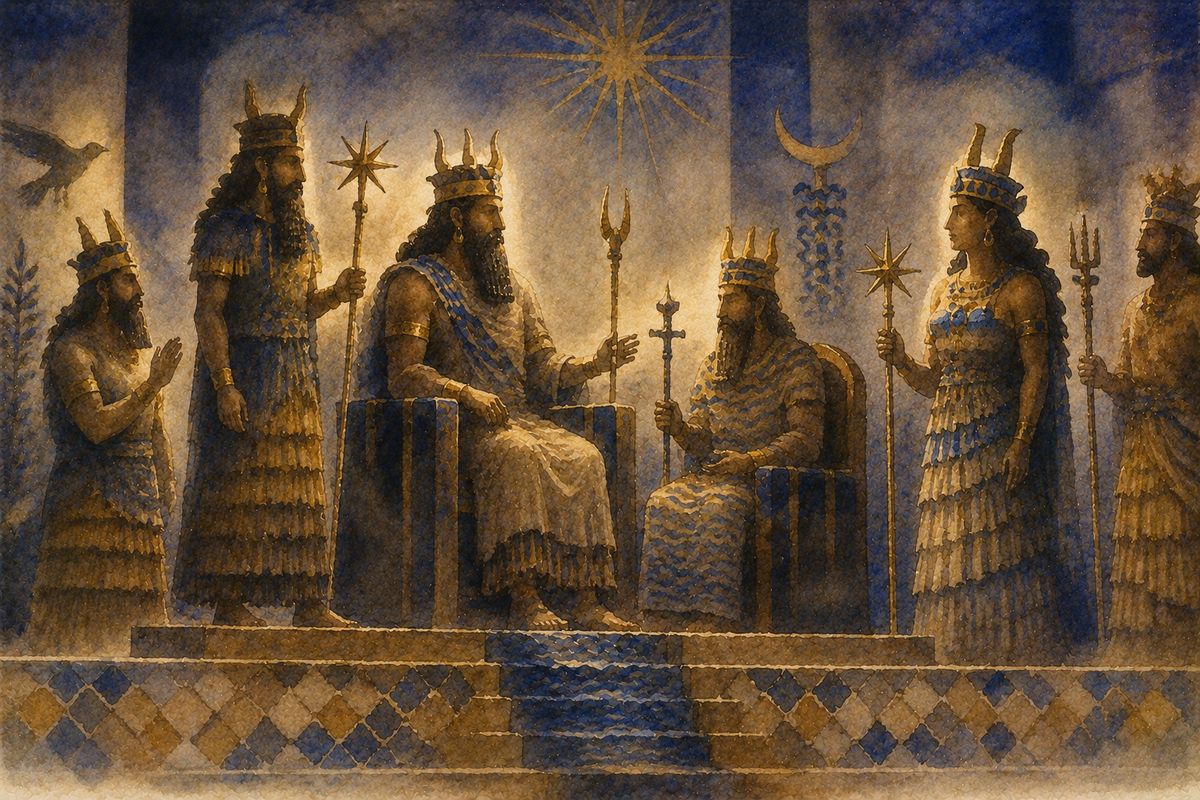
The name Anunnaki means, roughly, the offspring of An, the sky. In the myths they are the leading gods, gathered as a divine assembly that debates and decrees, much as a council of city elders might.
At its head stood An, the distant sky-father; Enlil, lord of wind and command; and Enki (later Ea), the clever god of fresh water, craft, and wisdom. Around them moved Inanna, goddess of love and war, the moon-god Nanna, the sun-god Utu, and many more. These were not remote abstractions. Each had a home city, a temple, a household, and a personality, with all the pride and quarrels that implies.
How myth pictured them
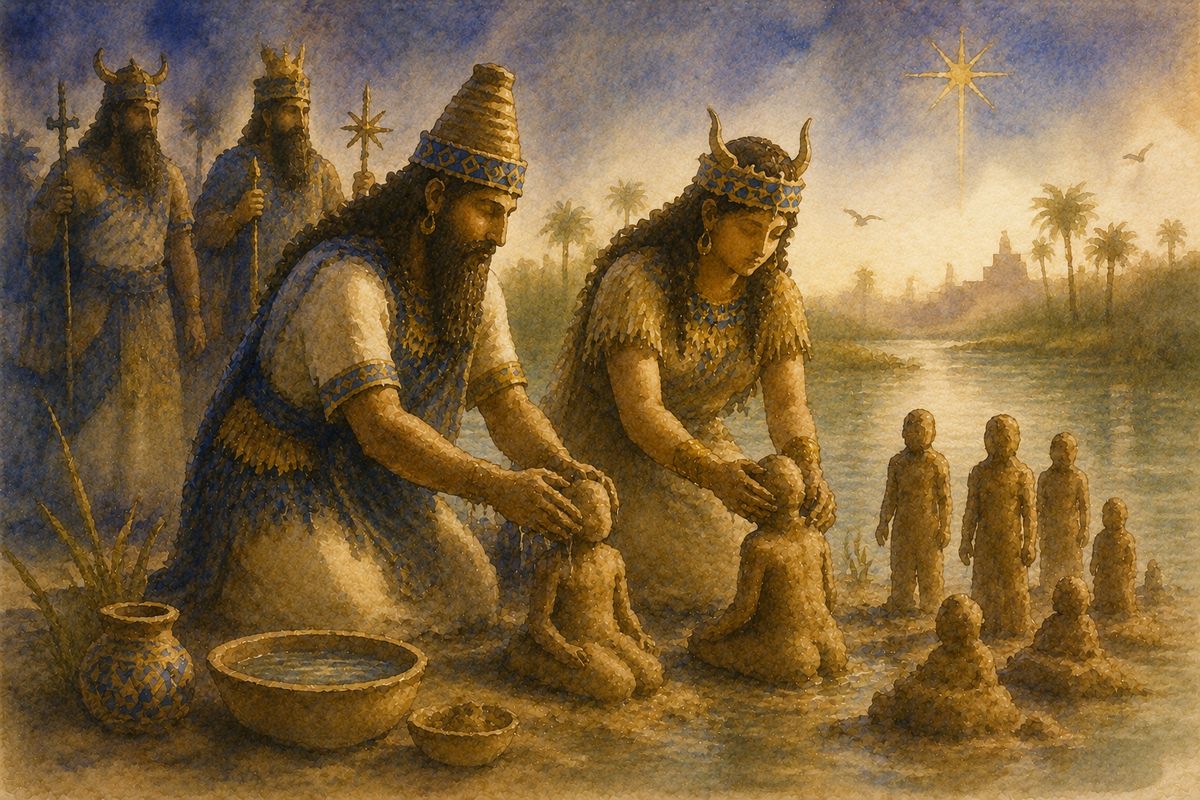
The Mesopotamians pictured their gods as powerful, immortal versions of themselves. In myth the gods even created humankind for a very practical reason: they were tired of doing their own labour, and made people to tend the fields and feed them through the temples.
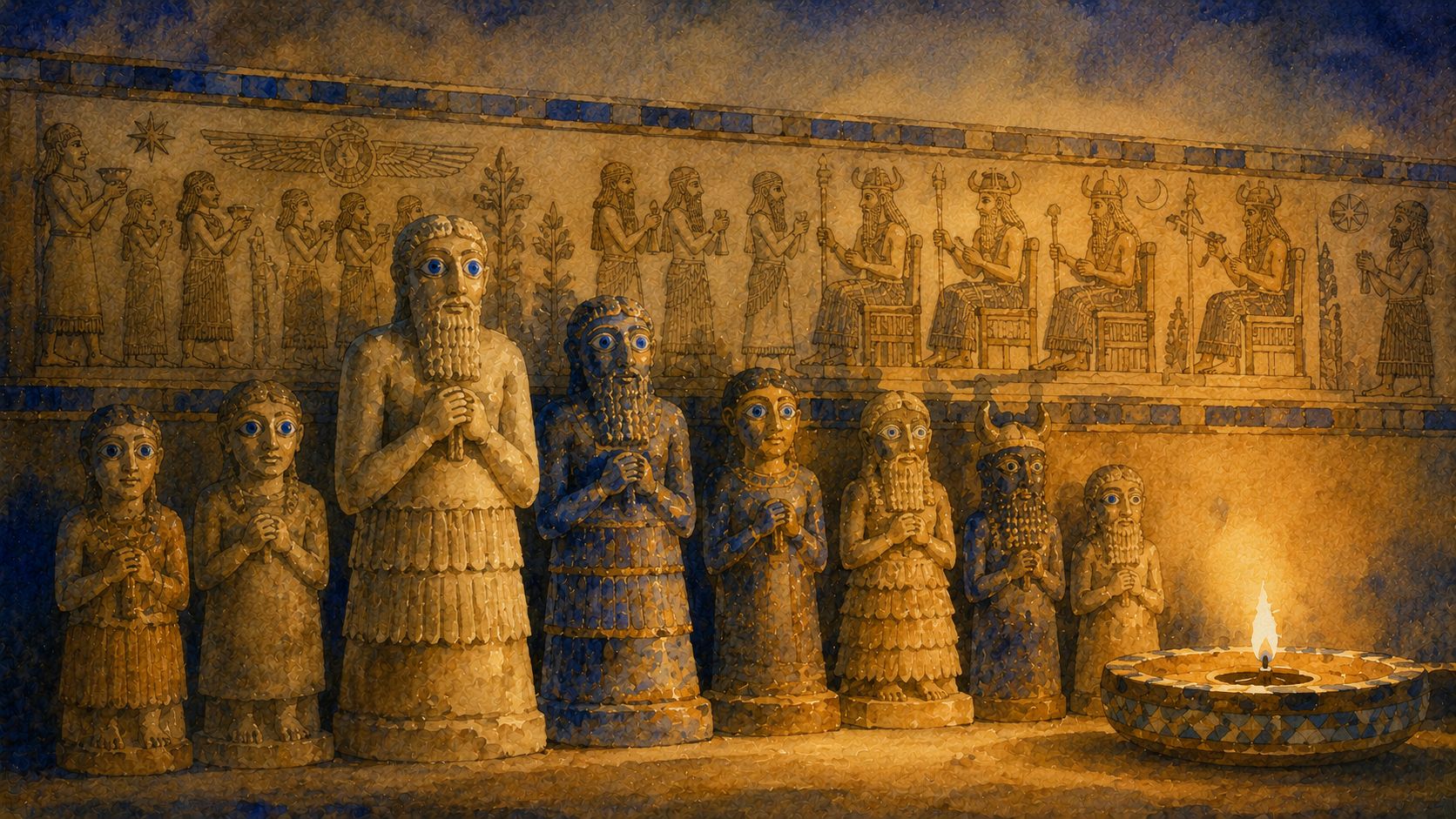
We see the Anunnaki in the art the ancients actually made: small votive statues with clasped hands and wide inlaid eyes, and cylinder seals showing worshippers led before an enthroned deity. In some stories the Anunnaki are also the judges of the underworld, weighing the dead. This is a religion of clay, reed, and river, not of the stars.
From clay to conspiracy
In the twentieth century the Anunnaki were pulled out of Sumer and into something else entirely. Popular writers, most famously Zecharia Sitchin, claimed they were astronauts from a hidden planet who engineered humanity. It is a striking story. It is not what the tablets say.
No Sumerian text describes spaceships or a planet called Nibiru in the way these theories claim, and specialists in the language reject the readings the theories depend on. The real Anunnaki are more interesting than the myth about the myth: gods imagined by the first city-dwellers to explain a world of flood and harvest, kingship and death. We tell their story straight, with respect for the people who first told it.
What is attested, and what we added
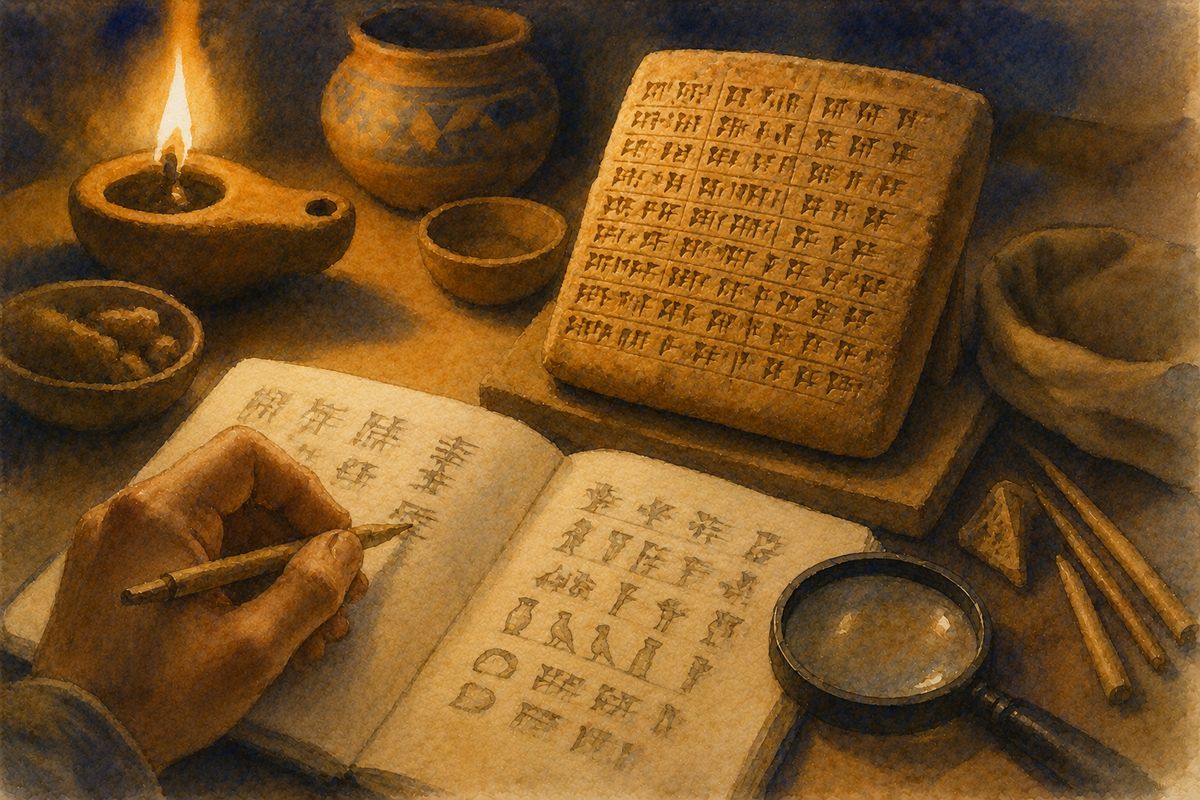
Every factual page here is written against a canon record card that separates the evidence from the retelling, claim by claim. This is that card, shown in full.
Period: Sumerian religion, 3rd millennium BCE onward, Mesopotamia
What the record supports
- The Sumerians worshipped a large pantheon led by An (sky), Enlil (air and authority), and Enki/Ea (fresh water and wisdom); Inanna (love, war, the planet Venus) and Nisaba (writing and grain) were among the great deities.
- The Anunnaki was a collective name in Sumerian and later Mesopotamian religion for the great gods, spoken of as the offspring of An and gathered as a divine assembly.
- A temple was the god's house: worship ran through offerings and a temple economy, and the myths were preserved in writing on clay (the Enuma Elish is a later Babylonian composition, not Sumerian).
What our story adds
The chronicle allows itself one suggestion and never explains it: that the myths might be the worn record of something older than a story. It stays a suggestion, and it is never presented as attested religion.
What we never claim
That any tablet records real visitors. Where our story adds to the pantheon, the page says plainly that we added it, and the invented layer is never dressed up as something the record supports.
Sources
- ORACC, Penn
- ETCSL, Oxford
- Wikipedia: Anunnaki
- Wikipedia: Igigi
- Wikipedia: Enūma Eliš
- Wikipedia: Zecharia Sitchin
- Wikipedia: Nibiru cataclysm
- Reference
HIST_ANUNNAKI_ASSEMBLY- Last reviewed
Suggested citation: Chronicles of Uruk, “The gods of the assembly” (HIST_ANUNNAKI_ASSEMBLY), reviewed 2026-07-26.
Readings of Sumerian signs and names are the standard scholarly ones where a value is well attested, and are flagged for specialist review where it is contested. If you find an error, we want to hear about it.
The Anunnaki in the Chronicle
Chronicles of Uruk takes the Anunnaki seriously as myth, the way the ancients remembered them, not as machinery from the sky. What that memory holds, and what it hides, is for you to discover in the story.
The adventure is invented. The gods, their assembly, and the people who worshipped them are real history, and we keep them that way.
Common questions
- Were the Anunnaki aliens?
- No. In the actual Sumerian and Mesopotamian sources the Anunnaki are gods, not extraterrestrials. The ancient-astronaut idea comes from twentieth-century popular writing, not from the tablets, and scholars of the language do not support it.
- Who was the most important Anunnaki god?
- It shifted over time. An, the sky, was the eldest and most remote; Enlil held real authority over gods and kings; and Enki, god of wisdom and fresh water, is the friend of humanity in many myths. Inanna, later Ishtar, may be the most vivid of all.
- Are the Anunnaki the same as the Igigi?
- Not quite. Some texts distinguish the Anunnaki, the great ruling gods, from the Igigi, a class of younger gods who did the labour, and who in one famous myth go on strike, prompting the gods to create humans in their place. The usage is not always consistent across the sources.
Keep reading
Cuneiform, the first writing
How marks pressed into wet clay five thousand years ago became the first writing, and what the tablets still say to us.
The Epic of Gilgamesh
Humanity's oldest surviving story: a restless king, a wild man made to match him, and a journey to the edge of death.
Inanna, queen of heaven
The goddess of love and war whose eight-pointed star became our mark, and the oldest story of a god who dies and returns.
Uruk, the first great city
The Sumerian city that gave an age its name, home to the world's earliest writing and the king who became its oldest legend.
Nippur
The religious centre of Sumer, which granted kingship and never held it.
Ur
The moon god's city, its great ziggurat, and the last Sumerian-speaking state.
Related dispatches
All dispatchesKeep exploring the Chronicle