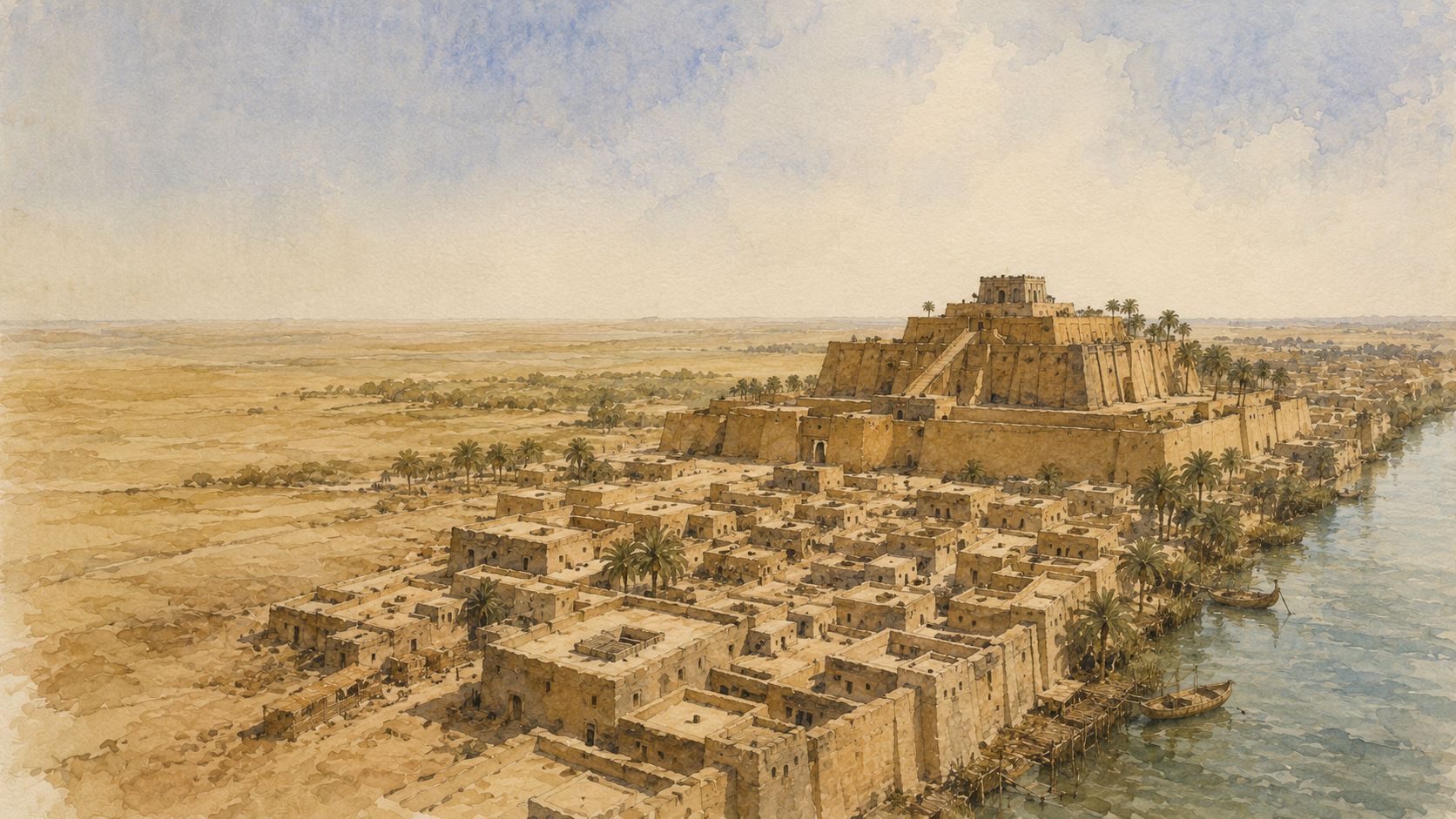
History
Nippur, where kingship was granted and never held
It was the religious centre of Sumer and never once a capital. A king who wanted to rule the land came here to be told he could, and then went home to somewhere else. That arrangement lasted longer than any dynasty it licensed.
Nippur is the strangest of the great Sumerian cities, because its power was of a kind we no longer really have. It commanded no army worth the name and produced no dynasty. What it had was Enlil, and Enlil decided who was king. So rulers from Ur, from Akkad, from Isin and Larsa in their turn all came to the same temple to ask the same question, and the city outlived every one of them.
It also, almost by accident, saved Sumerian literature. Nearly everything we can read of it today survives because schoolboys at Nippur copied it out and threw the copies away.
The house of the god who fixed destinies
Nippur's god was Enlil, lord of the wind and of the fixing of destinies, and his temple was the Ekur, which means "house of the mountain". Beside it stood the Ki-ur precinct, and nearby the Tummal, the shrine of his consort Ninlil.
The city was written EN.LÍL.KI, literally "place of Enlil": the city spelled with its own god's name. Only Ur did anything similar. An attested epithet for the place is Dur-an-ki, "bond of heaven and earth", which tells you exactly how the Sumerians understood what stood there.
Enlil is the difficult one in the pantheon. He is not kind, and the texts do not pretend otherwise. He is the one who decides, and what he decides holds. A city built around that god was never going to be a city of festivals.
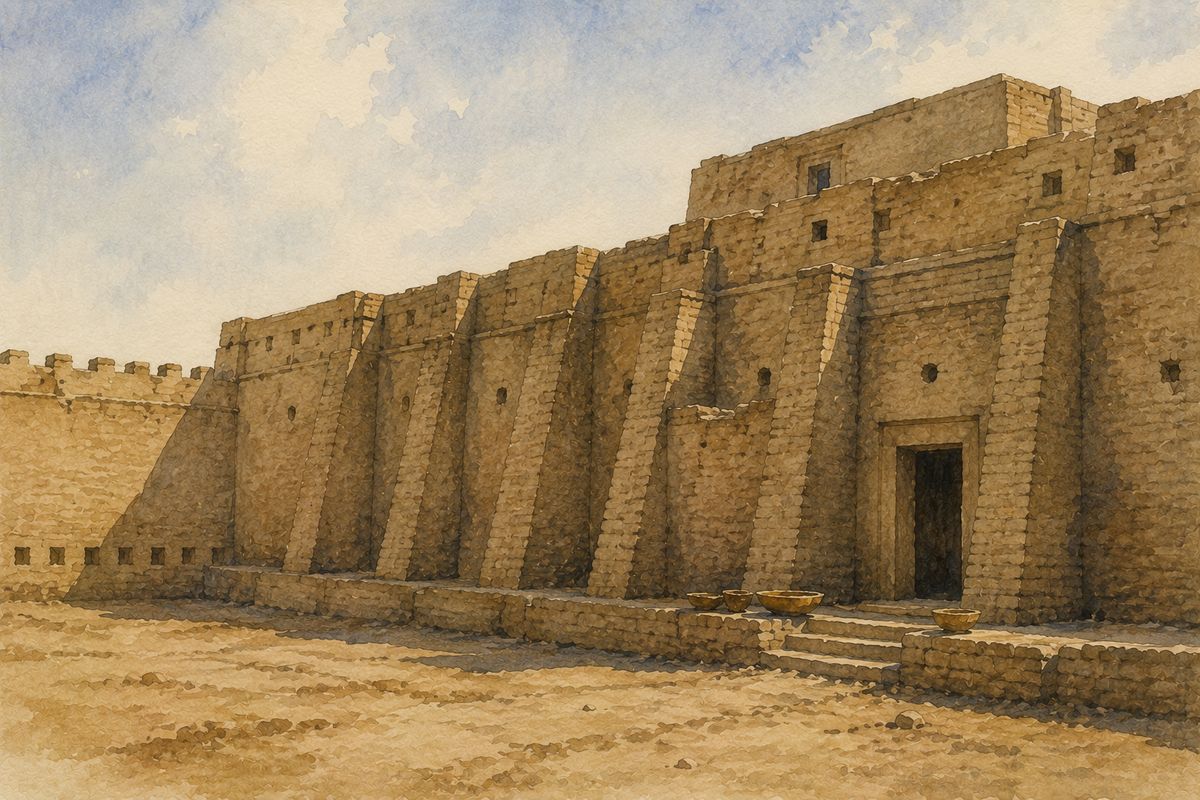
The city that granted power and never took it
Sumer's political history is a list of cities taking turns: Kish, then Uruk, then Ur, then Akkad, then Ur again, then Isin and Larsa arguing about it. Nippur is on none of those lists, and that is the point.
Kingship over the land was legitimised at the Ekur. A ruler who wanted the title over these lands sought Enlil's sanction there, and until he had it his claim was a local one. The city's authority was sacral rather than military, and that is precisely why it survived changes of dynasty that ended other cities outright. A conqueror had no reason to destroy the place that could make him legitimate.
It is worth sitting with how unusual this is. The Sumerians built an institution whose whole function was to confer authority it could not itself exercise, and it worked for something like a thousand years.
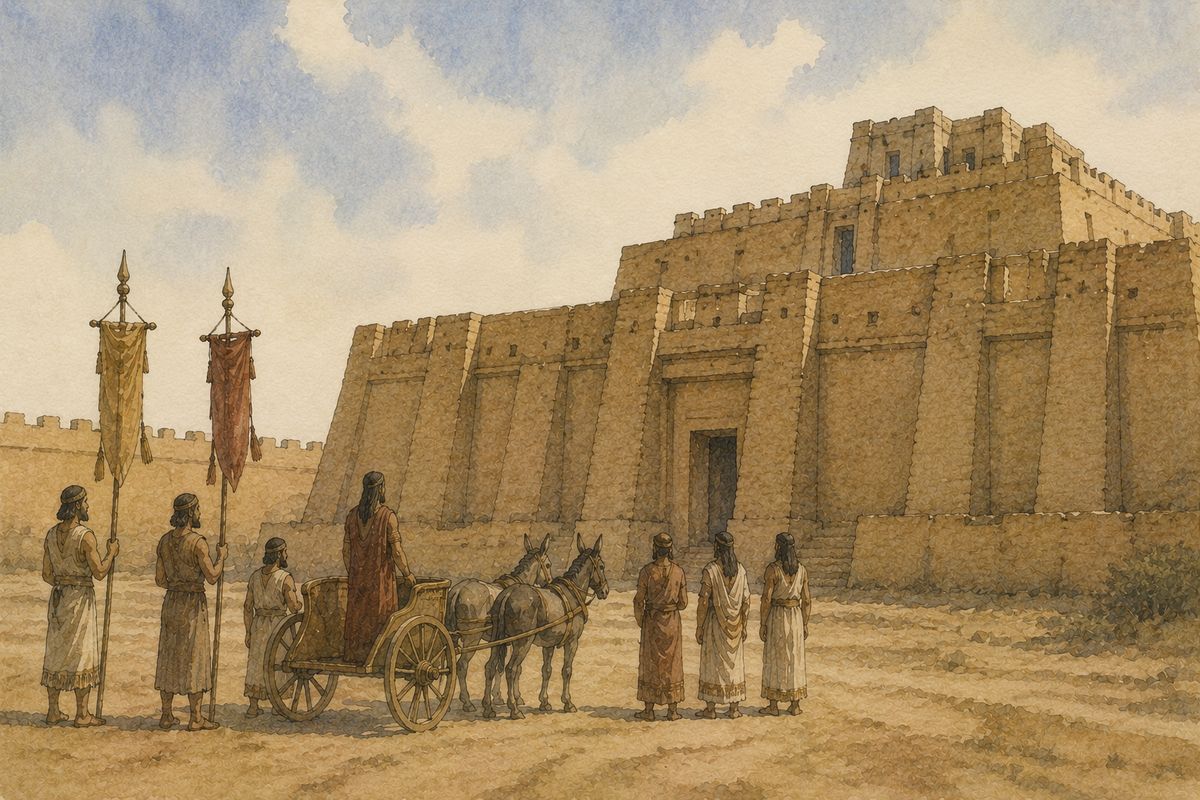
Sumerian literature survived as homework
Excavation began at Nippur in 1889 under the University of Pennsylvania and resumed from 1948 in joint expeditions with the Oriental Institute. What came out of it is the single largest source of Sumerian literature in existence.
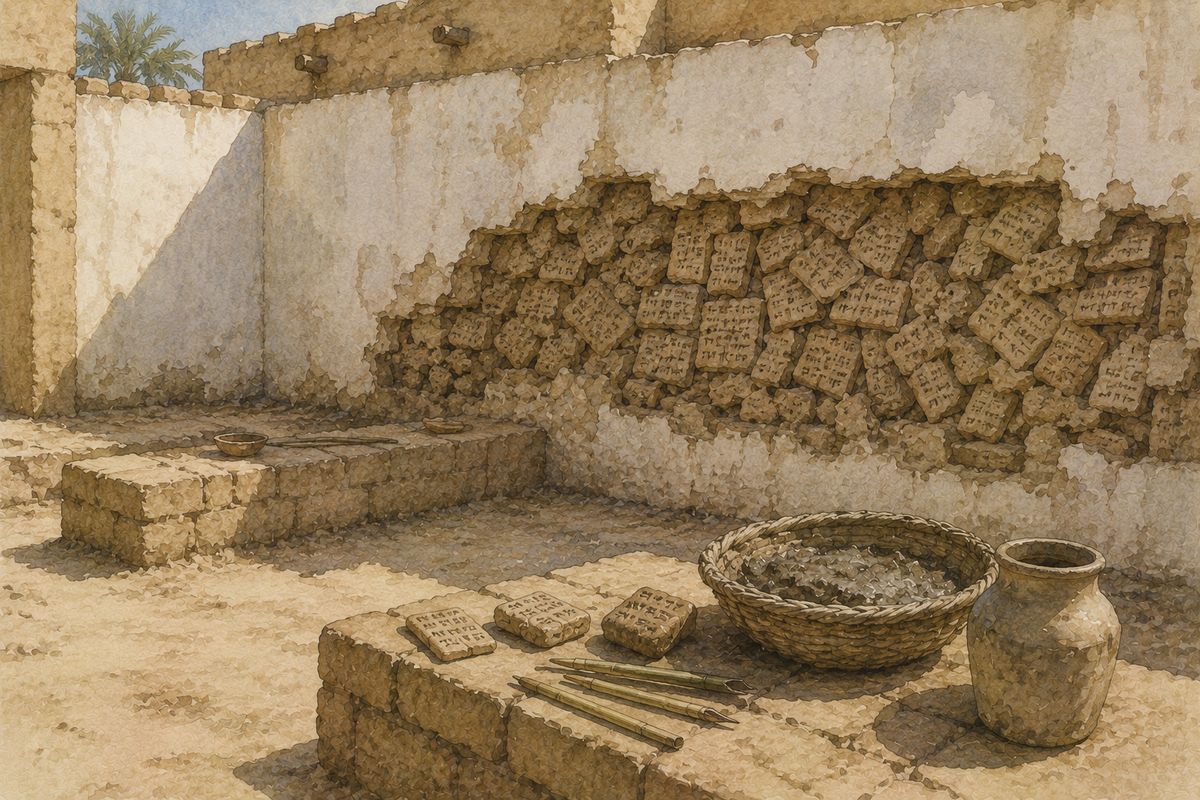
The reason is unglamorous. Nippur had scribal schools, and students learned to write by copying the classics onto clay tablets. A very large share of the compositions the Electronic Text Corpus of Sumerian Literature publishes, including Inanna's descent itself, survives because pupils copied them and the copies were thrown out, packed into walls and floors as rubble, and so preserved.
So the poems did not come down to us through a library or a temple archive. They came down as discarded practice, in the handwriting of children who were bored. Very little of the ancient world reaches us for a nobler reason than that, and it is a good corrective to any idea that survival tracks importance.
What is attested, and what we added
Every factual page here is written against a canon record card that separates the evidence from the retelling, claim by claim. This is that card, shown in full.
Period: Southern Mesopotamia; occupied from the Ubaid period and continuously important through the 3rd and 2nd millennia BCE, with the excavated record running into the Islamic era
Written:𒂗𒆤𒆠
What the record supports
- Nippur, Sumerian Nibru, stood on a course of the Euphrates in what is now Al-Qādisiyyah in southern Iraq; the mound is called Nuffar. Its god was Enlil, lord of the wind and of the fixing of destinies, whose temple was the Ekur, 'house of the mountain', with the Ki-ur precinct beside it and the Tummal, the shrine of his consort Ninlil.
- Nippur was the religious centre of Sumer and, unusually among the great cities, never a dynastic political capital. Kingship over the land was legitimised there: a ruler seeking the title over these lands sought Enlil's sanction at the Ekur. The city's authority was sacral rather than military, which is why it survived changes of dynasty that ended other cities.
- The city was written EN.LÍL.KI, literally 'place of Enlil' — the city written with its god's own name, as Ur was. An attested epithet of Nippur is Dur-an-ki, 'bond of heaven and earth'.
- Excavation began in 1889 under the University of Pennsylvania and resumed from 1948 in joint expeditions with the Oriental Institute. Nippur's scribal-school tablets are the single largest source of the Sumerian literary corpus: a very large share of the compositions ETCSL publishes, including Inana's descent itself, survives because students at Nippur copied them and discarded the copies.
What our story adds
That an appeal carried to Nippur is heard as an appeal to the law rather than to a person, and that the answer has the flat, unhurried weight of an institution that has already decided. Register only.
What we never claim
That Nippur was founded, built, taught or governed from outside; that the Ekur is anything other than Enlil's temple; that the attested epithet Dur-an-ki, 'bond of heaven and earth', refers to anything of ours; that Nippur's tablets held any of our invented material. Where the story borrows the name of a real building for a place of its own, it says so.
Sources
- Reference
HIST_NIPPUR
Suggested citation: Chronicles of Uruk, “Nippur, where kingship was granted and never held” (HIST_NIPPUR), reviewed .
Readings of Sumerian signs and names are the standard scholarly ones where a value is well attested, and are flagged for specialist review where it is contested. If you find an error, we want to hear about it.
Nippur in the Chronicle
An appeal carried to Nippur is heard as an appeal to the law rather than to a person, and the answer has the flat, unhurried weight of an institution that has already decided.
That is a matter of register, not invention. It is how the city actually worked, and the story leans on it rather than adding to it.
Where we borrow the name of a real building for a place of our own, we say so on the page rather than letting the borrowing pass as history.
Common questions
- Why did Nippur never become the capital?
- Because its authority was of a different kind. Nippur legitimised kingship rather than holding it, and a city that can make any ruler legitimate has more to lose than gain by becoming one ruler's seat. The arrangement also protected it: conquerors who razed rival capitals had every reason to leave Nippur standing.
- What was the Ekur?
- Enlil's temple, whose name means "house of the mountain". It was the centre of the city and the place where a claim to rule the land was sanctioned. The Ki-ur precinct stood beside it, and the Tummal, the shrine of Enlil's consort Ninlil, nearby.
- Why do so many Sumerian poems come from Nippur specifically?
- Because of its scribal schools. Students copied literary works as exercises, and the discarded tablets ended up in the fabric of buildings, where they kept. A very large proportion of the surviving Sumerian literary corpus is Nippur schoolwork, which is why excavating one city's classrooms gave us most of a literature.
Keep reading
Uruk, the first great city
The Sumerian city that gave an age its name, home to the world's earliest writing and the king who became its oldest legend.
Ur
The moon god's city, its great ziggurat, and the last Sumerian-speaking state.
Eridug
Where the Sumerians believed the world's first city stood, and kingship first came down.
Nineveh
The Assyrian capital, and the library whose burning preserved the oldest story.
Keep exploring the Chronicle