History
Nineveh, and the library that burned well
The Assyrian capital, the largest city of its day, and the place where the Epic of Gilgamesh survived. It is not a Sumerian city, and that distance is worth getting right before anything else.
Start with the thing most pages skip. Nineveh is Assyrian, it is in the north, and it stands roughly two and a half thousand years after Uruk was founded. Sumerian had already been a dead spoken language for well over a thousand years by the time Sennacherib rebuilt this city. Picture the gap between yourself and the Roman empire, then double it.
We put Nineveh on a site about Sumer for one reason: almost everything we can read of Sumer came out of the ground here.
Sennacherib's city
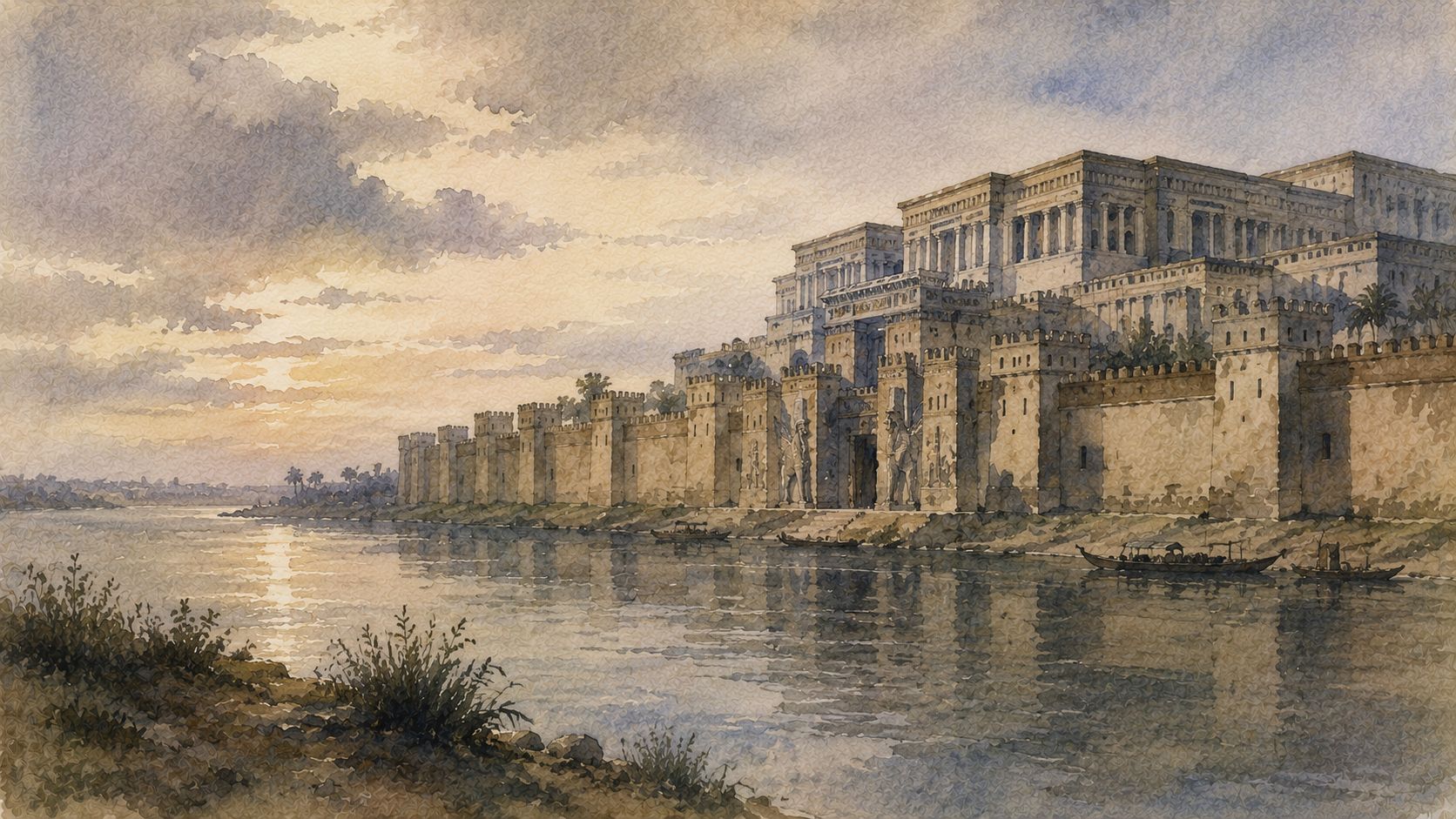
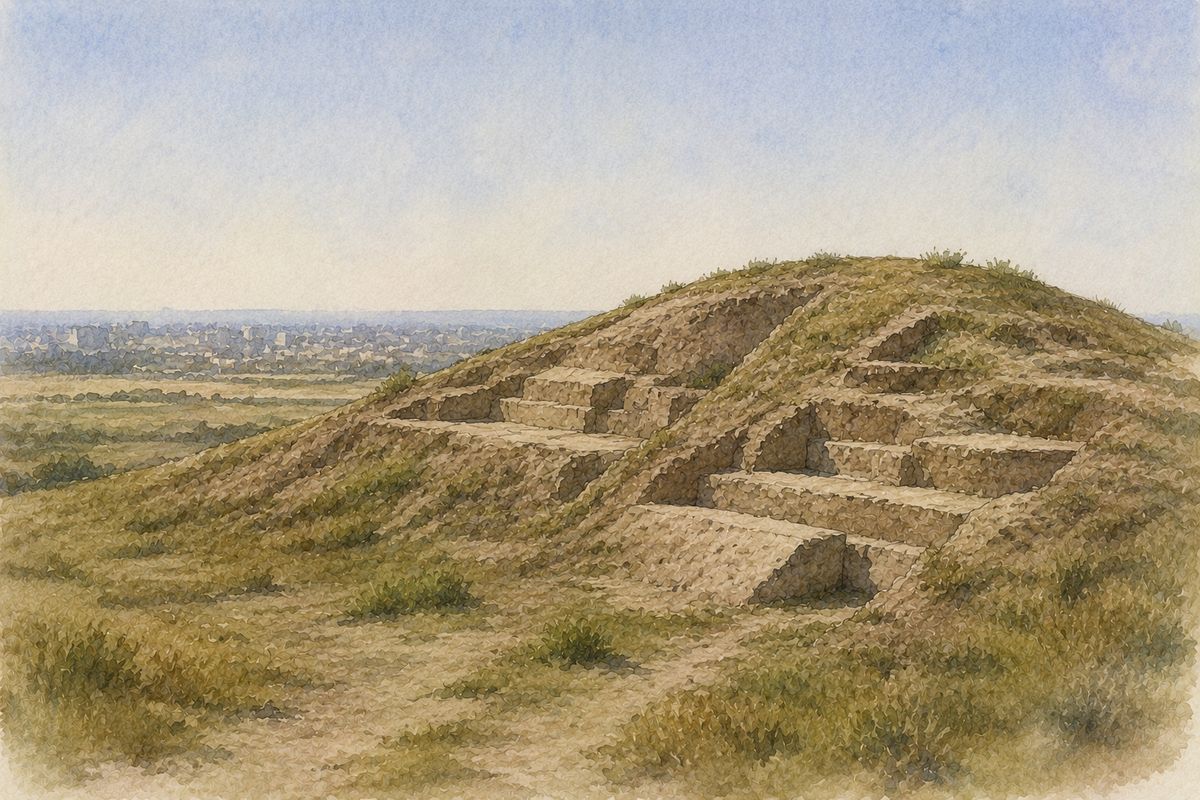
Nineveh sat on the east bank of the Tigris, inside what is now Mosul. The site is two mounds, Kuyunjik and Nebi Yunus, inside a long circuit of walls pierced by a series of named gates.
Around 705 BCE Sennacherib made it the Assyrian capital and rebuilt it on a scale that had no precedent. He put up a palace he named, without much modesty, the Palace Without Rival. He laid out gardens. He had water brought to the city from the hills through a system that included a stone aqueduct at Jerwan, which is still there.
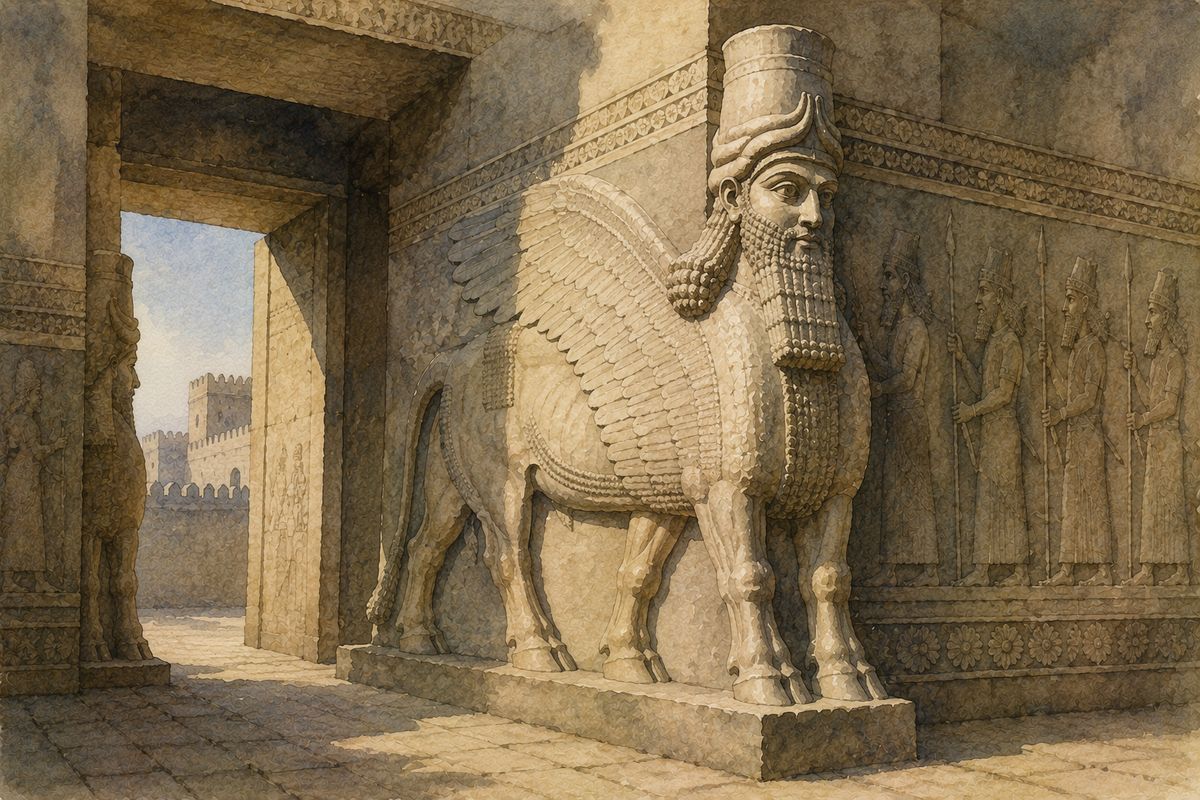
For a period it was very likely the largest city in the world. Its gateways and palace doorways were guarded by lamassu, the colossal human-headed winged bulls carved from stone, and the palace walls carried carved reliefs running metres at a stretch: campaigns, building works, a famous lion hunt. Assyrian relief is one of the great achievements of ancient art, and it is not Sumerian either.
The library that was collected on purpose
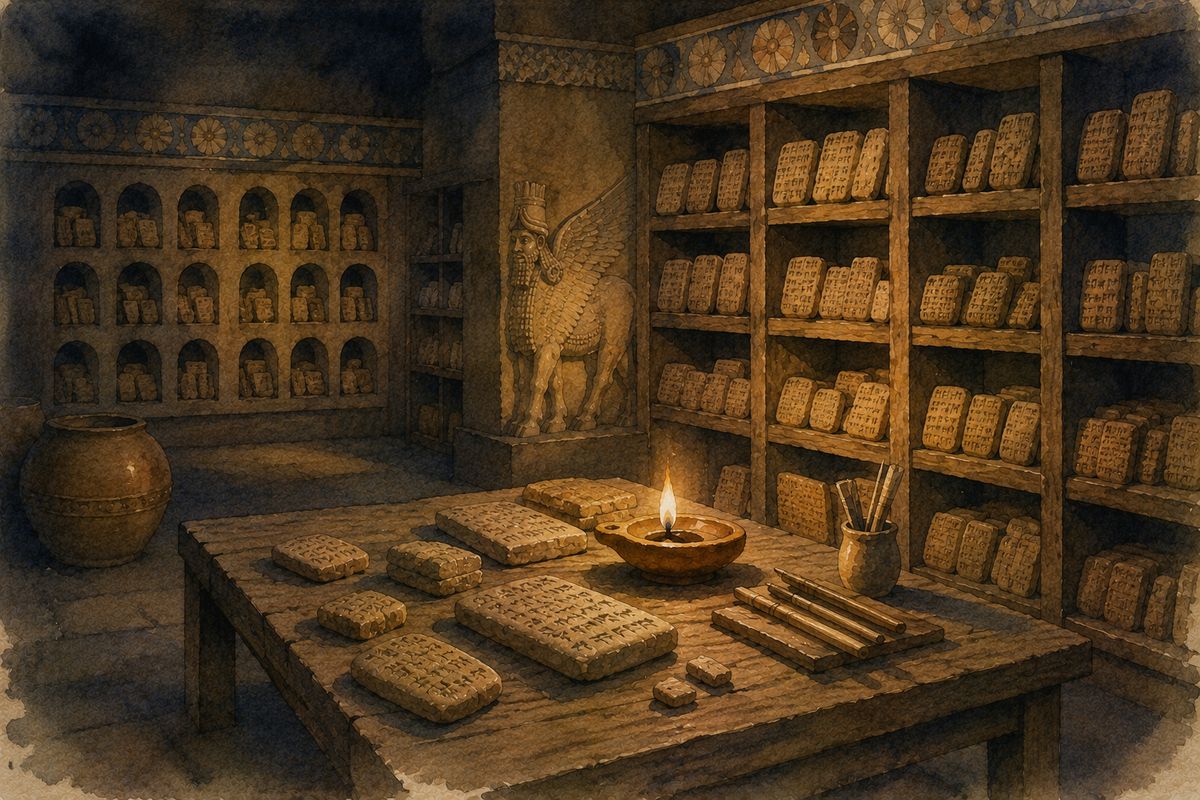
Ashurbanipal did something unusual. Rather than simply accumulating the records his administration generated, he set out to assemble the written tradition itself, sending agents to acquire and copy older Babylonian and Sumerian material.
That deliberate act of collection is why we can read Mesopotamian literature at all. The library at Nineveh is the single richest source we have. The version of the Epic of Gilgamesh that anyone reads today is substantially the Nineveh version.
There is a hard irony in how it reached us. Nineveh fell in 612 BCE to a coalition of Medes and Babylonians, and the palaces burned. Clay tablets do not burn. They bake. The fire that destroyed the city fired the library like a kiln and turned a collection of soft clay documents into something that could survive twenty-five centuries underground. Ashurbanipal's librarians preserved the texts; the people who sacked his city preserved the tablets.
A mound inside a living city
Nineveh is not a ruin alone in a desert. It lies inside Mosul, a working city, and it has been excavated, built over, walked across and lived beside for a very long time.
In 2015, during its occupation of Mosul, ISIS deliberately destroyed parts of the site, including reconstructed gates and lamassu. Documentation, conservation and reconstruction work has continued since, by Iraqi institutions and international partners.
We state that plainly and leave it there. It is recent, it concerns a living city and people who live in it, and it is not ours to make atmospheric. It is also part of the answer to a question readers ask about museum collections: the tablets that left in the 1850s are the reason a literature exists to be argued about at all, and the argument about where such things belong is a real one that this page does not pretend to settle.
What is attested, and what we added
Every factual page here is written against a canon record card that separates the evidence from the retelling, claim by claim. This is that card, shown in full.
Period: Northern Mesopotamia; capital of the Neo-Assyrian empire from c. 705 BCE, destroyed 612 BCE; the mound lies within modern Mosul
Written:𒌷𒉌𒉡𒀀
What the record supports
- Nineveh stood on the east bank of the Tigris in northern Mesopotamia, within what is now Mosul in Iraq; the site comprises the mounds of Kuyunjik and Nebi Yunus inside a long circuit of city walls with a series of named gates.
- Sennacherib made Nineveh the Assyrian capital around 705 BCE and rebuilt it on a vast scale, including the palace he called the Palace Without Rival, gardens, and an aqueduct at Jerwan carrying water to the city from the hills.
- Its gateways and palace doorways were guarded by lamassu, colossal human-headed winged bulls carved in stone, and its palace walls carried carved narrative reliefs of campaigns, hunts and building works.
- Ashurbanipal assembled a library at Nineveh intended to hold the written tradition, deliberately collecting older Babylonian and Sumerian material; it is the single richest source of Mesopotamian literature we have.
- Nineveh fell in 612 BCE to a coalition of Medes and Babylonians, and the burning of the palaces baked the clay tablets in the library, which is why they survived to be excavated.
- Nineveh is Assyrian and northern, roughly two and a half thousand years later than the founding of Uruk; it is not a Sumerian city, and Sumerian was already a learned language long before it.
- Parts of the site, including reconstructed gates and lamassu, were deliberately destroyed by ISIS in 2015, during its occupation of Mosul; documentation, conservation and reconstruction work has continued since.
What our story adds
Nothing. The chronicle takes one uncatalogued tablet out of the crates that left this city, and that belongs to the rediscovery story rather than to the city itself. Everything on this page is the record's.
What we never claim
That Nineveh was Sumerian, which it was not, or that it is contemporary with Uruk, which it is not by about two and a half thousand years. That anyone from outside built it or stocked its library. And we do not treat the destruction of 2015 as colour: it is recent, it is documented, and it is stated plainly or not at all.
Sources
- Wikipedia: Nineveh
- Wikipedia: Sennacherib
- Wikipedia: Library of Ashurbanipal
- Wikipedia: Lamassu
- Wikipedia: Jerwan
- Wikipedia: Battle of Nineveh (612 BC)
- Wikipedia: Destruction of cultural heritage by the Islamic State
- Reference
HIST_NINEVEH- Last reviewed
Suggested citation: Chronicles of Uruk, “Nineveh, the Assyrian capital” (HIST_NINEVEH), reviewed 2026-07-26.
Readings of Sumerian signs and names are the standard scholarly ones where a value is well attested, and are flagged for specialist review where it is contested. If you find an error, we want to hear about it.
Nineveh in the Chronicle
The chronicle takes one uncatalogued tablet out of the crates that left this city in the 1850s. That belongs to the story of the rediscovery, which has its own page, rather than to the city itself.
Everything here is the record's. We add nothing to Nineveh.
Common questions
- Was Nineveh a Sumerian city?
- No. Nineveh is Assyrian and in northern Mesopotamia, and its great age as a capital begins around 705 BCE, roughly two and a half thousand years after Uruk was founded in the south. Sumerian was by then a learned language, studied and copied but not spoken. The two belong to the same broad civilisation and to very different eras of it.
- Why did the tablets survive when the city was destroyed?
- Because they were clay and the palaces burned. Unbaked clay tablets are fragile, but fire hardens them the way a kiln does. The sack of 612 BCE fired Ashurbanipal's library and made it durable enough to last another twenty-five centuries in the ground.
- What is a lamassu?
- A protective figure carved as a colossal winged bull or lion with a human head, set at gateways and palace doorways in Assyrian cities. Many are carved with five legs, so that they read correctly as standing from the front and as walking from the side. They are Assyrian, not Sumerian.
Who ruled here
Named rulers our record ties to this city. Each page says whether the evidence is an object made in their lifetime or a list written long after.
Keep reading
Uruk, the first great city
The Sumerian city that gave an age its name, home to the world's earliest writing and the king who became its oldest legend.
Nippur
The religious centre of Sumer, which granted kingship and never held it.
Ur
The moon god's city, its great ziggurat, and the last Sumerian-speaking state.
Eridug
Where the Sumerians believed the world's first city stood, and kingship first came down.
Keep exploring the Chronicle