History
Eridug, where kingship first came down
The Sumerians believed this was the first city in the world. It was not, quite, but it is one of the oldest places anyone has ever lived continuously, and they were not wrong about what it meant.
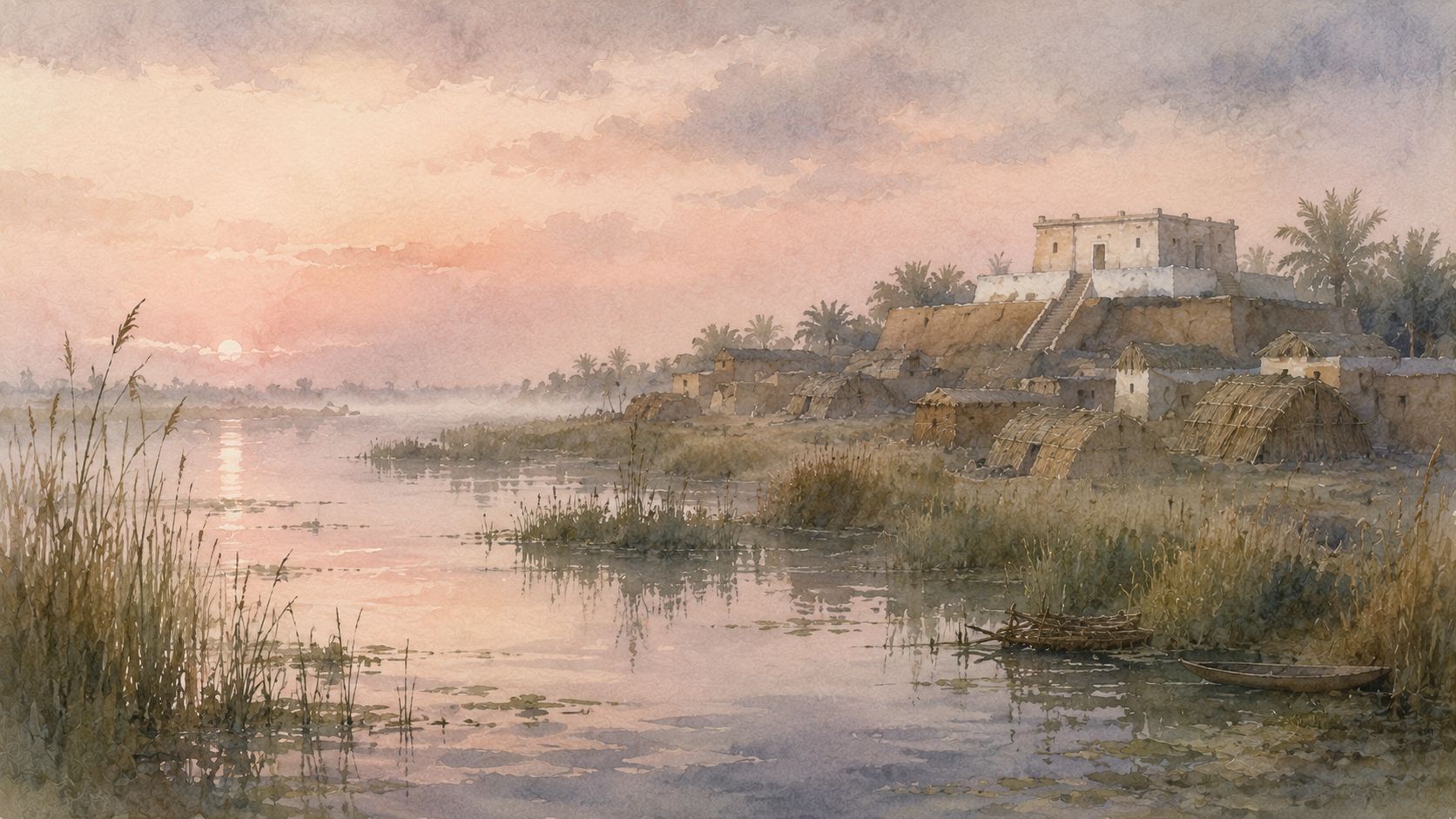
Eridug sat at the edge of the southern marshes, and for the people who came after, it was where everything started. The Sumerian King List opens by saying that kingship first descended from heaven here. That is a tradition rather than a record, but the archaeology underneath it is genuinely extraordinary: people were living on this spot from around 5400 BCE, rebuilding the same temple on the same footprint, one over the ruin of the last, for thousands of years.
It belonged to Enki, the god of sweet water and of cleverness, and of getting people out of trouble by thinking sideways.
Enki, the Abzu, and the house above it
Eridug's god was Enki, called Ea in Akkadian: god of fresh water, of craft, and of cunning. His house was the E-abzu, and it stood over the Abzu, the body of fresh water the Sumerians believed lay beneath the earth.
That belief was not arbitrary. In southern Iraq you dig and you find water. The Abzu is what the ground actually does, turned into cosmology, and Eridug sat where the marsh, the river and the water table all met.
Enki is the one god in the Sumerian pantheon who is reliably on humanity's side. When the assembly decides something harsh, he is the one who finds a way around it without quite disobeying, which in the Descent is exactly what he does after Enlil and Nanna have both refused.
The first city, according to the people who came after
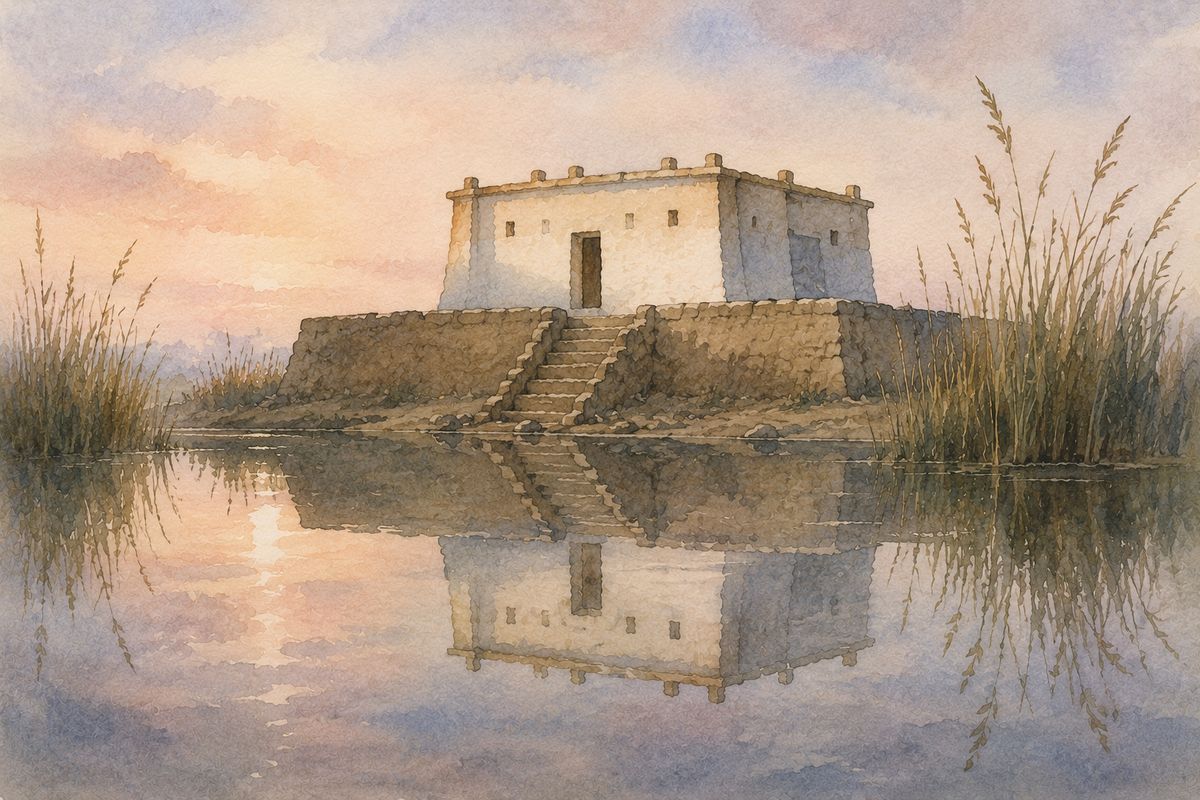
"After kingship had descended from heaven, kingship was in Eridug." That is the opening of the Sumerian King List, and it names Alulim as the first king, reigning an implausible number of years.
Treat that as tradition, not history. The King List's early reigns are legendary, the numbers are not real, and Alulim is not a historical person we can place. What it does tell us, reliably, is what Sumerians in the second millennium believed about their own origins, which is a different kind of fact and still a valuable one.
The archaeology says something quieter and more impressive: continuous occupation from the Ubaid period, around 5400 BCE, making it one of the oldest settlements in southern Mesopotamia. Eridug is also attached to the Sumerian flood tradition known as the Eridu Genesis.
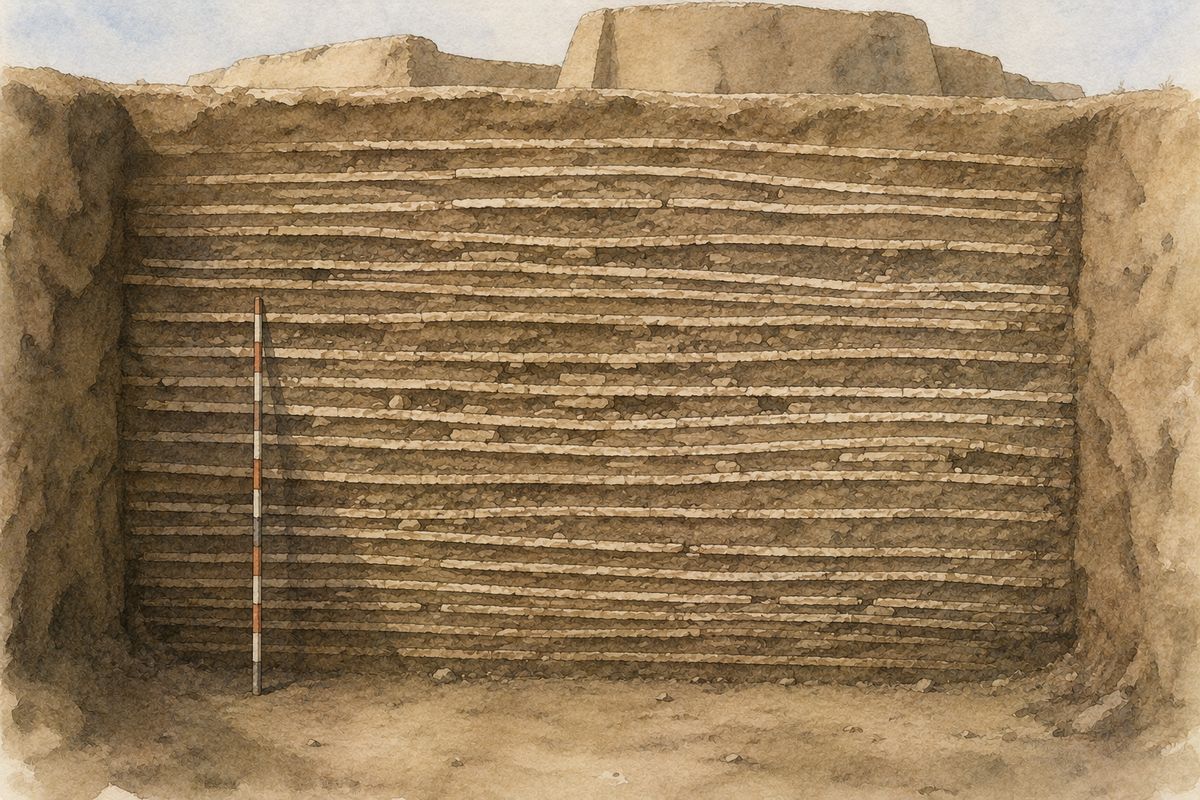
Eighteen temples, one footprint
The excavations found something you rarely get so cleanly: a sequence of temples built on the same spot, each raised over the levelled ruin of the one before, layer on layer, across millennia. You can read the whole architectural history of a Mesopotamian temple in one vertical section, from a small mudbrick room to a monumental platform.
Nobody moved the shrine. Over thousands of years, through changes of language and rule, the answer to "where does the god live" stayed the same square of ground.
The marsh that fed the city is gone now. Eridug sits in dry desert, and the water that explained everything about the place, the Abzu, the reeds, Enki himself, has withdrawn from it entirely.
What is attested, and what we added
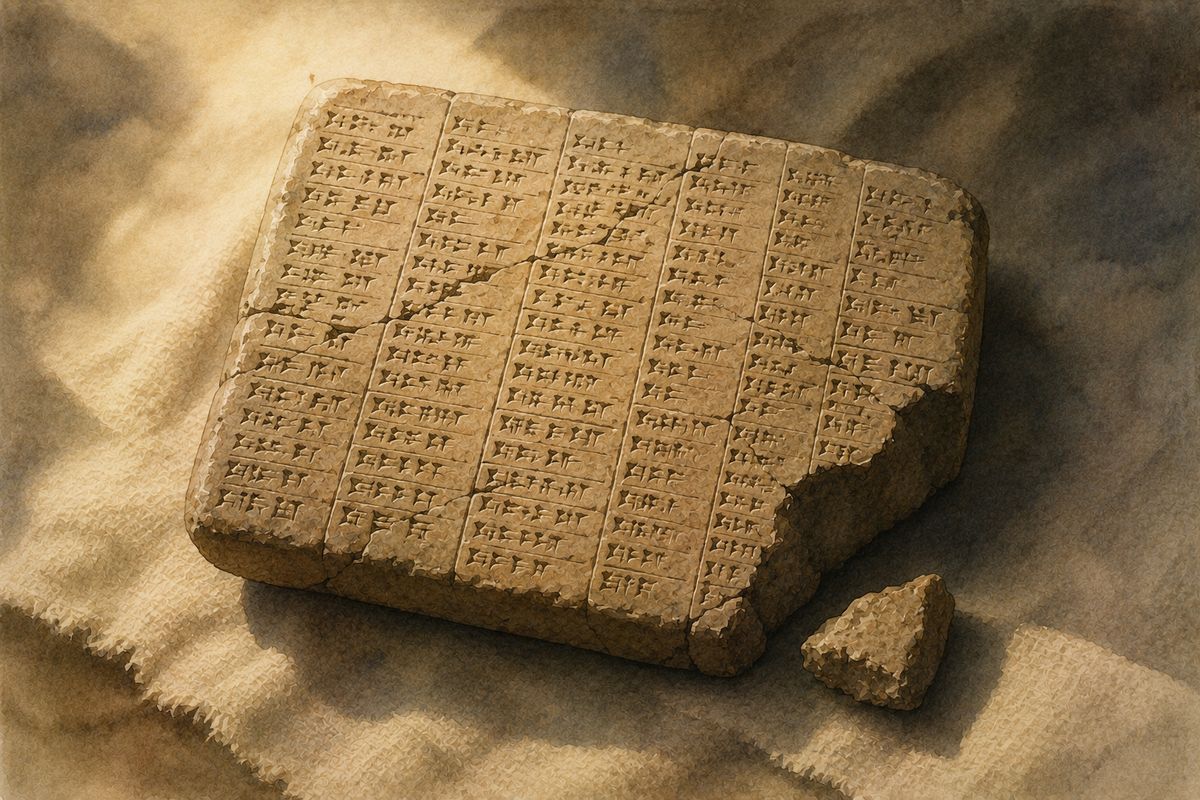
Every factual page here is written against a canon record card that separates the evidence from the retelling, claim by claim. This is that card, shown in full.
Period: Southern Mesopotamia; settled from the Ubaid period ~5400 BCE, and remembered by the Sumerians as the first city of all
Written:𒉣𒆠
What the record supports
- Eridug, commonly written Eridu in modern books, lay at the edge of the southern marshes in what is now Dhi Qar in southern Iraq; the mound is called Tell Abu Shahrain. Its god was Enki, Akkadian Ea, god of sweet water, craft and cunning, whose house E-abzu stood over the Abzu, the fresh water the Sumerians believed lay beneath the earth.
- The Sumerian King List opens by saying that kingship first descended from heaven at Eridug, naming Alulim as the first king; this is tradition, not history, and the King List's early reigns are legendary. Archaeologically the site was occupied from the Ubaid period, around 5400 BCE, which makes it one of the oldest settlements in southern Mesopotamia.
- Excavation found a sequence of temples rebuilt on the same spot, one over the ruin of the last, layer upon layer. The city is also attached to the Sumerian flood tradition known as the Eridu Genesis. The marsh that fed it is gone, and the mound now sits in dry desert.
What our story adds
That Eridug feels older than anywhere else in the story, and that an answer given there carries the weight of the oldest house. Atmosphere and precedence only.
What we never claim
That Eridug was founded, built or taught by anyone from outside; that the Abzu is anything other than the fresh water the Sumerians believed lay beneath the earth; that Alulim was a historical king, or that the King List's descent of kingship is an event rather than a tradition.
Sources
- Reference
HIST_ERIDUG
Suggested citation: Chronicles of Uruk, “Eridug, where kingship first came down” (HIST_ERIDUG), reviewed .
Readings of Sumerian signs and names are the standard scholarly ones where a value is well attested, and are flagged for specialist review where it is contested. If you find an error, we want to hear about it.
Eridug in the Chronicle
Eridug feels older than anywhere else in the story, and an answer given there carries the weight of the oldest house.
That is atmosphere and precedence, taken from what the city actually was rather than added to it. The Abzu is the fresh water the Sumerians believed lay beneath the earth, and nothing else.
Common questions
- Was Eridug really the first city?
- It is one of the oldest settlements in southern Mesopotamia, occupied from around 5400 BCE, and the Sumerians themselves regarded it as the first city of all. "First city" is a claim about their tradition rather than a ranking we can verify. Uruk, later, was the first to reach the scale we would recognise as urban.
- What is the Abzu?
- The fresh water the Sumerians believed lay beneath the earth, and Enki's domain. Eridug's temple, the E-abzu, was built over it. In the marshland south of Iraq, where digging reaches water quickly, it is a piece of cosmology grown directly out of the local ground.
- Is the Sumerian King List reliable?
- Not as a chronicle of early reigns, no. Its opening kings rule for tens of thousands of years, and Alulim of Eridug is not a person we can place historically. It becomes more usable for later periods, and it is always valuable as evidence of what Mesopotamians believed about their own past.
Who ruled here
Named rulers our record ties to this city. Each page says whether the evidence is an object made in their lifetime or a list written long after.
Keep reading
Uruk, the first great city
The Sumerian city that gave an age its name, home to the world's earliest writing and the king who became its oldest legend.
Nippur
The religious centre of Sumer, which granted kingship and never held it.
Ur
The moon god's city, its great ziggurat, and the last Sumerian-speaking state.
Nineveh
The Assyrian capital, and the library whose burning preserved the oldest story.
Keep exploring the Chronicle