Histoire
Ceux qui tenaient ces cités
14 dirigeants nommés, chacun évalué selon ce que les preuves soutiennent réellement : 10 attestés par des objets faits de leur vivant, 4 connus seulement par la tradition.
Sumer nous a laissé des noms de rois sur des briques, sur des sceaux, sur des perles portées à des centaines de kilomètres, et dans une liste qui commence par un règne de vingt-huit mille ans. Tout cela est du matériel réel. Une partie seulement est de l'histoire.
Cette page sépare les deux, personne par personne, et relie chacune à la cité dont elle relève et à la période où elle se place. Là où les preuves s'arrêtent, elle le dit, et elle le dit à côté du nom plutôt qu'en note de bas de page.
Comment lire les marques
- Attesté
- Une personne réelle. Des objets, des inscriptions ou des archives faits de son vivant portent son nom.
- Par la tradition
- Nommée par la tradition, sans attestation contemporaine de la personne. Les textes sont réels ; que l'individu l'ait été n'est pas établi.
Avant le début du cadre
Des règnes que la tradition place avant le déluge, hors de toute période archéologique.
La période dynastique archaïque
vers 2900 à 2350 av. n. è.
Mesannepada
Attestéthe earliest king of Ur we can hold in our hands
- Règne :
- c. 26th century BCE
- Cité :
- Ur
Founder of the First Dynasty of Ur, and among the earliest Mesopotamian kings attested by objects made in his own lifetime rather than by a later list.
Enmerkar
Par la traditionthe king in the poem about writing
- Règne :
- the King List places him in the First Dynasty of Uruk; no contemporary attestation
- Cité :
- Uruk
A king of Uruk in the Sumerian King List, and the hero of the Sumerian poem that contains the oldest story about writing being invented.
Gilgamesh
Par la traditionthe one everyone has heard of
- Règne :
- the King List places him in the First Dynasty of Uruk
- Cité :
- Uruk
King of Uruk in the Sumerian King List and the hero of the Epic. A real early ruler may lie behind the name; the poem is literature either way.
Lugalbanda
Par la traditionthe father, and a king in his own poems
- Règne :
- the King List places him in the First Dynasty of Uruk
- Cité :
- Uruk
An early king of Uruk in the Sumerian King List, hero of two Sumerian poems of his own, and later worshipped as a god.
Puabi
Attestéthe burial that made Ur famous
- Règne :
- no reign is recorded; her cylinder seal gives her the title nin
- Cité :
- Ur
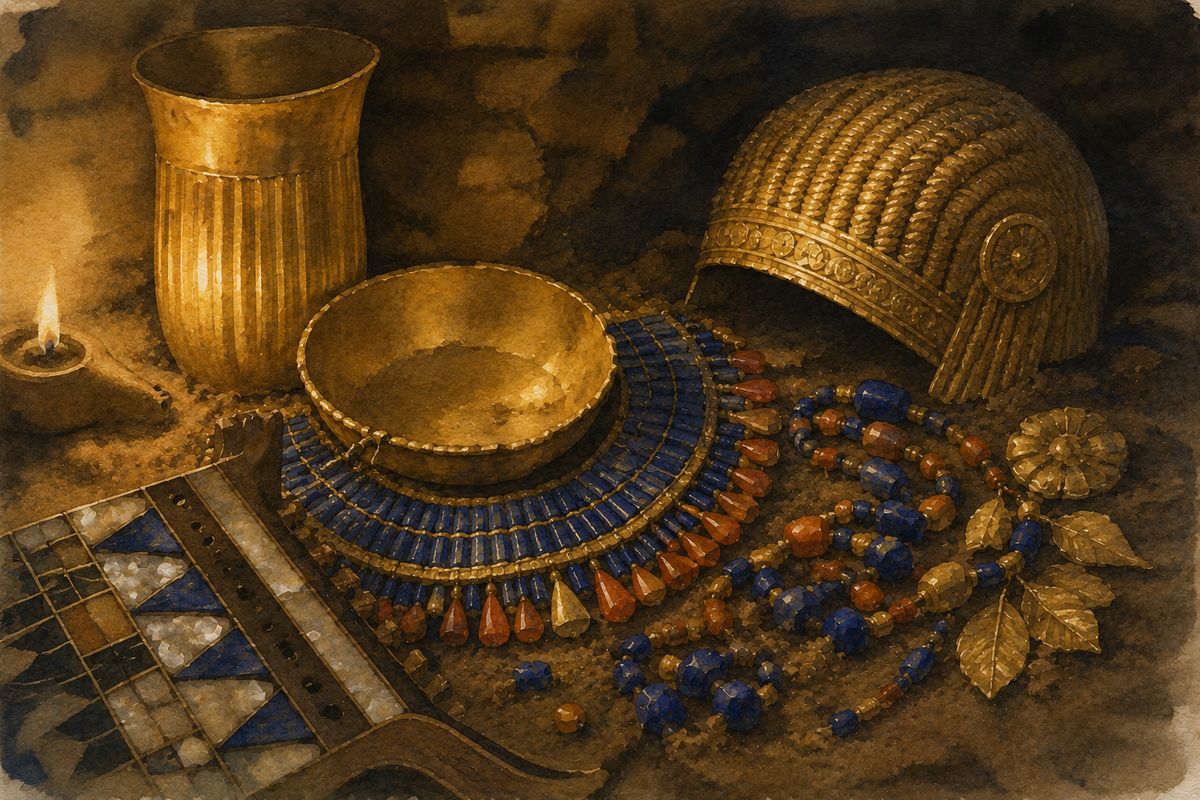
A woman of high rank buried at Ur around 2600 BCE with lyres, a gold headdress and attendants. Her seal names her, which is why we know her name at all.
L'empire d'Akkad
vers 2334 à 2154 av. n. è.
Sargon of Akkad
Attestéthe first empire
- Règne :
- c. 2334 to 2279 BCE
The king who brought the Sumerian cities under one rule, founding the first empire of the region. His capital has never been found.
Enheduanna
Attestéhigh priestess, and the first author with a name
- Règne :
- she did not rule; she held the office of en-priestess at Ur, c. 2300 BCE
- Cité :
- Ur
Daughter of Sargon and high priestess of Nanna at Ur, and the earliest author whose name is attached to surviving work.
Naram-Sin
Attestéthe king who wrote himself a god
- Règne :
- c. 2254 to 2218 BCE
Sargon's grandson, and the first Mesopotamian king known to have claimed divinity in his own lifetime.
La troisième dynastie d'Ur
vers 2112 à 2004 av. n. è.
Ur-Nammu
Attestéthe ziggurat and the law
- Règne :
- c. 2112 to 2095 BCE
- Cité :
- Ur
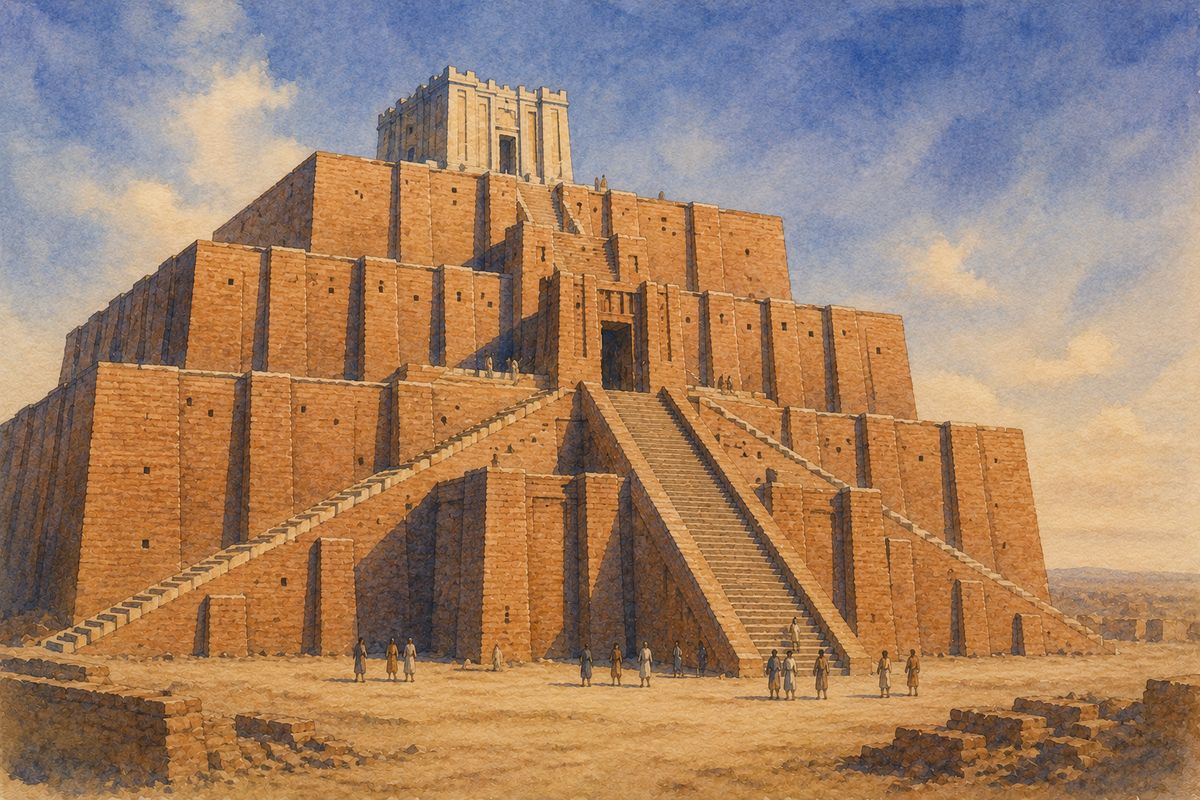
Founder of the Third Dynasty of Ur, builder of the great ziggurat that still stands, and the name on the oldest surviving law code.
Shulgi
Attestéthe administrator
- Règne :
- c. 2094 to 2046 BCE
- Cité :
- Ur
Ur-Nammu's son, who ruled for around forty-eight years and built the bureaucracy whose clay archives are the richest record any Mesopotamian period has left.
Ibbi-Sin
Attestéthe last king, and the lament
- Règne :
- c. 2028 to 2004 BCE
- Cité :
- Ur
The last king of the Third Dynasty of Ur, under whom the last great Sumerian-speaking state fell to Elam and its allies around 2004 BCE.
L'empire néo-assyrien
vers 911 à 609 av. n. è.
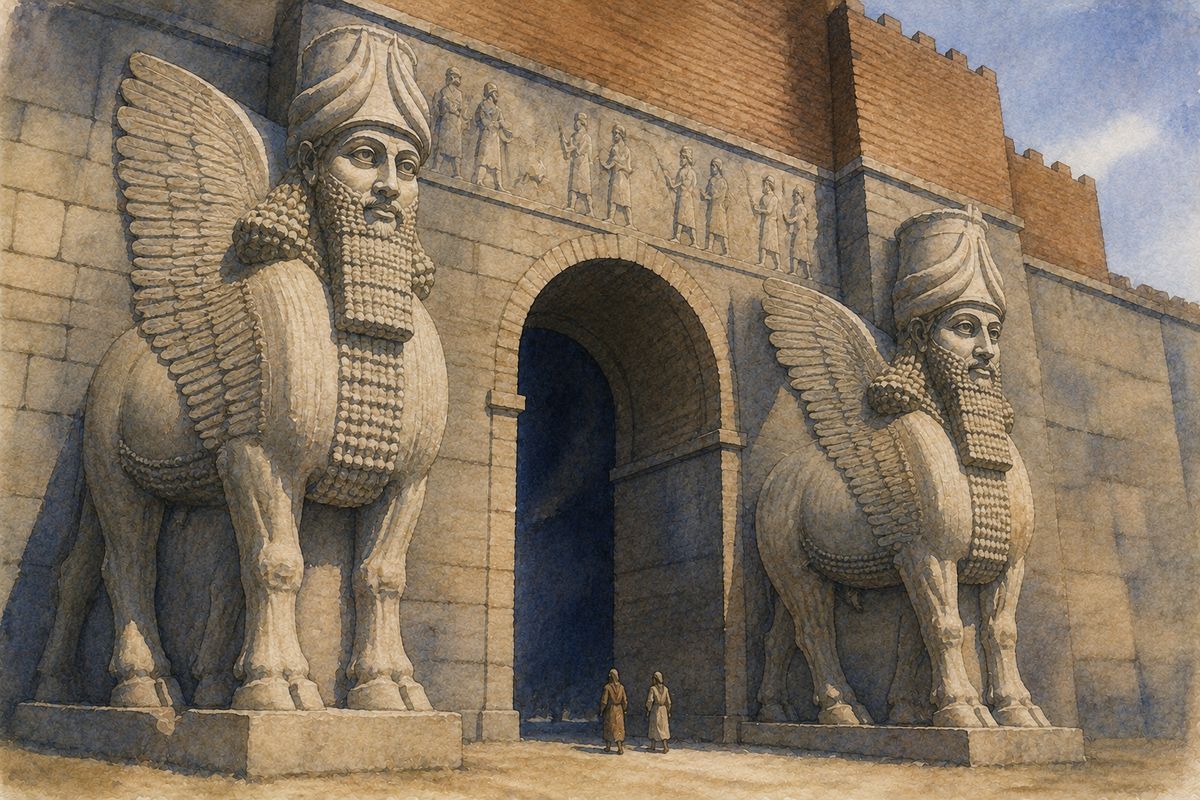
Sennacherib
Attestéthe capital without rival
- Règne :
- 705 to 681 BCE
- Cité :
- Nineveh
The Assyrian king who made Nineveh his capital around 705 BCE and rebuilt it on a scale the region had not seen.
Ashurbanipal
Attestéthe library
- Règne :
- 669 to c. 631 BCE
- Cité :
- Nineveh
The Assyrian king who assembled a library at Nineveh meant to hold the written tradition, and so preserved most of what we can read of Mesopotamian literature.
Pourquoi il n'y a ici aucun portrait
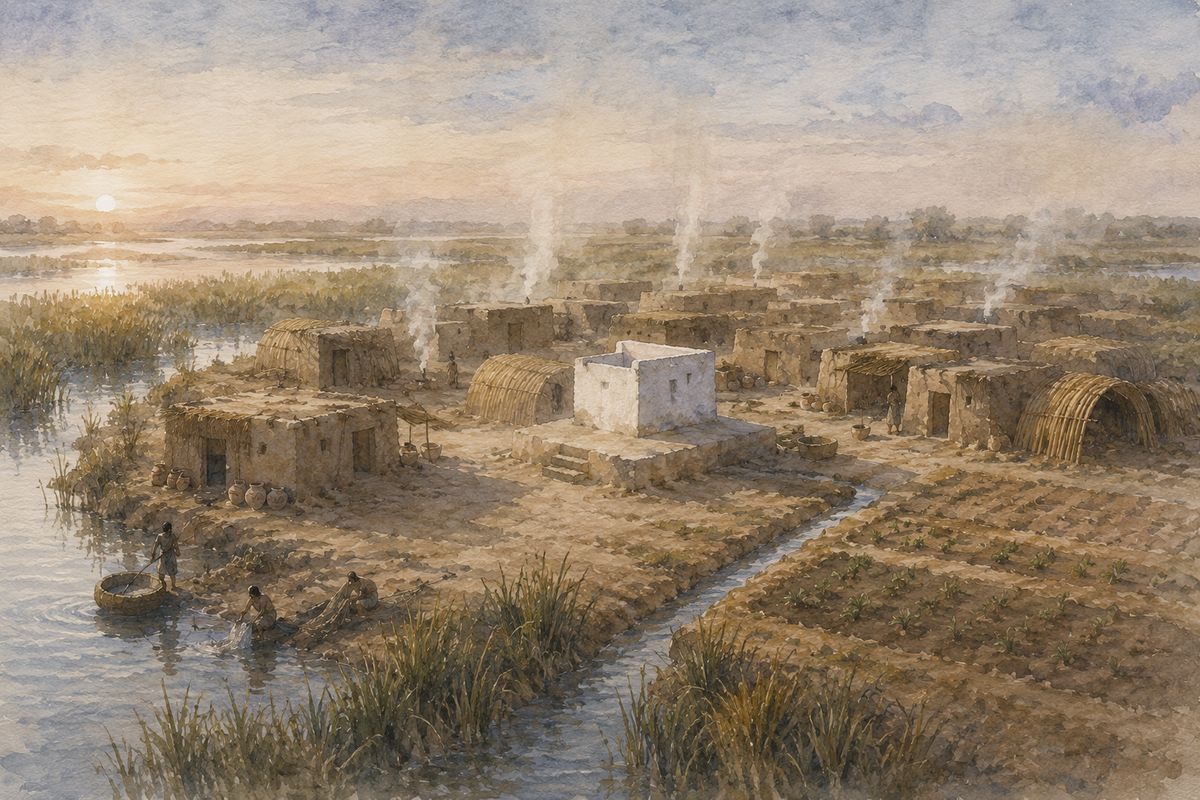
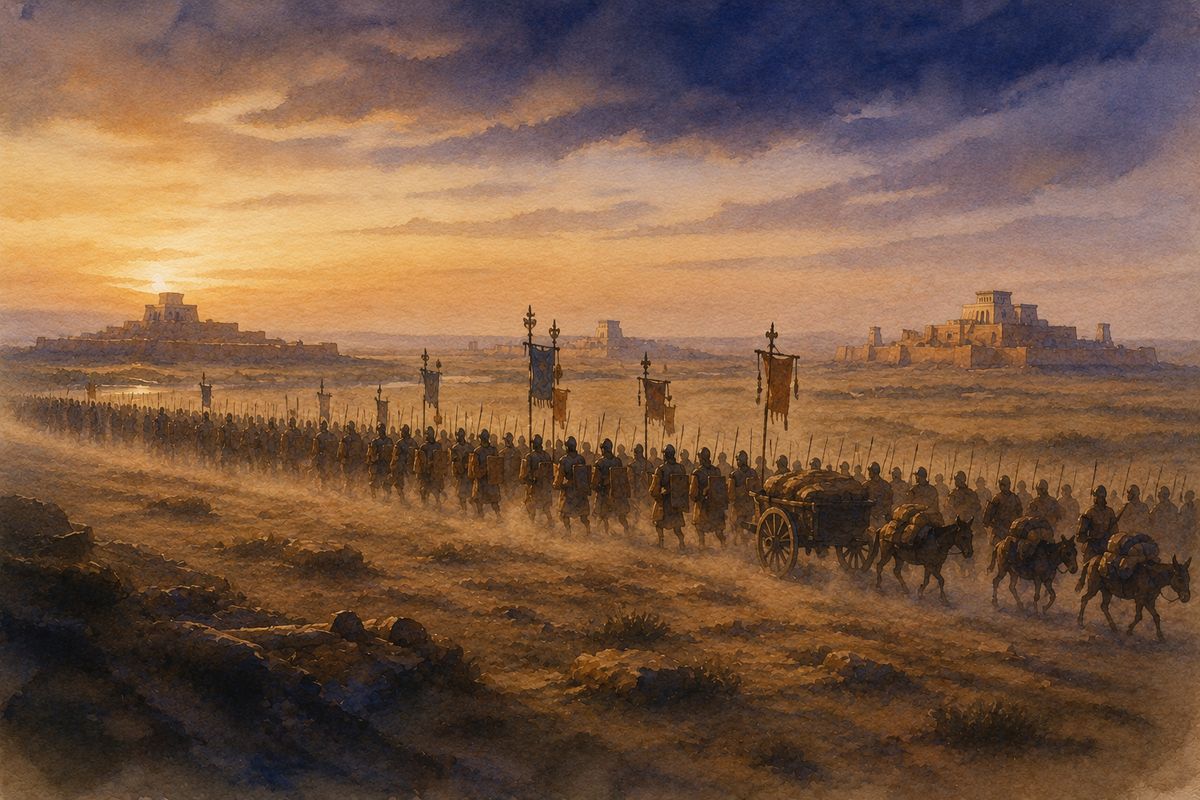
Nous n'avons de portrait d'aucune de ces personnes, et personne n'en a. La Stèle de victoire montre Naram-Sîn tel que sa propre cour voulait qu'on le voie ; tout le reste est postérieur et inventé. Chaque groupe ci-dessus est donc illustré par sa période, et légendé comme telle.
Nous pourrions générer un visage pour chaque nom de cette page en un après-midi. Nous ne le ferons pas. Une image placée à côté de faits sourcés finit par se lire comme une preuve, et la seule chose que cette section ne peut pas se permettre, c'est que son art soit pris pour son document.
Continuez à explorer la Chronique