Histoire
Une chronologie de la Mésopotamie antique
11 périodes, des premiers villages agricoles de la plaine alluviale du sud jusqu'au jour de 1872 où un conservateur lut un récit du déluge plus ancien que la Genèse. Datées avec toute la prudence que permettent les preuves, et sourcées de bout en bout.
Trois mille ans d'écriture, puis mille sept cents ans de silence. Voici la forme de cette histoire : quand chaque période a couru, ce qui y a changé, et où lire la suite. Les périodes elles-mêmes sont de l'histoire réelle de bout en bout ; ce que nous posons par-dessus, notre récit, n'apparaît qu'au pied de la page, signalé comme le nôtre.
vers 5500 à 4000 av. n. è.(approximatif)
La période d'Obeid
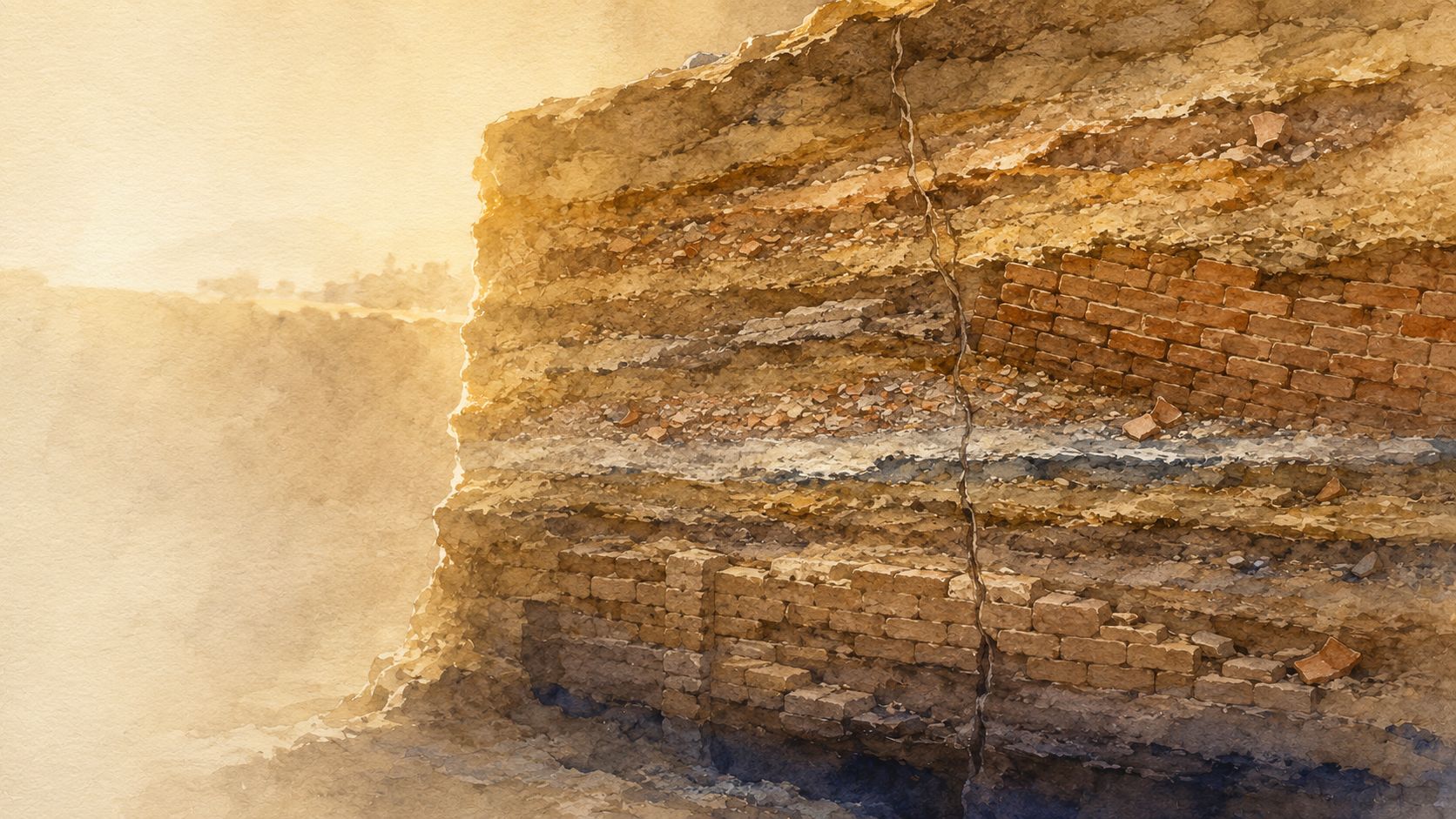
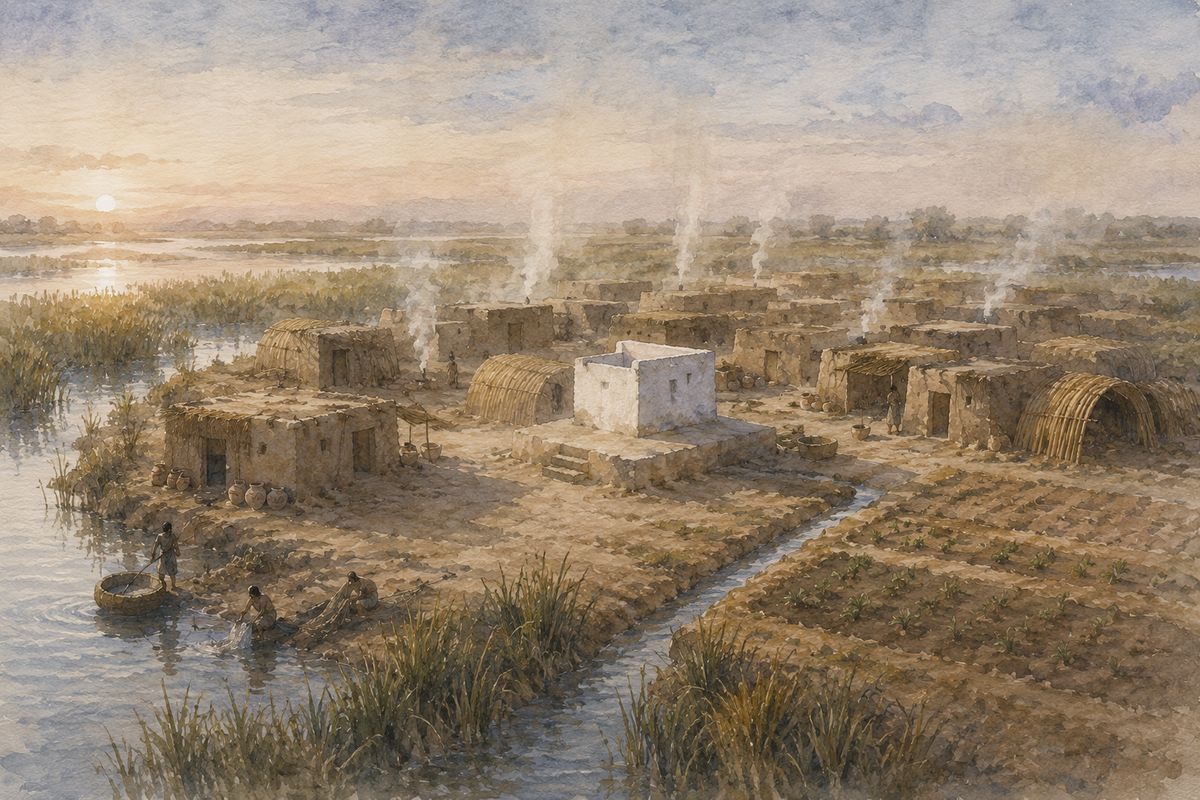
Des villages agricoles se répandent sur la plaine inondable du sud et les premières plates-formes de temple sont dressées, à Eridug entre autres. Le schéma qui deviendra une ville, un sanctuaire au centre et l'irrigation autour, est déjà visible.
Villes Eridug
Sources : Ubaid period · Eridu
vers 4000 à 3100 av. n. è.(approximatif)
La période d'Uruk
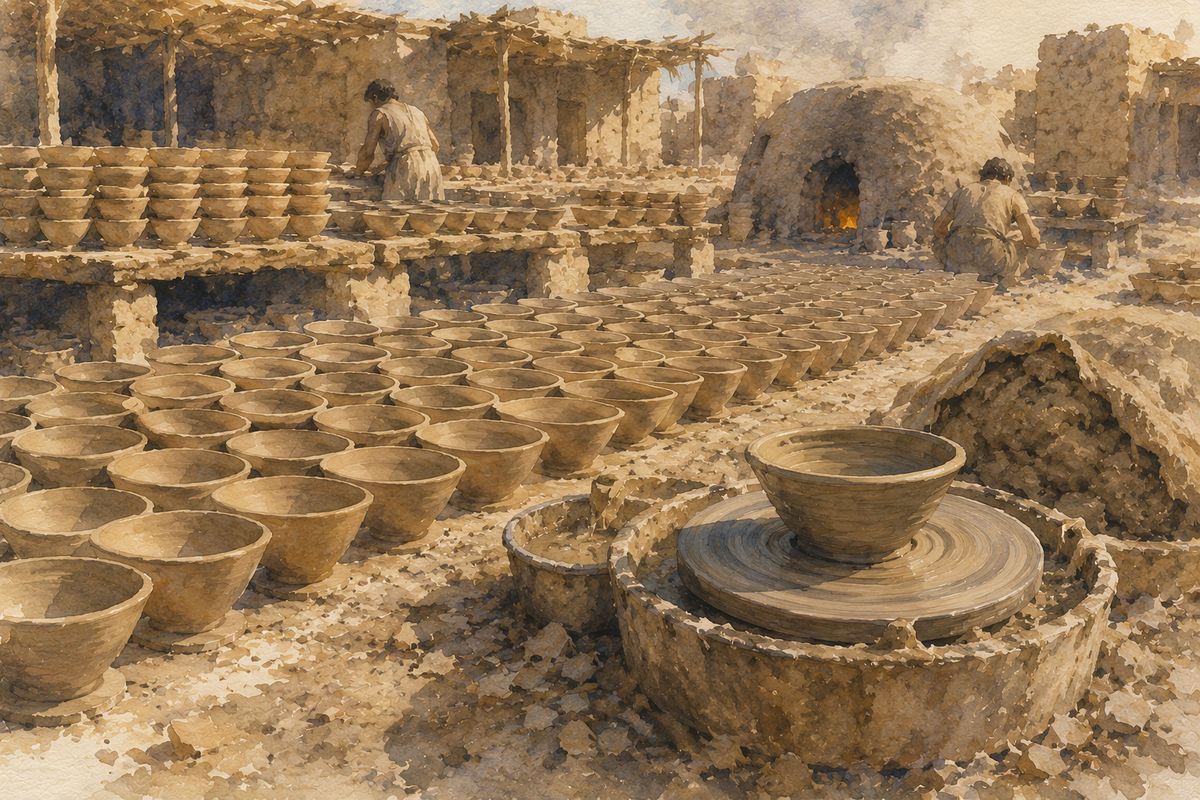
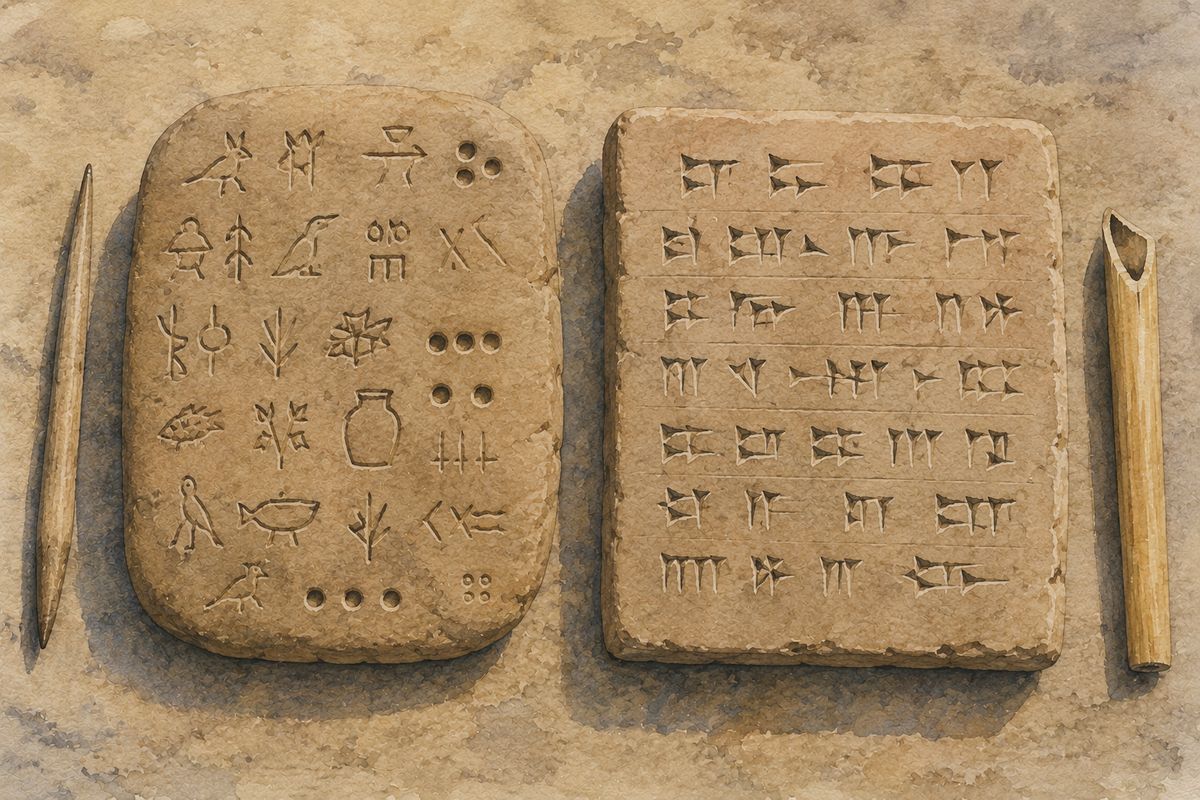
Uruk devient sans doute la première véritable ville du monde, des dizaines de milliers d'habitants derrière une grande muraille. L'âge des premières fois : architecture de temple monumentale, tour de potier rapide, bols à bord biseauté produits en masse, et la plus ancienne écriture connue, qui commence en comptabilité de temple et non en littérature.
En savoir plus : Uruk s'élève, la première grande ville · Le cunéiforme et la première écriture
Sources : Uruk period · Uruk · Proto-cuneiform
vers 3100 à 2900 av. n. è.(approximatif)
La période de Jemdet Nasr
Une courte phase de transition. L'écriture passe des images aux coins à mesure que le calame de roseau est pressé plutôt que tiré, et l'inventaire des signes commence à se réduire vers quelque chose qu'un scribe pouvait apprendre.
Villes Uruk
En savoir plus : Le cunéiforme et la première écriture
Sources : Jemdet Nasr period · Cuneiform
vers 2900 à 2350 av. n. è.(approximatif)
La période dynastique archaïque
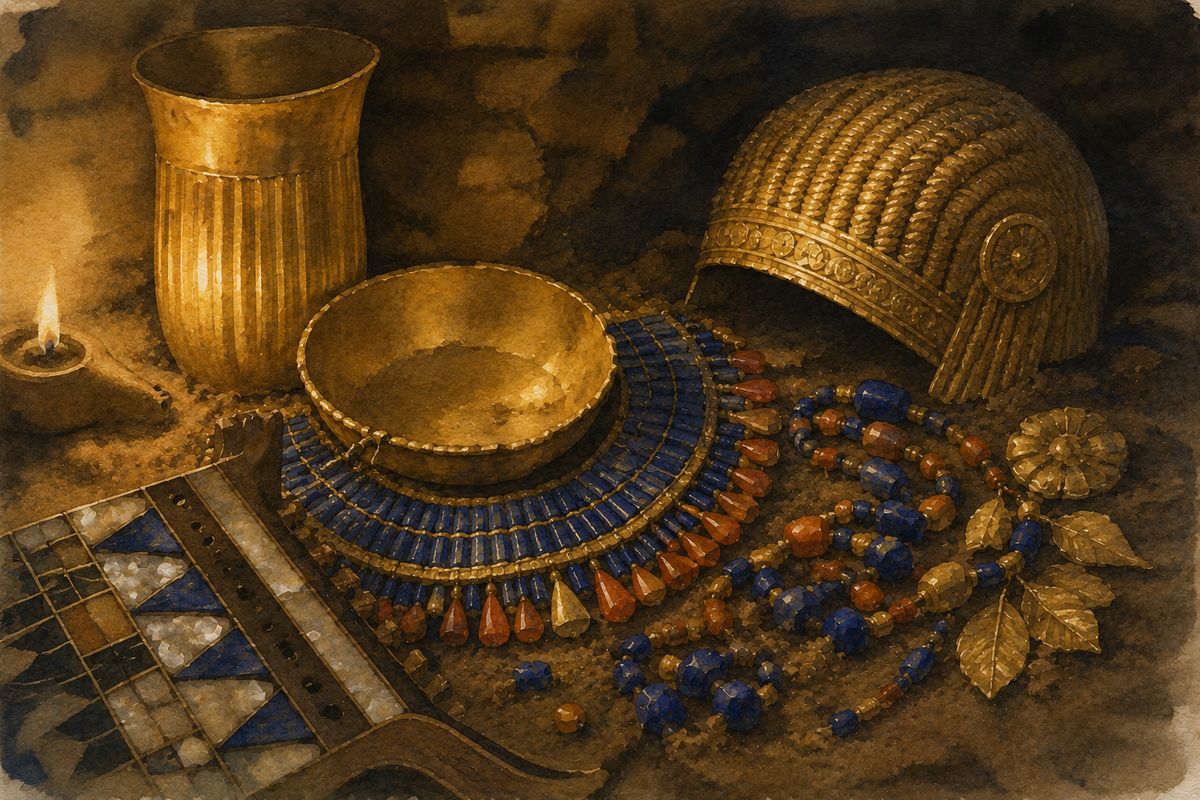
Des cités-États rivales, Uruk, Ur, Lagash, Kish, Umma, avec des rois, des traités et des guerres de frontière. Le cimetière royal d'Ur appartient à cette période, comme les souverains semi-légendaires que nomme la Liste royale sumérienne, Gilgamesh parmi eux. Les sceaux-cylindres deviennent l'instrument ordinaire de l'autorité.
À cette période : Mesannepada · Enmerkar · Gilgamesh · Lugalbanda · Puabi
Sources : Early Dynastic Period (Mesopotamia) · Sumerian King List · Cylinder seal
vers 2334 à 2154 av. n. è.(approximatif)
L'empire d'Akkad
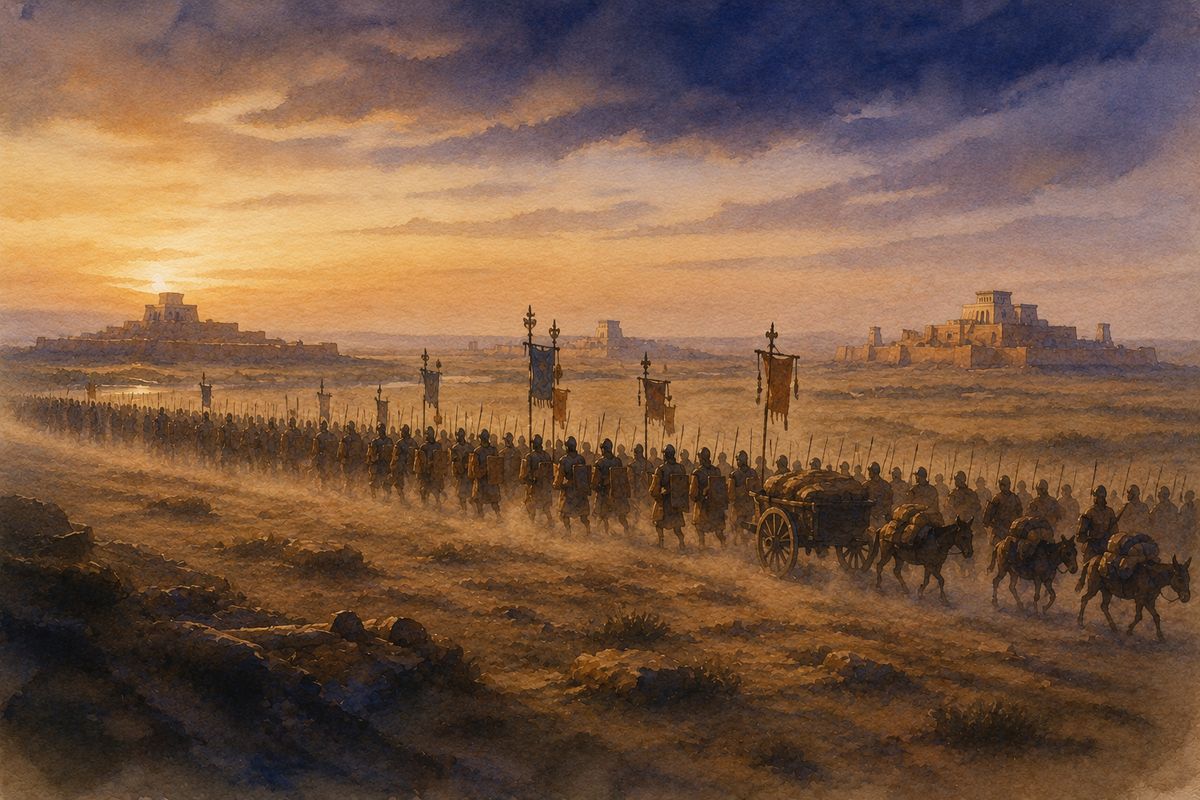
Sargon d'Akkad réunit les cités sumériennes sous une seule autorité, premier empire de la région. L'akkadien, langue sémitique, s'écrit avec les mêmes signes cunéiformes que le sumérien, et pendant des siècles les deux se lisent côte à côte.
À cette période : Sargon of Akkad · Enheduanna · Naram-Sin
Sources : Akkadian Empire · Sargon of Akkad
vers 2112 à 2004 av. n. è.(approximatif)
La troisième dynastie d'Ur
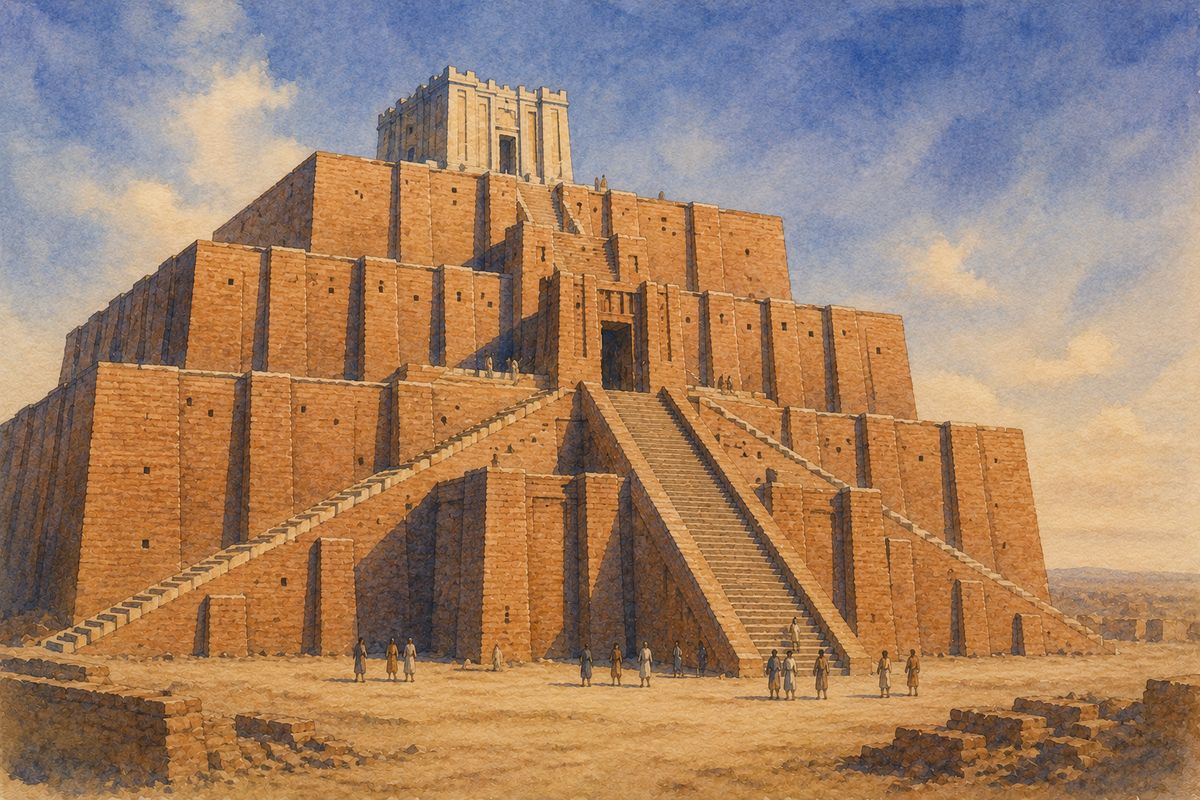
Le dernier grand État de langue sumérienne. Ur-Nammu dresse la ziggourat au-dessus de la maison de Nanna et son fils Shulgi tient une administration qui laisse des dizaines de milliers de tablettes. Elle s'achève vers 2004 av. n. è. sous Ibbi-Sîn, chute pleurée dans la Lamentation sur Ur.
À cette période : Ur-Nammu · Shulgi · Ibbi-Sin
Sources : Third Dynasty of Ur · Ziggurat of Ur · ETCSL
vers 2000 à 1595 av. n. è.(approximatif)
La période paléo-babylonienne
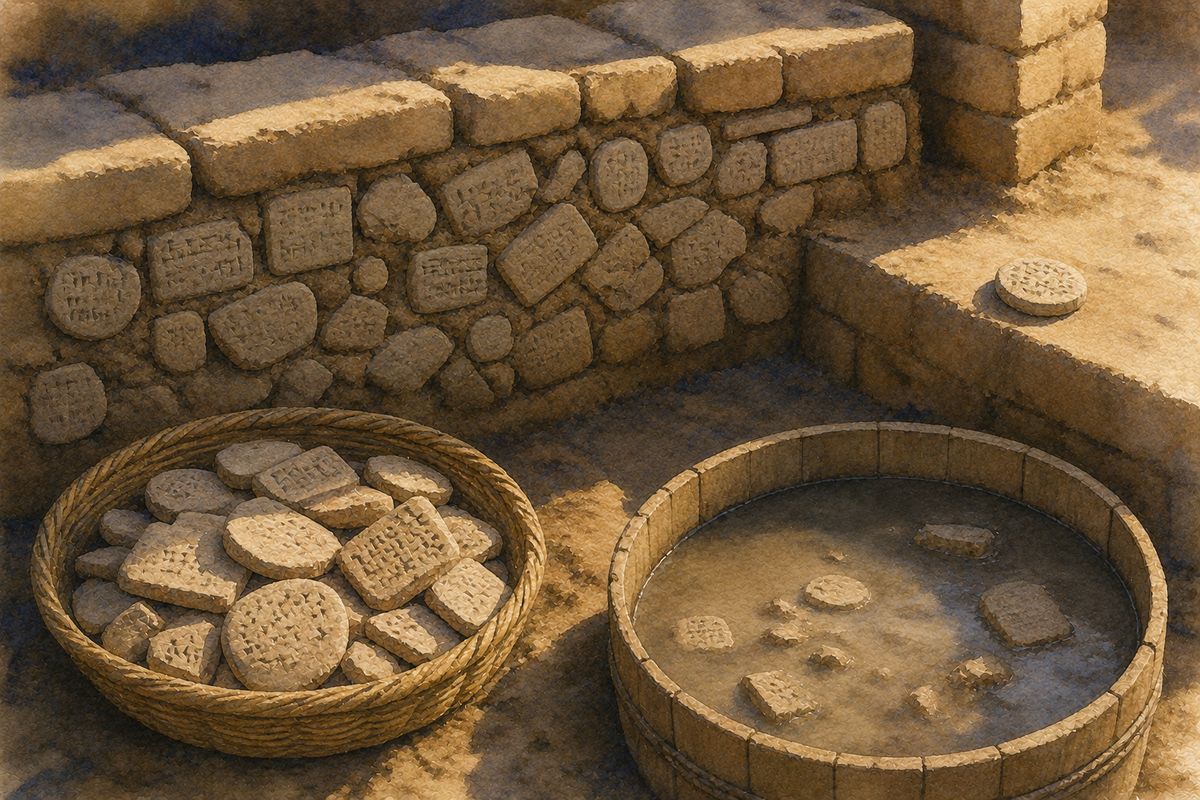
Le sumérien survit comme langue savante et liturgique plutôt que parlée, et les écoles de scribes le copient sans fin, ce qui est précisément pourquoi nous pouvons lire la littérature sumérienne. La plupart des copies conservées des grands poèmes sont des devoirs de ces siècles, en bonne partie exhumés à Nippur.
En savoir plus : Le cunéiforme et la première écriture
Sources : First Babylonian dynasty · Eduba · ETCSL
vers 911 à 609 av. n. è.
L'empire néo-assyrien
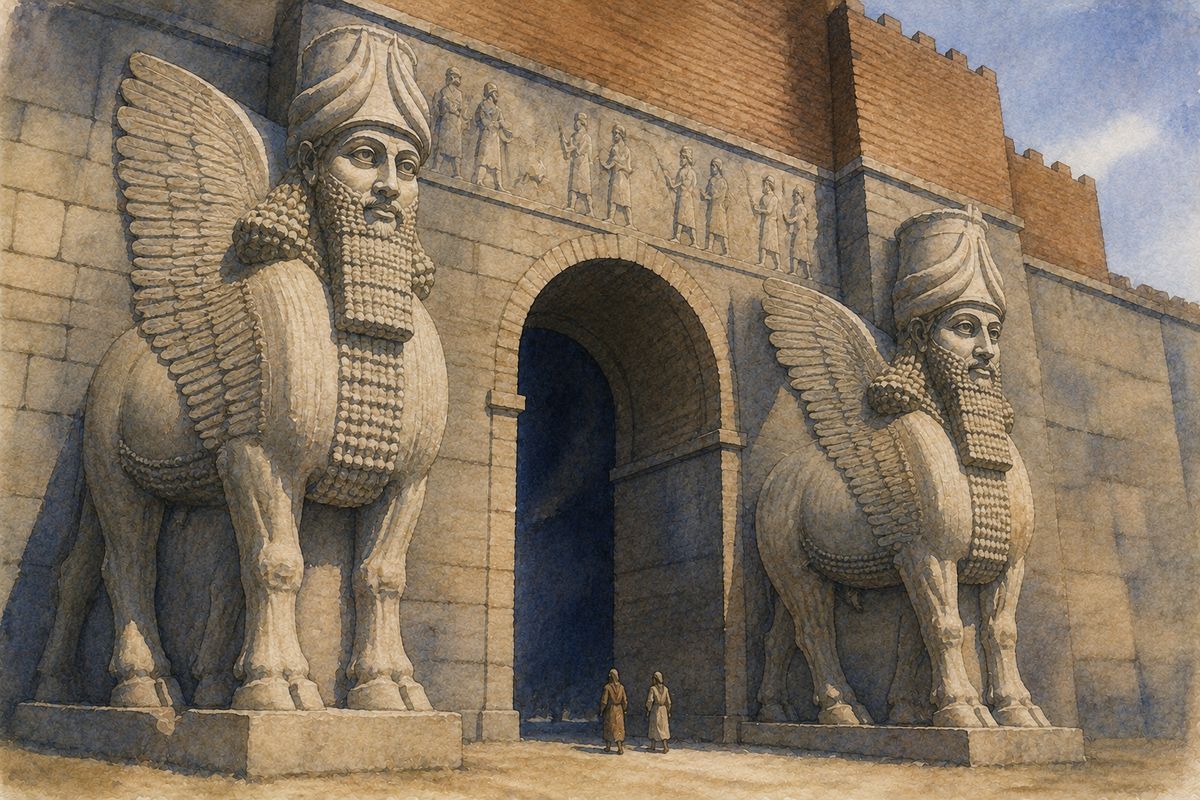
L'Assyrie règne depuis Ninive, et Assurbanipal rassemble une bibliothèque censée contenir toute la tradition écrite, en collectant délibérément des textes babyloniens et sumériens plus anciens. C'est cet acte d'accumulation qui a permis à l'Épopée de Gilgamesh de survivre jusqu'à sa découverte.
Villes Nineveh
À cette période : Sennacherib · Ashurbanipal
En savoir plus : La redécouverte de Gilgamesh (Ninive, années 1850 ; la lecture de 1872)
Sources : Neo-Assyrian Empire · Library of Ashurbanipal · Nineveh
626 à 539 av. n. è.
La période néo-babylonienne
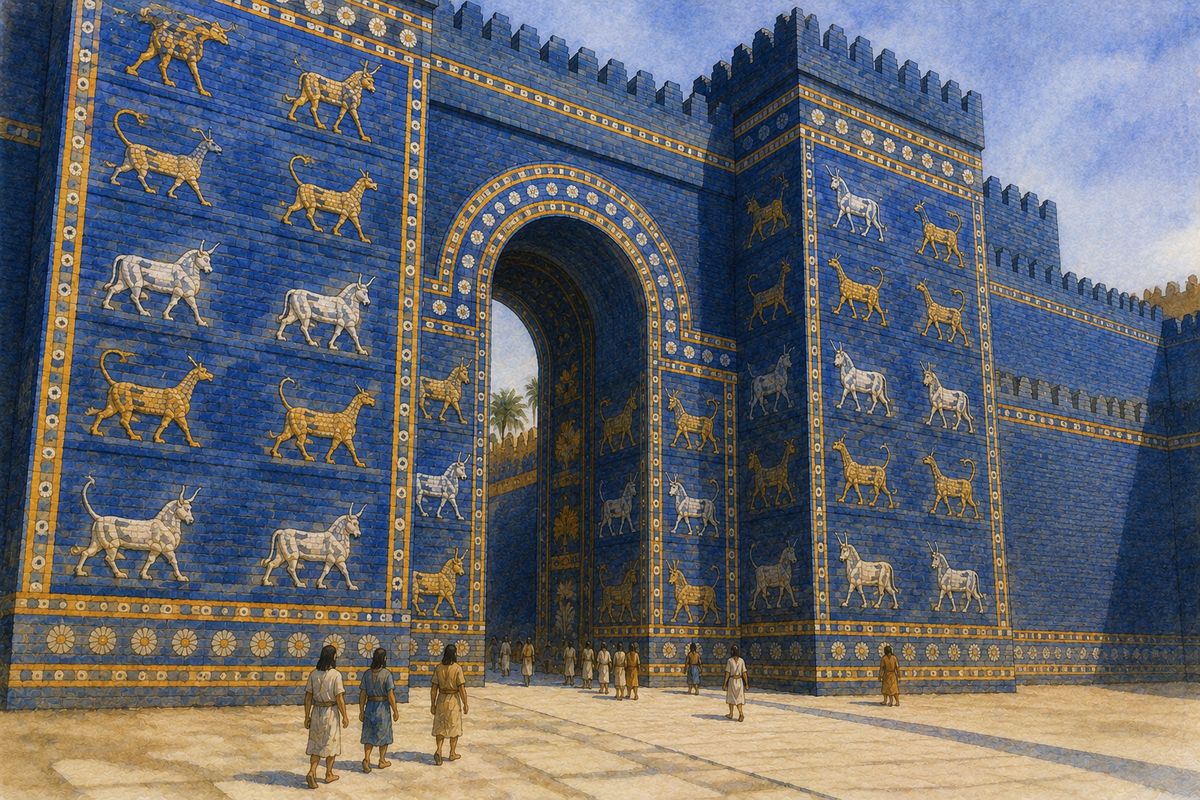
Le dernier âge d'indépendance de Babylone. Nabuchodonosor II rebâtit la ziggourat Etemenanki et la porte d'Ishtar, la brique émaillée bleue que la plupart des gens imaginent aujourd'hui en pensant à la Mésopotamie, alors qu'elle vient environ deux mille cinq cents ans après la fondation d'Uruk.
Sources : Neo-Babylonian Empire · Etemenanki · Ishtar Gate
à partir de 539 av. n. è.
La domination perse et après
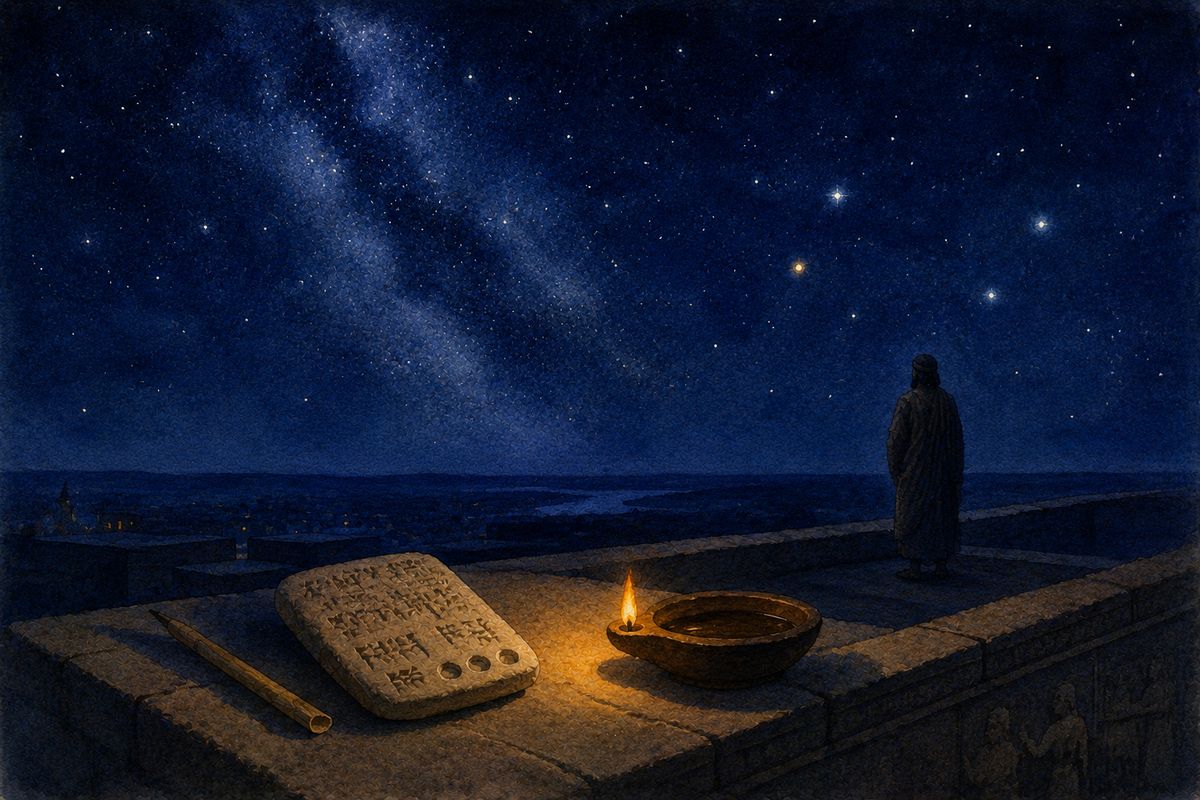
Cyrus prend Babylone en 539 av. n. è. Le cunéiforme continue d'être écrit des siècles après la fin de l'indépendance politique, surtout par des astronomes et des scribes de temple ; la dernière tablette cunéiforme datable avec certitude est un texte astronomique d'environ 75 de n. è. Puis l'écriture est simplement oubliée, et le reste plus de dix-sept siècles.
En savoir plus : Le cunéiforme et la première écriture
Sources : Achaemenid Empire · Cuneiform
des années 1840 à 1872
La redécouverte
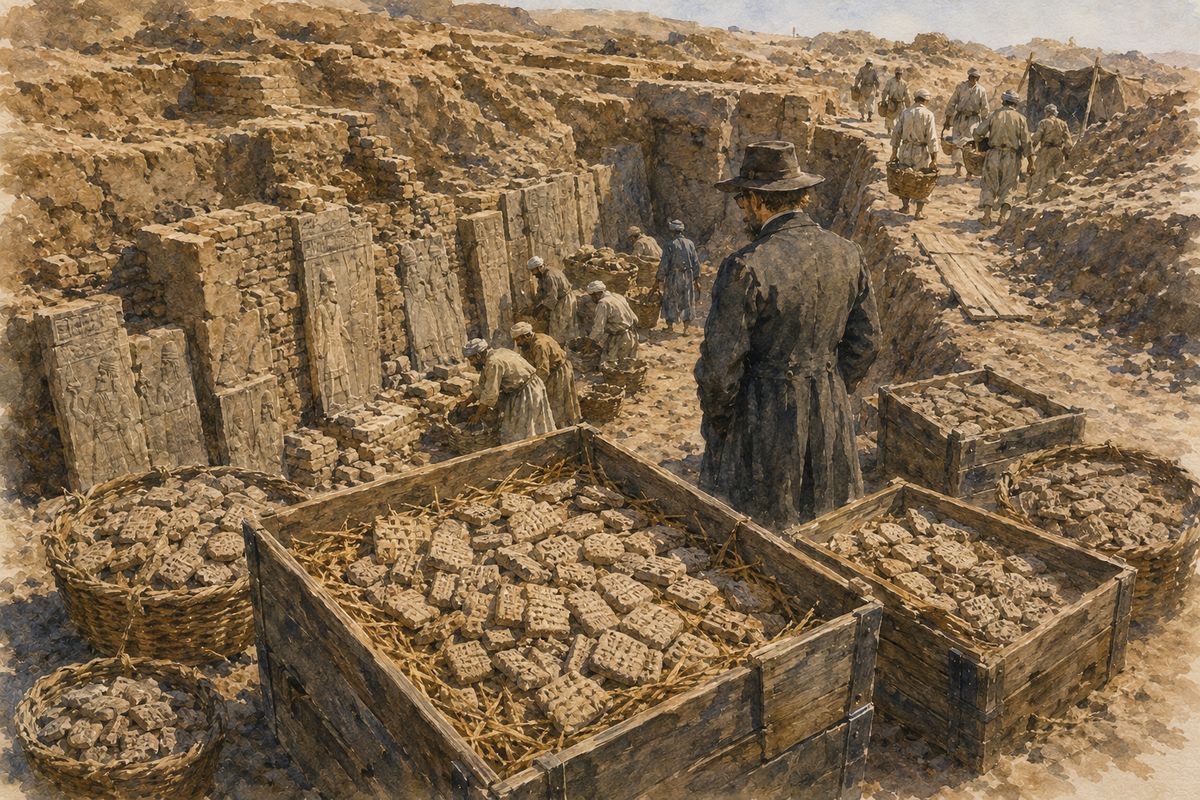
Les fouilles européennes à Ninive et à Nimroud expédient des milliers de tablettes vers l'Europe. En 1872, George Smith, en dépouillant le matériel d'Assurbanipal au British Museum, lit un récit du déluge plus ancien que la Genèse et comprend ce qu'il tient. La littérature de Sumer et de Babylone revient au monde, et tout ce qui est sur ces pages en dépend.
Villes Nineveh
En savoir plus : La redécouverte de Gilgamesh (Ninive, années 1850 ; la lecture de 1872)
Sources : George Smith (Assyriologist) · Library of Ashurbanipal · Epic of Gilgamesh
Comment lire ces dates
Les dates absolues de l'histoire mésopotamienne sont des conventions, non des mesures. Celles-ci suivent la chronologie moyenne, la plus employée parmi plusieurs schémas concurrents ; les autres décalent les IIIe et IIe millénaires de quelques décennies à plus d'un siècle. Tout ce qui précède la fin du IIe millénaire avant notre ère est réellement discuté, et chaque fourchette marquée approximative est un intervalle savant, non un arrondi.
Une correction à faire d'emblée : la brique émaillée bleue que la plupart des gens imaginent en pensant à la Mésopotamie est néo-babylonienne, du VIe siècle avant notre ère. Cela fait environ deux mille cinq cents ans après la fondation d'Uruk. Les murs d'Uruk étaient en brique crue, et ses temples étaient revêtus de milliers de petits cônes d'argile noirs, rouges et beiges.
La littérature sumérienne n'a pas survécu par chance. Elle a survécu parce que des écoliers paléo-babyloniens la recopiaient en devoir pendant des siècles après que plus personne ne la parlait, et parce qu'un roi assyrien, à Ninive, a délibérément amassé la tradition ancienne. Ces deux accidents d'habitude sont la raison pour laquelle tout cela peut encore être lu.
Notre récit · Fiction
L'histoire que nous posons par-dessus
Chronicles of Uruk ajoute une fiction par-dessus cette chronologie. Sur cette page, elle est signalée comme la nôtre ; dans les histoires et les chambres, elle est simplement la réalité. Trois âges la portent :
L'ancienne Sumer
Les premières cités s'élèvent exactement comme le dit le registre ci-dessus. Dans notre récit, autre chose bouge sous elles : un vieux conflit que les tablettes n'ont jamais écrit.
Le présent
Une vie ordinaire est interrompue par un héritage plus ancien que toute vitrine de musée, et le vieux conflit devient le vôtre.
Un futur lointain
Loin devant, sous un New York transformé, ce qui a commencé à Uruk se décide encore.
Les périodes ci-dessus restent de l'histoire réelle de bout en bout ; rien de cet encart n'est enseigné comme un fait. Le lore complet, avec ses révélations, vit derrière son propre avertissement.
Continuez à explorer la Chronique