History
The people who ran these cities
14 named leaders, each graded for what the evidence actually supports: 10 attested by objects made in their own lifetimes, 4 known only from the tradition.
Sumer left us kings' names on bricks, on seals, on beads carried hundreds of miles, and in a list that begins with a reign of twenty-eight thousand years. All of that is real material. Only some of it is history.
This page keeps the two apart, per person, and links each one to the city they belonged to and the period they belong in. Where the evidence stops, it says so, and it says so beside the name rather than in a footnote at the bottom.
How to read the marks
- Attested
- A real person. Objects, inscriptions or archives made in their own lifetime carry their name.
- From the tradition
- Named by the tradition, with no contemporary attestation of the person. The texts are real; whether the individual was is not established.
Before the scheme begins
Reigns the tradition places before the flood, outside any archaeological period.
The Early Dynastic period
c. 2900 to 2350 BCE
Mesannepada
Attestedthe earliest king of Ur we can hold in our hands
- Reigned:
- c. 26th century BCE
- City:
- Ur
Founder of the First Dynasty of Ur, and among the earliest Mesopotamian kings attested by objects made in his own lifetime rather than by a later list.
Enmerkar
From the traditionthe king in the poem about writing
- Reigned:
- the King List places him in the First Dynasty of Uruk; no contemporary attestation
- City:
- Uruk
A king of Uruk in the Sumerian King List, and the hero of the Sumerian poem that contains the oldest story about writing being invented.
Gilgamesh
From the traditionthe one everyone has heard of
- Reigned:
- the King List places him in the First Dynasty of Uruk
- City:
- Uruk
King of Uruk in the Sumerian King List and the hero of the Epic. A real early ruler may lie behind the name; the poem is literature either way.
Lugalbanda
From the traditionthe father, and a king in his own poems
- Reigned:
- the King List places him in the First Dynasty of Uruk
- City:
- Uruk
An early king of Uruk in the Sumerian King List, hero of two Sumerian poems of his own, and later worshipped as a god.
Puabi
Attestedthe burial that made Ur famous
- Reigned:
- no reign is recorded; her cylinder seal gives her the title nin
- City:
- Ur
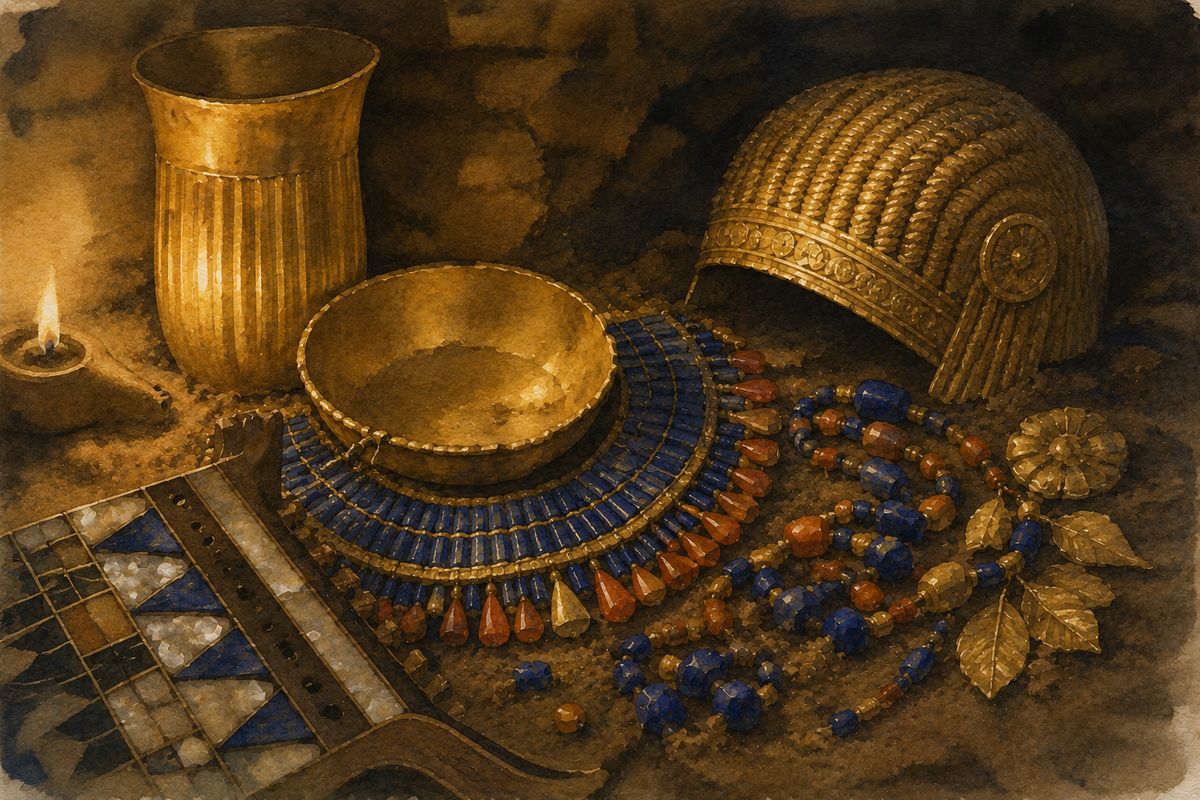
A woman of high rank buried at Ur around 2600 BCE with lyres, a gold headdress and attendants. Her seal names her, which is why we know her name at all.
The Akkadian empire
c. 2334 to 2154 BCE
Sargon of Akkad
Attestedthe first empire
- Reigned:
- c. 2334 to 2279 BCE
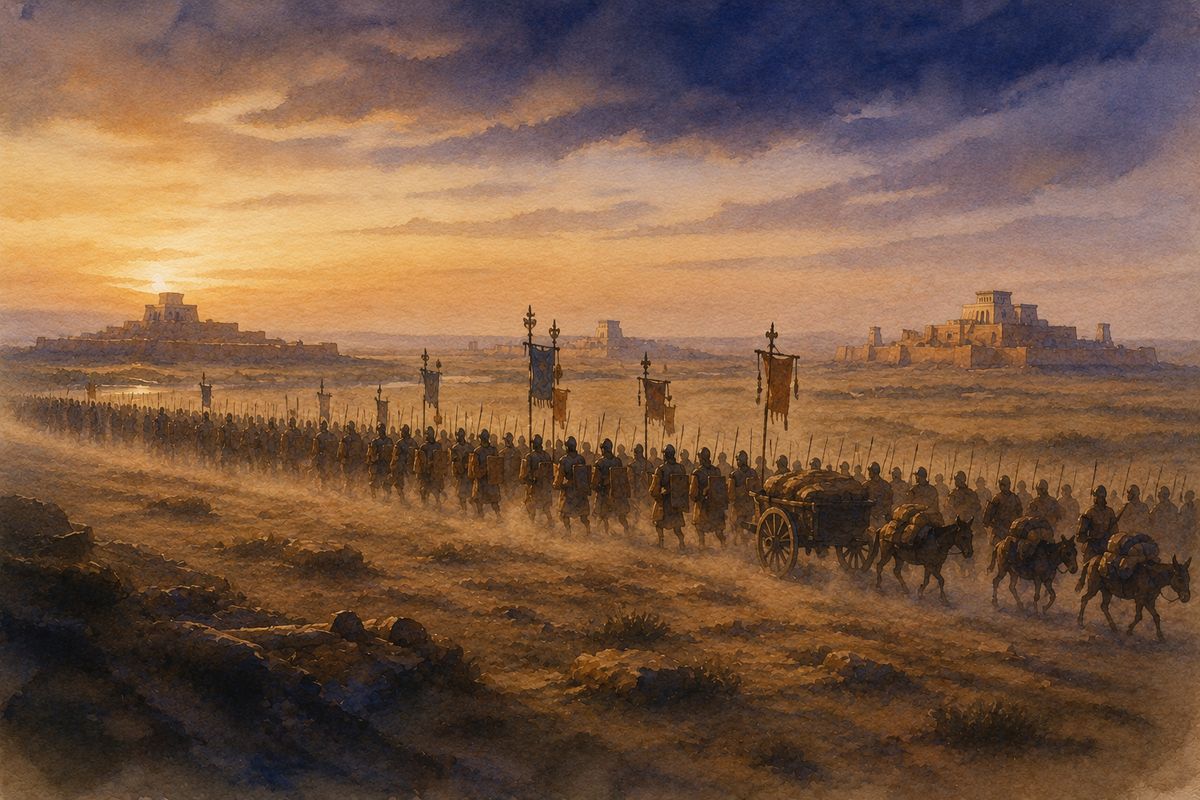
The king who brought the Sumerian cities under one rule, founding the first empire of the region. His capital has never been found.
Enheduanna
Attestedhigh priestess, and the first author with a name
- Reigned:
- she did not rule; she held the office of en-priestess at Ur, c. 2300 BCE
- City:
- Ur
Daughter of Sargon and high priestess of Nanna at Ur, and the earliest author whose name is attached to surviving work.
Naram-Sin
Attestedthe king who wrote himself a god
- Reigned:
- c. 2254 to 2218 BCE
Sargon's grandson, and the first Mesopotamian king known to have claimed divinity in his own lifetime.
The Third Dynasty of Ur
c. 2112 to 2004 BCE
Ur-Nammu
Attestedthe ziggurat and the law
- Reigned:
- c. 2112 to 2095 BCE
- City:
- Ur
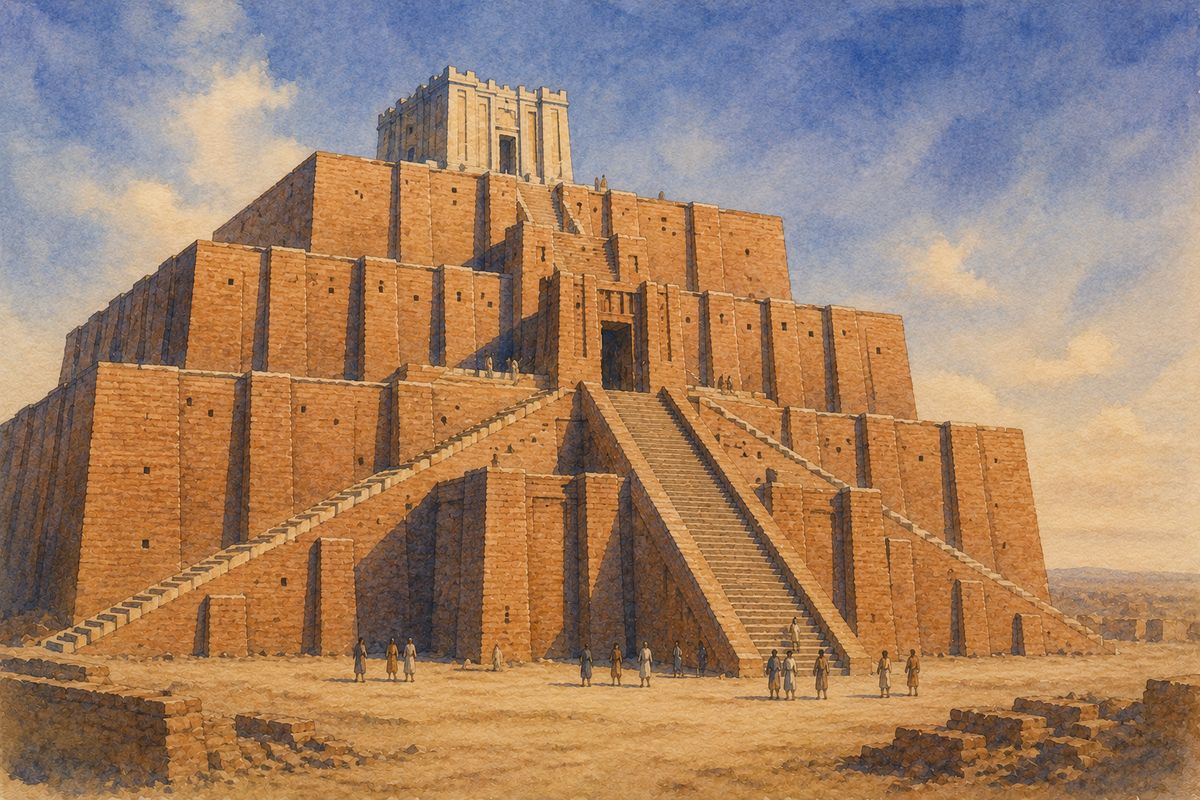
Founder of the Third Dynasty of Ur, builder of the great ziggurat that still stands, and the name on the oldest surviving law code.
Shulgi
Attestedthe administrator
- Reigned:
- c. 2094 to 2046 BCE
- City:
- Ur
Ur-Nammu's son, who ruled for around forty-eight years and built the bureaucracy whose clay archives are the richest record any Mesopotamian period has left.
Ibbi-Sin
Attestedthe last king, and the lament
- Reigned:
- c. 2028 to 2004 BCE
- City:
- Ur
The last king of the Third Dynasty of Ur, under whom the last great Sumerian-speaking state fell to Elam and its allies around 2004 BCE.
The Neo-Assyrian empire
c. 911 to 609 BCE
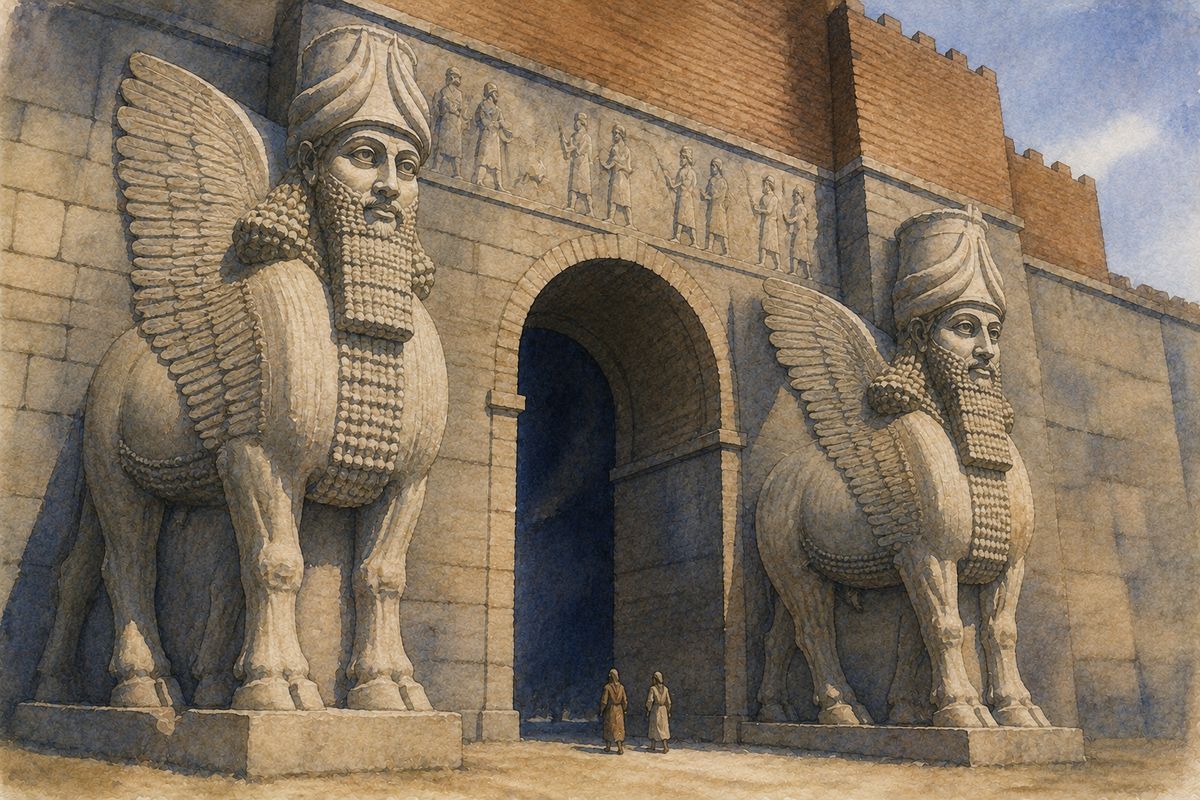
Sennacherib
Attestedthe capital without rival
- Reigned:
- 705 to 681 BCE
- City:
- Nineveh
The Assyrian king who made Nineveh his capital around 705 BCE and rebuilt it on a scale the region had not seen.
Ashurbanipal
Attestedthe library
- Reigned:
- 669 to c. 631 BCE
- City:
- Nineveh
The Assyrian king who assembled a library at Nineveh meant to hold the written tradition, and so preserved most of what we can read of Mesopotamian literature.
Why there are no portraits here
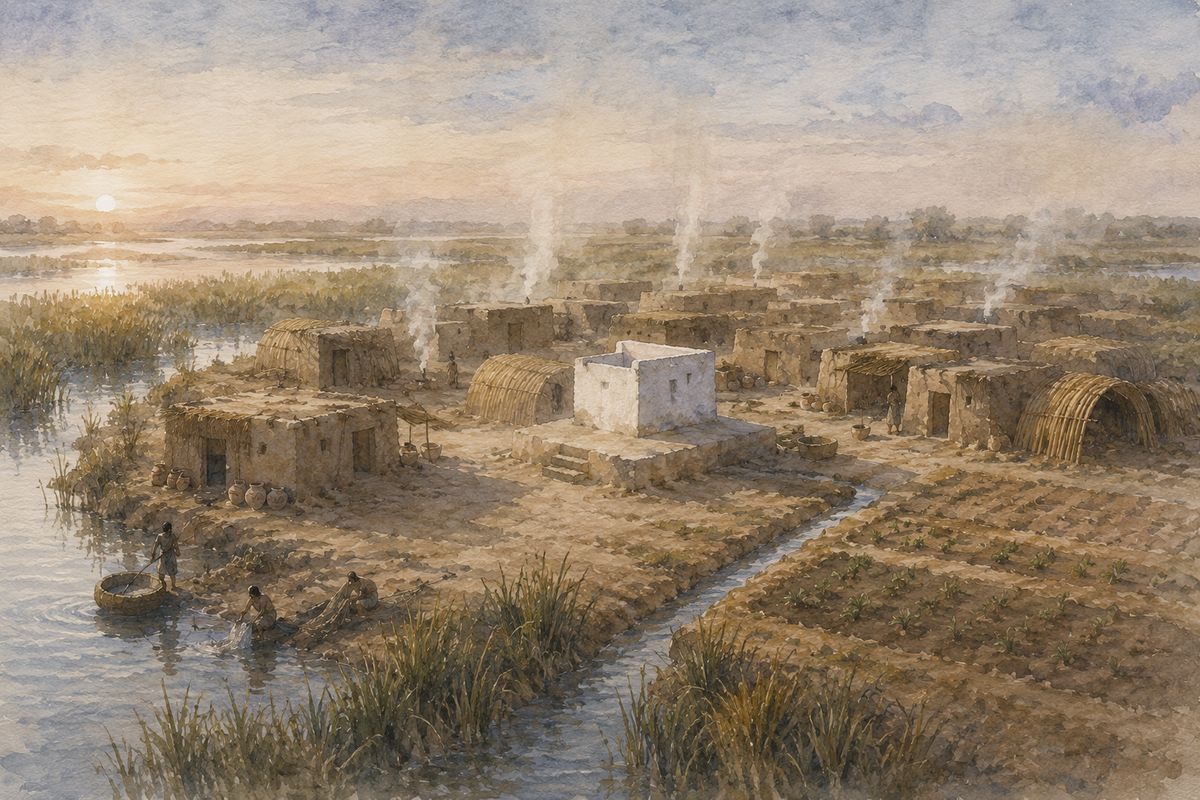
We have no likeness of any of these people, and neither does anybody else. The Victory Stele shows Naram-Sin as his own court wished him seen; everything later is invention. So each group above is illustrated by its period, captioned as its period.
We could generate a face for every name on this page in an afternoon. We are not going to. A picture set beside sourced facts starts to read as evidence, and the one thing this section cannot afford is to have its art mistaken for its record.
Keep exploring the Chronicle