History
Puabi
A woman of high rank buried at Ur around 2600 BCE with lyres, a gold headdress and attendants. Her seal names her, which is why we know her name at all.
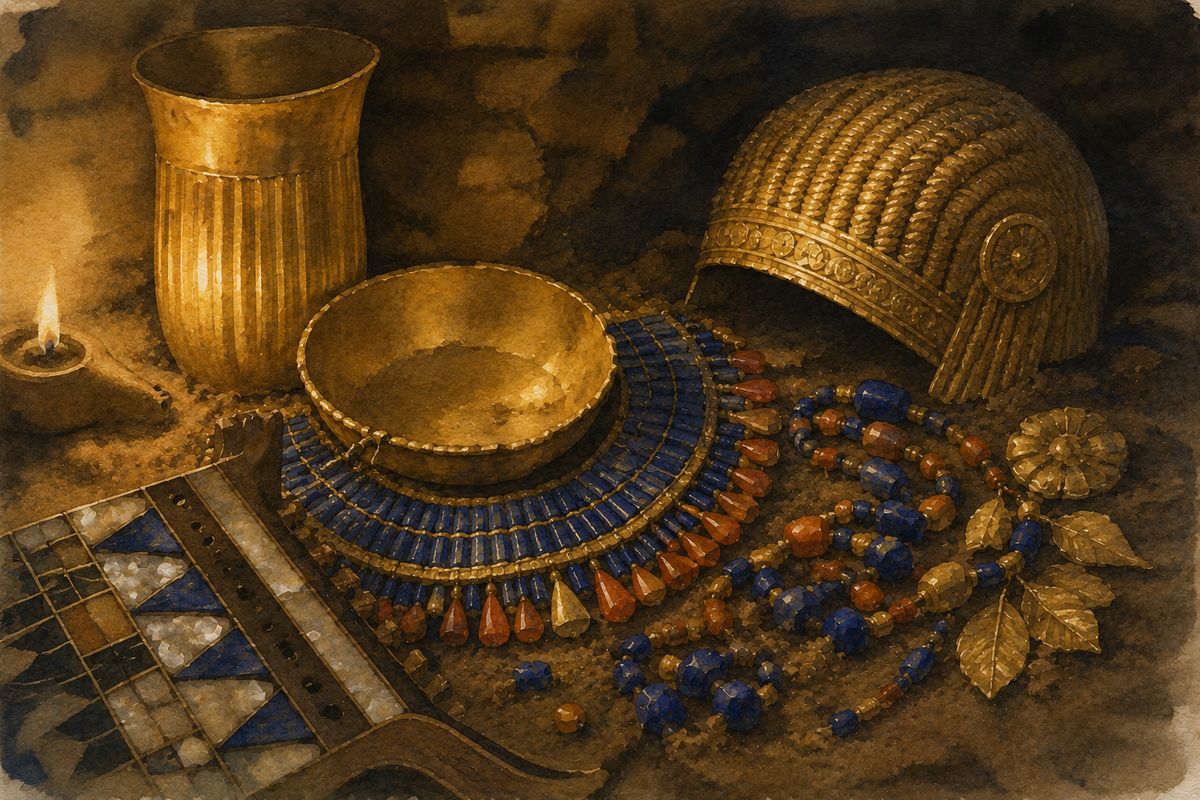
Illustration of The Early Dynastic period, not a likeness of any person on this page.
- Standing:
- A real person. Objects, inscriptions or archives made in their own lifetime carry their name.
- Reigned:
- no reign is recorded; her cylinder seal gives her the title nin
- City:
- Ur
- Period:
- The Early Dynastic period · c. 2900 to 2350 BCE
What they did
none recorded. What survives is her grave, excavated by Leonard Woolley in the 1920s, and the objects in it, which are among the most reproduced Mesopotamian artefacts in the world.
Where the evidence stops
nin can mean queen or high priestess, and specialists have argued both. A page that calls her "Queen Puabi" without saying so is choosing a side quietly.
Sources
The references this entry is drawn from. ETCSL is the scholarly edition for the Sumerian texts; the rest are general references for the archaeology and the dates.
In the same period
Others our chronology places in The Early Dynastic period.
Keep exploring the Chronicle